Commentary
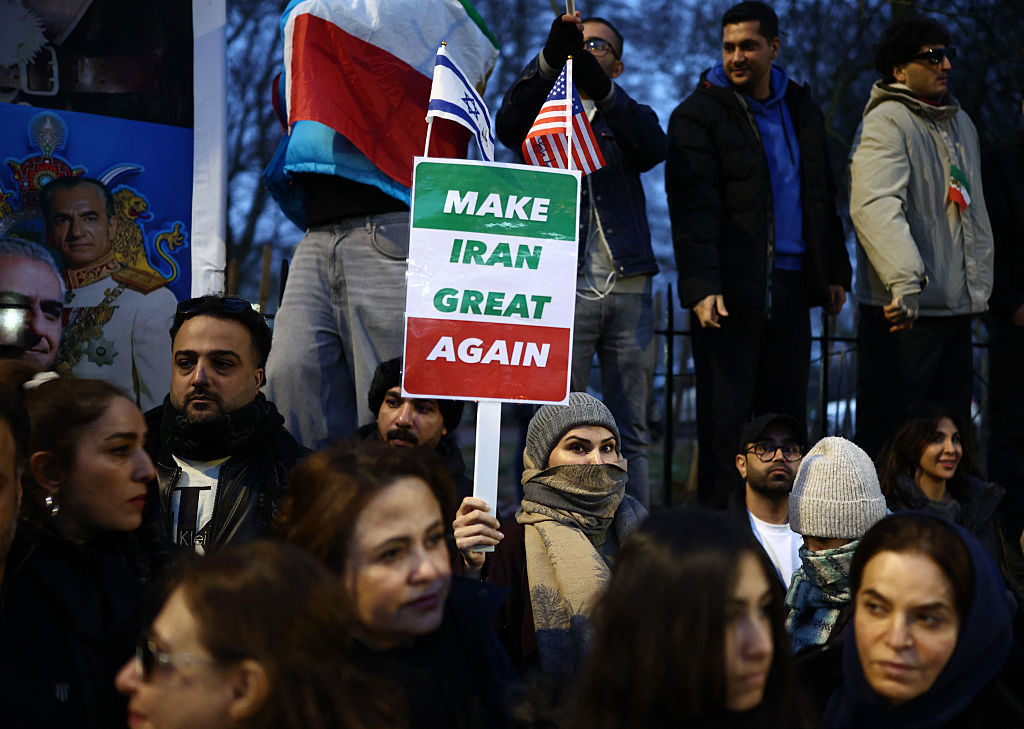
Where does Iran go from here? How is the global balance changed—and it is being changed—by the emerging collapse of the Iranian theocratic, revolutionary government?
The Iranian clerical government’s death throes were protracted over years; its lifespan, now 47 years, was extended by technologies of crowd formation analysis and crowd suppression. Equally, it was being defeated by other technologies. But by January 2026, the Iranian government under Supreme Leader Ayatollah Ali Hosseini Khamenei was neutered.
Despite the presumed inevitability of this transition, few planners have considered the tasks to be performed for the reconstruction of the nation. Those who understood the task are now dead.
How likely is it that the influence of the Shia mosque in Iran will wane dramatically, moving Iran to a more secular state, as the late Shah had intended: not to kill religion but to relegate it to a more balanced place in the society?
How long will it take for a semblance of order and new governance to establish itself? And to what extent will Russia (in particular) move to preserve its recently found access to the Indian Ocean through Iran, something it had sought for centuries?
That is the nub of it: Iran—known as Persia before its name change in 1935—is strategically powerful because of its location. Today, that includes providing the land bridge to and from the Central European states, which are anxious for trade routes that do not involve subordination to Russia or the Chinese communist regime.
It is worth asking just how leadership structures have become increasingly enabled to hold on to power in the face of mounting public dissatisfaction, even in what we still call democracies? This power retention capacity has substantially increased in the past half-century or so, as witnessed in China, Iran, Venezuela, Cuba, and so on and, in different ways, even in Europe (the EU itself), France, the UK, the United States, and others. People in power usually attempt to retain power by whatever means possible.
Strategist Assad Homayoun (1932–2020) attempted to look at the likely lifespan of the Iranian clerical government through the lens of Crane Brinton’s 1938 book, “The Anatomy of Revolution.” It was a useful perspective on the Iranian so-called revolution of 1979, except for the time span of the process. It is now possible for “revolutionaries” to protract their stay in office longer than expected, which theoretically gives greater opportunity for the new rulers to retain power.
But the collapse of the Iranian clerics is appearing by January 2026 to look inevitable, and it is a signal for other protracted “modern revolutionists” to see where they stand in the evolutionary cycle. China, Cuba, the transitioning Venezuelans, and so on, are all in terminal stages; the only question is how long that stage will last. The same could be said of Ethiopia’s government, now in its third stage since the coup of 1974. So the collapse of the Iranian clerics is a significant milestone for other modern autocracies and some democracies, especially at a time when the normal revolution cycle, as described by Brinton, is assisted by the present global disruptive cycle.
Even the Russian Revolution (actually a putsch, followed by a civil war) was able to become protracted; its durability was assisted largely by the recognition accorded to it by its adversaries, until its final collapse after some 73 years due to its own internal corrosion. Even its ability to get beyond the putsch stage was enabled only by the vacuum left by the murder—regicide—of the imperial family of Russia and the world’s preoccupation with ending World War I.
What happens to Iran itself as the overthrow of the clerics becomes formalized with the probable flight of Khamenei? The most important factor to be considered will be the extent and competitiveness of foreign powers attempting to influence and control the situation. Those most intent on attempting to shape the new Iranian administration will be Israel, the United States, Russia, and Turkey. Others, such as China, India, and Saudi Arabia, will be less direct, and the Central Asian states, as well as many European players, will be more formal and diplomatic in their attempts to assist the post-clerical government on issues such as trade and integration.
What is significant is that all the major players bent on staking a claim to Iran have lost their “corporate memory” of traditional Iranian/Persian politics.
Recent U.S. writings and policy statements on Iran—indeed, over the past decade or two—show no detailed historical context. It would be surprising if the Russians have not already initiated Track II contacts with the major Iranian opposition movements, including those around Crown Prince Reza Pahlavi, 65, to retain as much of their access as possible. There is no evidence that Reza has the support of U.S. President Donald Trump, who appears to have his own vision for a post-clerical Iran. But that Trump vision has not been outlined by mid-January 2026.
If possible, and if the United States does not counter the move before it could take effect, Russia would want to reaffirm its Iranian land bridge connection in the International North-South Transport Corridor, which gives Moscow a trade route from the Baltic Sea/Atlantic through the riverine system to the Caspian Sea and through Azerbaijan and Iran to the Indian Ocean. It is probable that Moscow’s muted response to the collapse of the clerics is linked to the fact that Russia sees its future linked to Iran, and not specifically to the clerics. This, indeed, was the approach of the Soviets before the fall of Shah Mohammad Reza Pahlavi in 1979.
The Soviet’s key controller of events in the southern Caucasus down to Iran was KGB Gen. Heydar Aliyev, who later became president of post-Soviet Azerbaijan (1993–2003) and was the father of current Azerbaijani President Ilham Aliyev. He employed subversion operations through various front groups, but ultimately the Soviets were not ready for the Shah’s collapse in late 1978, and his efforts merely paved the way for the clerics to fill the power vacuum. The post-Soviet Russians learned from that.
China now has little energy left to support Iran’s clerics, and their fall would be seen inside China as another sign that Chinese Communist Party (CCP) is set to fall as well. China’s current impotence in Iran and Venezuela is a key indicator of the CCP’s weakness.
The future has come before anyone, including the Iranians, was prepared. From whence will the man on horseback appear—the inspirational savior of the nation?
Views expressed in this article are the opinions of the author and do not necessarily reflect the views of The Epoch Times.
 Friends Read Free
Copy
Facebook
Tweet
Friends Read Free
Copy
Facebook
Tweet