
Commentary
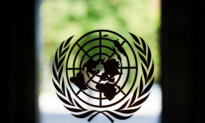
In September, at the 80th U.N. General Assembly in New York City, President Donald Trump stepped to the podium and posed a question that reverberated through the hall and across global headlines: “What is the purpose of the United Nations?”
His words, delivered at an assembly that featured a malfunctioning teleprompter and a broken escalator, cut deep, accusing the U.N. of issuing “strongly worded letters” that fail to stop wars, funding assaults on Western borders through lax migration policies, and squandering its potential in a world of empty rhetoric. X erupted with reactions, from cheers of agreement with the put-down to fierce defenses of the U.N.’s humanitarian lifelines.
Trump’s jab wasn’t new, but in 2025, a year of multipolar rivalries, reversing globalization, and cascading crises, it felt pretty urgent. Now the latest attempt to create a global carbon tax makes this question even more pertinent.
That moment requires a reckoning: Why does the U.N. exist? What was it meant to achieve, and what has it become? It was born from the ashes of World War II as a beacon of collective security and human progress. Yet today, Trump’s question exposes a core issue: Is the U.N. a vital global referee, a bloated bureaucracy, or simply a stage for diplomatic theater?
In this exploration, we’ll trace its intellectual roots and historical evolution, then confront its current roles, costs, and relevance in today’s world. The verdict? It’s left to you.
The Intellectual Foundations of Global Cooperation
The U.N. didn’t emerge in a vacuum. Its DNA can be traced back centuries. It is the product of humanity’s recurring quest to tame the seeming chaos of nation-states through shared rules and institutions. As early as 1795, philosopher Immanuel Kant outlined a vision of “perpetual peace” in his essay “Perpetual Peace: A Philosophical Sketch,” proposing a federation of republics bound by law to end wars of conquest. Earlier still, Jeremy Bentham coined the term “international law” in 1789, laying groundwork for enforceable global norms. By 1849, author Victor Hugo evoked a “United States of Europe” at the Paris Peace Congress, imagining economic ties replacing the battlefield.
These weren’t idle musings. The 19th century saw practical experiments: the International Committee of the Red Cross in 1863 to protect war victims and the 1899 Hague Peace Conferences that codified rules of warfare and arbitration. We can see similar efforts appear in antiquity: The Roman “Pax Romana” (27 B.C. to 180 A.D.) imposed stability through empire, medieval popes mediated royal disputes, and the post-Napoleonic Concert of Europe (1815–1914) saw the then great powers convene to preserve balance. Flawed and often elite-driven, these precursors revealed a pattern: the wish to build some supranational framework.
A Cautionary 1st Draft
The 20th century’s horrors seemed to demand a bolder attempt. In 1920, the League of Nations launched as the world’s first “parliament of man,” inspired by U.S. President Woodrow Wilson’s Fourteen Points. It promised arbitration for disputes, with equal footing for nations regardless of size. But in hindsight, it was doomed from the start: The U.S. Senate rejected membership in 1919, depriving the League of its enforcer. Lacking an army or coercive power, it relied on moral persuasion and toothless sanctions.
When aggression flared again in Japan’s 1931 invasion of Manchuria, Italy’s 1935 occupation of Ethiopia, and Hitler’s escalating Blitzkrieg across Europe, the League dithered, reduced to a “debating club” ignored by powerful actors. Its collapse amid World War II wasn’t total failure, though, in the sense that postwar leaders learned lessons: to exclude no major power, create credible enforcement, and address war’s causes as perceived at the time, such as economic despair and colonialism.
Birth From Ashes
World War II’s toll, more than 70 million people dead, prompted a second attempt. In San Francisco, leaders such as U.S. President Franklin D. Roosevelt and British Prime Minister Winston Churchill forged the U.N. Charter on four pillars learned from the League.
First, Roosevelt ensured U.S. leadership, with the Senate ratifying it in 1945. Second, all great powers were included: The victors of the war—the United States, the Soviet Union, the UK, France, and China—gained permanent Security Council seats with veto power, a practical compromise to the equality ideal. Third, the charter empowered action: Chapter VII authorized military force against threats, unlike the League. Fourth, beyond security, the U.N. tackled economics (via the World Bank and International Monetary Fund), human rights (Universal Declaration, 1948), and decolonization (Trust Territories).
President Harry Truman ended the founding conference with a solemn quote: “If we fail to use it, we shall betray all those who died.” But there was no grace period, as the U.N. launched into the Cold War.
Cold War Stalemate
The U.N. was barely a year old when U.S.–Soviet rivalry turned the Security Council into a veto arena. Major flashpoints such as Hungary (1956), Vietnam, and Afghanistan (1979) gridlocked the Security Council into “collective stalemate.”
Yet the U.N. adapted, pivoting to work on smaller conflicts. For de-escalation in Cold War proxy wars, Canadian diplomat Lester Pearson pioneered peacekeeping in 1956 during the Suez Crisis: neutral “blue helmets,” troops to patrol the Israel–Egypt border, a model replicated in Cyprus (1964), Congo (1960–1964), and beyond.
Decolonization swelled membership, from 51 member states in 1945 to 193 today, turning the General Assembly into a democratic counterweight to the Security Council, in which Tuvalu has a vote equal to that of the United States. All the while, humanitarian arms such as UNICEF and the U.N. High Commissioner for Refugees quietly fed refugees and built schools the world over.
Unipolar Missed Opportunity
The Soviet collapse ushered in a “unipolar moment,” with the United States ascendant. This should have been the U.N.’s golden moment. At first, it seemed so: For instance, in 1990, the Security Council approved a U.S.-led coalition to liberate Kuwait from Iraq (Resolution 678), while peacekeeping missions worked in Cambodia, Mozambique, and Bosnia.
But it had its limits. In Rwanda (1994), under-resourced U.N. Assistance Mission for Rwanda troops witnessed genocide (800,000 people killed). Srebrenica (1995) turned a “safe area” into a Bosnian Serb slaughterhouse (8,000-plus people dead).
The U.S. cherry-picked U.N. cover: It said “yes” to Kuwait but bypassed it for Kosovo (1999 NATO strikes).
The War on Terror and China’s Quiet Ascendancy
Post-9/11, the U.N. endorsed U.S. self-defense (Resolution 1368) and anti-terror financing, but for the 2003 Iraq War, the council withheld approval; the United States invaded anyway, sidelining the U.N.
Meanwhile, China’s World Trade Organization (WTO) entry (2001) fueled its U.N. infiltration. For example, Chinese nationals now helm the U.N.’s Food and Agriculture Organization (Qu Dongyu, 2019 to present) and International Telecommunication Union (Zhao Houlin, 2015 to 2022).
By the COVID-19 pandemic (2019), the World Health Organization (WHO) drew fire for perceived deference to Beijing, delaying the global emergency declaration until Jan. 20, 2020; obfuscating its origins; and praising China’s response amid cover-up allegations.
The UN in 2025’s World
Fast-forward to today: The United States remains potent but faces many internal and external challenges. China seems to be rising but faces tariffs and tech wars from without and a crumbling society and economy from within. Russia’s Ukraine war drains global resources but without dominance, while Europe is hedging and smaller states are attempting to assert their sovereignty.
Globalization is in retreat: Trade growth slowed to 1.2 percent in 2023 (WTO data), supply chains shorten via near-shoring, post-COVID-19 pandemic redundancy trumps “pure” efficiency. Institutions such as the U.N. and WTO, designed for a cooperative era of a “flat world,” barely hang on in times of discord.
The U.N. isn’t the “world government” envisioned by some of its founders. It’s a patchwork: vital in spots, symbolic elsewhere, broken in others:
- Collective security’s paralysis: Vetoes disable it—Russia on Ukraine (2022–2024 resolutions blocked), U.S.–China on Syria. The General Assembly offers voice to the smaller nations, but it’s nonbinding.
- Humanitarian work: The U.N. High Commissioner for Refugees protected and assisted 129.9 million displaced and stateless people in 2024, a record amid wars in Sudan and Ukraine. The World Food Programme reached 124.4 million people with rations in 2024.
- Technical backbone: The International Civil Aviation Organization’s aviation standards enable global flights; the International Telecommunication Union coordinates telecom; WHO sets health protocols (with increasing controversy of power grabs).
Bureaucratic Empires
The U.N.’s regular budget for 2025 has been $3.72 billion, up slightly from 2024’s $3.59 billion. Peacekeeping has been $5.6 billion for July 2024 to June 2025, down by 8.2 percent from the previous year amid mission closures. The total system-wide budget (including agencies such as the WHO, the Food and Agriculture Organization, and the U.N. Development Programme) is about $65 billion to $70 billion annually, per recent estimates: the budget of a mid-sized government, but dwarfed by the U.S. defense budget of more than $850 billion.
There are 37,000 staffers in the Secretariat (as of late 2024) and more than 100,000 system-wide. Many are dedicated, but fragmentation creates overlaps, agencies compete, and accountability lags. The lack of a global electorate holding the staff accountable means that scandals can fester such as Iraq’s Oil-for-Food scandal (1995 to 2003, billions of dollars skimmed) and peacekeeping abuses in Congo and Haiti (sexual exploitation cases). Diplomatic immunity possibly shields too much, and reform stalls.
This is not dissimilar to the situation of the European Union: A $200 billion 2023 budget, 32,000 European Commission staff, Brexit backlash, and “democratic deficit” gripes over unelected bodies. Both, born of postwar unity dreams, strain against nationalism’s tide.
Critics describe the General Assembly as a stage for “empty speeches,” perhaps fairly. Yet symbolism has had its role in world history—flags at half-staff, oaths of office, national holidays—whether one likes it or not. So why not in the U.N.?
Reflections
So what’s the point of the U.N.? Trump’s question isn’t the whole story, but it’s a good one. From Rome to Kant to 1945, humans keep building systems. The U.N. is just the latest try: imperfect, but not entirely useless. Without the U.N., essential functions might migrate to another home as the need exists. Aid might go to nongovernmental organizations, standards to ad hoc bodies, forums to the Group of 20 and its rivals.
The real question is: What’s next? Can it be reformed to fit 2025’s world, or do we need new forums for a future world?
Views expressed in this article are the opinions of the author and do not necessarily reflect the views of The Epoch Times.
 Friends Read Free
Copy
Facebook
Tweet
Friends Read Free
Copy
Facebook
Tweet