Commentary
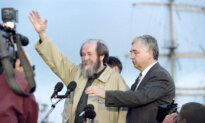
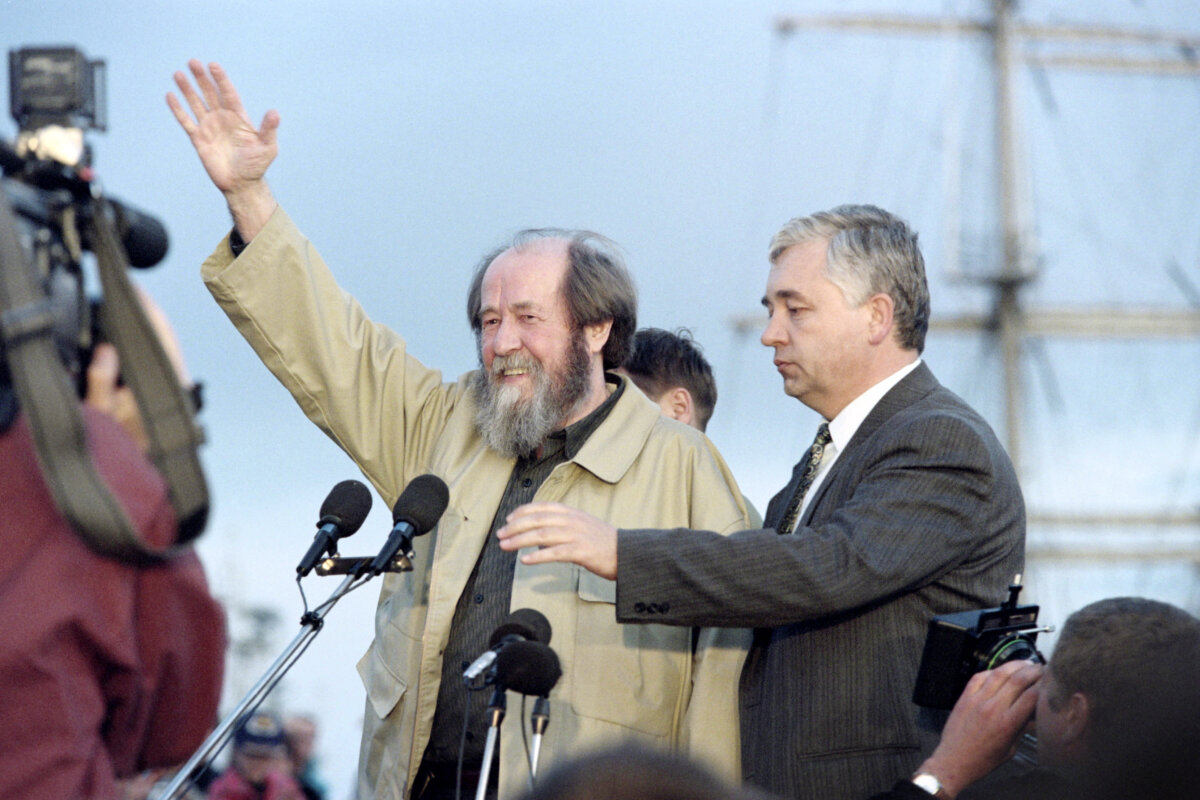
In February 1974, Aleksandr Solzhenitsyn was arrested by the KGB, stripped of his citizenship, and expelled from the Soviet Union. On the eve of his arrest, he circulated a short essay among Moscow’s intellectuals titled “Live Not by Lies.”
The essay was neither a revolutionary manifesto nor an appeal to overthrow the state. Instead, it was a quiet moral summons. Solzhenitsyn urged ordinary citizens to withdraw their consent from falsehood—to refuse to repeat what they knew to be false, even when silence promised their safety. Tyranny, he argued, does not rest solely on brute force; it survives because people are compelled to participate in a lie, often out of fear, convenience, or moral fatigue.
Over half a century later, Solzhenitsyn’s ethic of dissent has unexpected relevance in Canada. A small group of Canadian scholars and journalists, contributors to the recent publications “Grave Error” and “Dead Wrong,” have challenged prevailing claims about indigenous residential schools, particularly the assertion that Canada committed “genocide” through a system that caused the deaths of thousands of missing children who were buried in unmarked graves.
The work of these scholars has not been an exercise in denial or indifference to indigenous suffering. Rather, it represents an attempt to distinguish verifiable evidence from conjecture, and moral reckoning from myth-making. In doing so, they are paying a price remarkably familiar to anyone who has studied the life of Alexandr Solzhenitsyn.
The narrative they question emerged from the June 2015 Summary Report of Canada’s Truth and Reconciliation Commission (TRC). That report asserted that approximately 150,000 First Nations, Inuit, and Métis children were forcibly removed from their families between the mid-19th century and 1996 and placed in institutions designed to eradicate indigenous culture. It further contended that some 6,000 children died while enrolled in the residential school system and characterized the entire enterprise as “cultural genocide.” These conclusions were received with widespread public sympathy and quickly became foundational to Canada’s moral self-understanding.
The genocide narrative gained extraordinary momentum in the spring of 2021 when the Tk’emlúps te Secwépemc First Nation announced that ground-penetrating radar (GPR) surveys had identified what were described as the remains of 215 children near the former Kamloops Indian Residential School. International media outlets swiftly reported that mass graves had been discovered. Flags were lowered across Canada. Churches were vandalized or burned. Political leaders spoke in tones of absolute certainty about murdered children buried in secret.
Yet, as contributors to “Grave Error” and “Dead Wrong” have documented, these reports went well beyond the available evidence. GPR technology detects soil disturbances—anomalies—not human remains. No bodies were exhumed. No forensic investigations confirmed graves, let alone murders. Even the Tk’emlúps te Secwépemc leadership later clarified that the findings were preliminary and unverified. Nevertheless, the correction never matched the emotional ferocity of the original allegation.
Those who questioned the genocide narrative were not met with reasoned rebuttal. Instead, they faced moral denunciation. Those who asked cautious questions were accused of “denialism.” Academics who pointed to historical mortality rates, incomplete records, or alternative explanations for burial practices were branded as racists. Politicians across party lines warned against “questioning survivors.” Legacy media organizations treated skepticism itself as evidence of bad faith. In several cases, individuals lost professional positions or reputational standing simply for insisting that horrific claims require sound evidence.
It is here that the parallel with Solzhenitsyn becomes instructive. Solzhenitsyn argued that tyranny endures not only through violence but through the insistence of authorities that citizens regularly accept and participate in obvious falsehoods. Fearing isolation more than injustice, people surrender conscience for comfort.
Liberation begins not with protest or revolution, but with personal moral refusal: declining to repeat, endorse, or live by fabrications, thereby depriving lies of their power to survive. Some Canadian scholars have taken precisely that step. They have not denied the possibility that trauma could have been experienced by former students of residential schools. What they criticize is the moral shortcut of regarding contested claims as settled truth.
The reaction to their work reveals something troubling about Canada’s current intellectual climate. A society confident in its values should welcome scrutiny, especially on matters of historical gravity. Instead, Canada has drifted toward a culture in which narratives are insulated from challenge by ideological taboos. Once a claim is framed as protecting victims, questioning it becomes an act of aggression. Truth yields to sentiment; evidence bows to consensus.
This does not rise to the level of Soviet era repression. No one is being arrested at dawn or expelled from the country. But cultural repression operates differently in liberal democracies. It functions through professional ostracism, reputational harm, and the quiet knowledge that asking certain questions will cost more than the answers are worth. Solzhenitsyn warned that such climates are sustained not by secret police alone but by ordinary people repeating things they do not fully believe because it feels safer than standing apart.
The irony is that this climate ultimately undermines reconciliation itself. Genuine reconciliation depends on trust, and trust depends on truth. When institutions exaggerate or decline to correct errors, they invite cynicism. When journalists abandon skepticism, they weaken their credibility. When scholars self-censor, they impoverish public understanding. Indigenous communities, too, are ill-served by narratives that cannot withstand scrutiny, for their case will eventually lose credibility under the weight of unanswered questions.
How can we escape a regime of unrestrained fabrications? Solzhenitsyn’s answer was modest but demanding. He did not call for grand gestures. He simply urged individuals to refuse participation in falsehood—to speak carefully, verify claims, correct errors, and accept the costs of honesty. Applied today, this means defending the right to question even the most emotionally charged assertions. It means insisting on high standards of evidence before making accusations of genocide. It means separating empathy from epistemology.
Canada does not need fewer conversations about its past; it needs better ones. The scholars and journalists who contributed to “Grave Error” and “Dead Wrong” demonstrated what such conversations require: courage without cruelty, skepticism without cynicism, and compassion anchored in evidence. In an age in which lies spread faster than truth and moral fervour often substitutes for proof, their work stands as a quiet act of resistance.
To live not by lies is not to deny suffering. It is to honour it by refusing to build reconciliation on allegations that cannot bear the weight of facts.
Views expressed in this article are the opinions of the author and do not necessarily reflect the views of The Epoch Times.
 Friends Read Free
Copy
Facebook
Tweet
Friends Read Free
Copy
Facebook
Tweet