Commentary
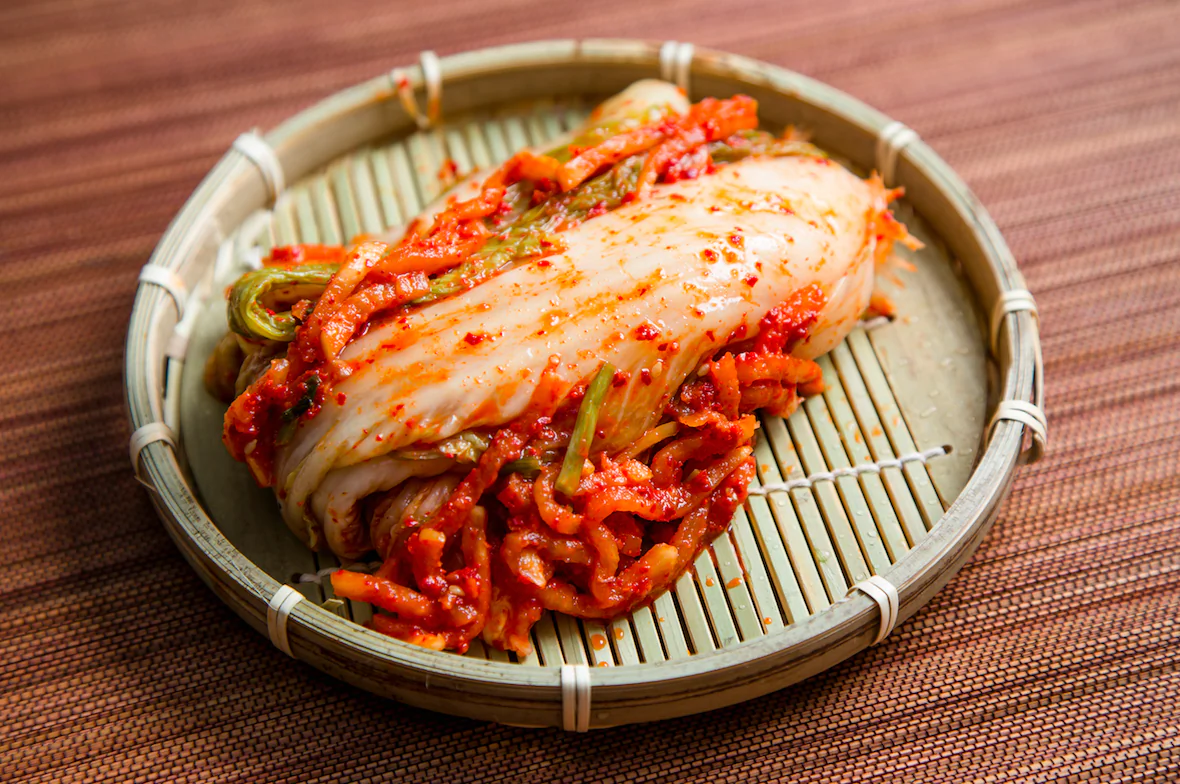
Every week at The Barn, we sell jars of homemade kimchi to customers who drive from all over Texas to buy it. The kimchi patty melt is the best-selling item on our menu. We sell out constantly.
And every time my husband makes another giant batch, he smiles and says the same thing:
“This is Kim’s kimchi.”
We have been told by many customers that it is some of the best kimchi in Central Texas, which is especially funny because my husband is Mexican, not Korean.
Almost every week, someone asks us how he learned to make such good kimchi.
It’s an interesting story that began in an adult school classroom off Sunset Boulevard in Los Angeles.
My husband came to the United States when he was 16 years old and spent most of his early years here, living in predominantly Latino neighborhoods and working in restaurant kitchens. By the time he was 21, he realized he needed to improve his English if he wanted more opportunities, so he enrolled in adult school.
One week, the instructor assigned the students a project. Everyone was paired with someone from another country, and over the weekend, they had to teach each other something from their culture using only English. The teacher intentionally paired people who did not share a common language so they could not simply revert to Spanish, Korean, Armenian, or Russian. Broken English, as limited as it was, became the bridge.
My husband was paired with a Korean girl whose name was difficult for many of the students to pronounce, so everybody simply called her Kim.
To this day, my husband cannot remember her real name, but every time he makes kimchi, he still says, “This is Kim’s kimchi.”
She decided to teach him how to make kimchi.
He had never even heard of kimchi before, but he was willing to learn. In exchange, he taught her how to make chilaquiles and salsa completely from scratch.
Somewhere between the cabbage, garlic, teakyung red pepper powder, onions, and imperfect English, a friendship formed, and a skill was passed down that more than a decade later would become one of the defining foods at our ranch in Texas.
Today, my husband makes huge tubs of kimchi at a time. He takes enormous pride in it. Right now, we have both a spicy version and a ginger version fermenting. We also make long fermented hot sauces, kombucha, sourdough bread every day, farm cheese, yogurt, kefir, and all sorts of fermented vegetables.
As I sit here writing this article, my husband is eating steak and eggs with kimchi, while I am eating a quesadilla filled with kimchi and farm cheese.
Fermented foods have quietly become part of nearly every meal in our home.
What fascinates me is how unusual that now seems to many Americans, when, for most of human history, fermented foods were simply part of everyday life.
Before refrigeration, humans lived alongside fermentation. Nearly every culture developed some version of it. Kimchi in Korea. Sauerkraut in Germany. Yogurt and kefir across the Middle East and Eastern Europe. Sourdough bread. Pickles. Cheese. Kombucha. Miso. Tempeh. Fermented hot sauces.
Human beings did not just preserve food this way. We evolved eating this way.
At the restaurant, customers will sometimes ask for the patty melt without kimchi. I usually laugh and say, “Oh, because you’re already eating too many fermented foods these days?” They always look surprised because, in truth, most people barely eat any at all.
I try to include four or five fermented foods in my diet daily. Not because I am following a trend, but because it feels intuitive to me that humans were never meant to live on sterile, ultra-processed food disconnected from bacteria, fungi, soil, and traditional preparation methods.
A customer recently came in to buy more kimchi and told me he had started intentionally adding a wide variety of fermented foods back into his diet. He said many of the chronic skin issues he had struggled with for years began improving. That is not medical advice, but it does make me wonder what happens when modern diets become so disconnected from the living foods our ancestors consumed regularly.
We spend a great deal of time discussing all the possible reasons human health appears to be declining. Chemicals. Endocrine disruptors. Pollution. Agricultural practices. Overconsumption. Prescription medications. Artificial light. Stress.
But I also think it is fair to ask whether we lost something important when we stopped eating the kinds of foods humans consumed for thousands of years.
My mother jokes that having a homestead is really just learning to manage bacteria and fungi. She is constantly making tempeh, ginger beer, jun tea, fermented vegetables, homemade yogurt, and sourdough crackers.
The more time I spend around real food, the more I realize that life itself depends on carefully managed relationships with invisible organisms. Healthy soil depends on them. Fermentation depends on them. Compost depends on them. Even our own bodies depend on them.
Maybe part of modern life’s problem is not that we are surrounded by too much bacteria, but that we have become too disconnected from the right kinds.
My husband and I often joke that the menu at The Barn is really a map of all the people and traditions that shaped us. My family’s Italian heritage influences our naturally fermented sourdough pizzas and breads. His Mexican heritage lives in our long fermented jalapeño hot sauces, chilaquiles, salsas, and countless other dishes. And a Korean girl from an adult school classroom in Los Angeles still shows up on the menu every day through the kimchi patty melt and kimchi pork fried rice.
The yogurt, kombucha, cheeses, hot sauces, sourdough, and kimchi bubbling in our kitchen all carry traditions much older than us.
Real food has always been one of the ways human beings connect with each other. Recipes travel. Techniques get passed down. Cultures influence one another quietly over dinner tables, kitchen counters, and shared meals.
And more than a decade later, every time my husband packs another jar of kimchi, he still smiles and says the same thing:
“This is Kim’s kimchi.”
Kimchi Recipe
The key is to salt everything thoroughly.
The cabbage can be either shredded finely, as in sauerkraut, or chopped into larger chunks for a more traditional kimchi texture.
Salt the cabbage heavily and let the salt draw out moisture. Once the cabbage has released its water, pour off the salty liquid and lightly rinse the cabbage if desired.
In a blender, combine:
- 6 apples
- 6 radishes
- Taekyung red pepper powder to taste, depending on how spicy you want it
- A small amount of leftover kimchi or store-bought kimchi to help inoculate the ferment
- Sauerkraut can also work as a starter
- 10 cloves of fresh garlic
- The white ends of 6 to 10 green onions
Blend thoroughly.
Chop green onions and radishes so they equal roughly 20 percent of the total volume of cabbage.
Pour the blended mixture over the cabbage and mix thoroughly until every piece is fully coated.
Freshly chopped ginger can be added after a few days of fermenting. Ginger adds wonderful flavor, but it can inhibit fermentation if added too early.
Pack tightly into jars or crocks and allow the kimchi to ferment at room temperature until it reaches your desired flavor.
Views expressed in this article are the opinions of the author and do not necessarily reflect the views of The Epoch Times.
 Friends Read Free
Copy
Facebook
Tweet
Friends Read Free
Copy
Facebook
Tweet