
Commentary
Iran’s military shot down a U.S. Apache helicopter on June 8. The next day, President Donald Trump carried out his promise to retaliate. U.S. Central Command announced it, and explosions were heard in coastal parts of southern Iran that border the Strait of Hormuz.
The U.S. strikes will likely degrade Iran’s military far more than the loss of one U.S. helicopter. If this is a traditional war of attrition, the United States and our allies will win.
The uptick in military hostilities threatens to scotch negotiations between the two countries on ending what appears to be a war despite the official ceasefire. Continued U.S. strikes on Iran improve the U.S. negotiating position even as they risk upsetting American voters who prefer peace.
Trump wants a peaceful and non-nuclear Iran as well, and has noted that the U.S. blockade of Iran’s ports and oil exports has provided the best bargaining leverage for that aim so far. “The blockade has turned out to be much stronger than bombing,” he said.
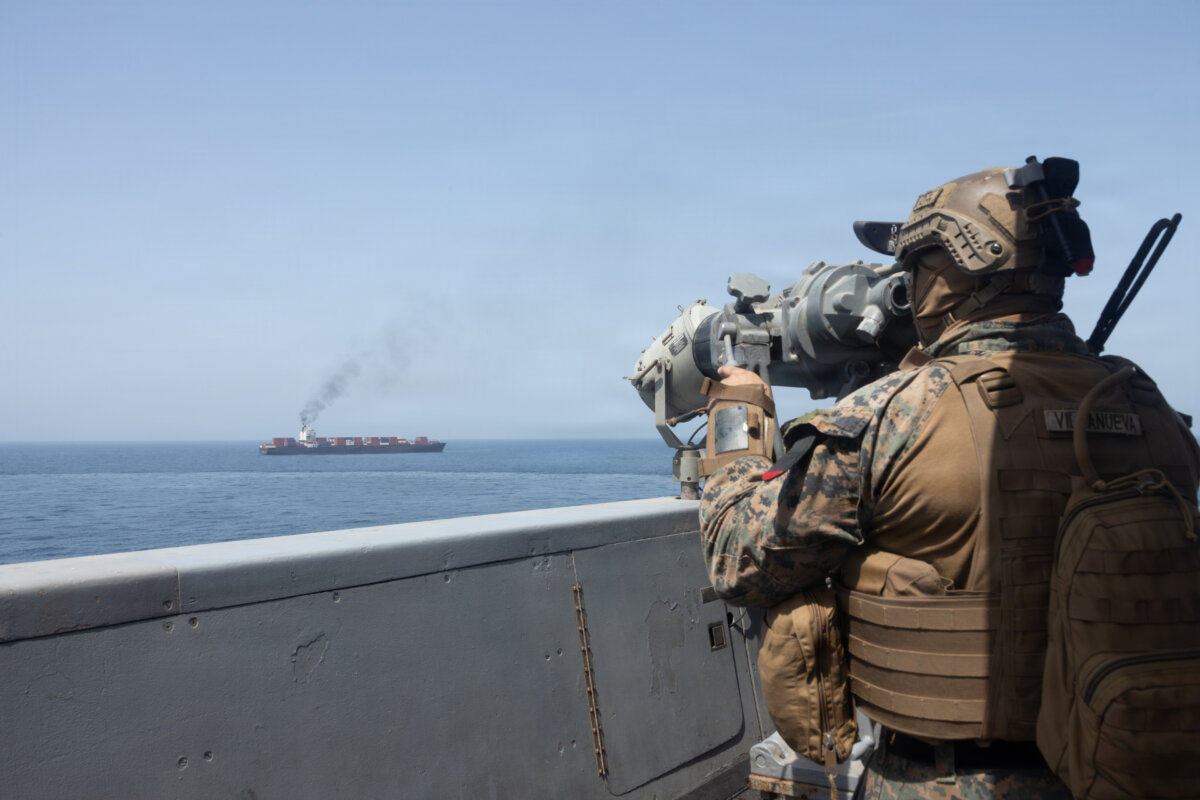
Iran is in an ideologically and normatively indefensible position. It’s a dictatorship that launched attacks on its neighbors, shut the Strait of Hormuz for about 100 days, cut off about 27 percent of maritime trade in crude oil and petroleum, and put upward pressure on gas prices around the world, including in the United States. The average national price on June 9 was about $4.16 per gallon.
Tehran wants a king’s ransom of about $25 billion in the first phase of sanctions relief, plus the ability to develop its own nuclear weapons, for its reopening. Eventually, Tehran wants an estimated $100 billion of its frozen assets. While Tehran denies its goal of nuclear weapons development, it would not have risked, much less escalated, this war were it not the goal.
The United States is rightly holding firm during negotiations. First, Washington asks that the regime’s nuclear enrichment efforts be banned for 20 years rather than 10 as demanded by Tehran.
Second, the United States wants to be involved and verify the downblending of all 11 tons of Iran’s uranium rather than trusting Iran to downblend just the half-ton of its near-bomb-grade material.
Third, Washington wants the dismantlement of all three of Iran’s nuclear sites, including Natanz, Fordo, and Isfahan, rather than leaving one for it to rapidly redevelop. Iran must be made to understand that dictators and terrorists have no “right to enrich” as the regime believes.
Lastly, Tehran should agree to snap inspections by the United States and allied democracies, rather than by international agencies influenced by Beijing and Moscow. And, Israel’s right to defend itself should be in the demands, including against Iran-backed terrorists like Hezbollah in Lebanon.
The regime in Tehran is playing hardball with Washington at its own risk and the risk of its people. Democratization of the country is the best path forward for Iranians, and the most enduring way to end U.S. involvement in Middle East wars, given that democracies rarely initiate conflicts against each other.
The regime is making this hope for a democratic peace more difficult by speeding up the execution of dissidents, activists, and democracy advocates. In 2024, the regime executed at least 975 people, and in 2025, at least 1,639. Tehran continues to use its proxies in places like Lebanon and Iraq to attack U.S. partners in the region, including Israel and Saudi Arabia. The regime joins in by launching its own direct attacks. On June 3, Iranian missiles hit Kuwait’s international airport, killing one person.
The tough U.S. response against Iran has increased its regional support. In Saudi Arabia, a key global exporter of crude oil, approximately three-quarters of respondents in an ongoing public opinion survey now support closer U.S.-Saudi ties. With the support of a large part of its population, Saudi Arabia retaliated against Iran covertly and encouraged U.S. action in what Crown Prince Mohammed bin Salman has reportedly called a “historic opportunity” to remake the Middle East.
While retaliation is never an unmitigated good, rewarding Iran with cash and nukes for peace is an even worse option. It would incentivize and empower more of the regime’s violence and extortion in the future. After spending from $29 billion to $72 billion on the war so far, it is Tehran that should reimburse the United States for its expenses, not the other way around.
Iran’s $100 billion in frozen funds should be used to partially reimburse not only the United States, but also Israel, Saudi Arabia, Kuwait, and other countries, companies, and individuals harmed by the regime. Only after Tehran’s victims have been made whole should that money be used for any other purposes—starting with those of a humanitarian nature—within Iran itself.
The regime continues the war because it is fooling itself that time is on its side. Yes, U.S. voters are worried about inflation and the cost of the war. Yes, voters and their president do not want another “endless” foreign war. But neither are Americans going to allow a rogue regime like Iran to take advantage of this preference for peace.
The war is costing Iran far more than it is the United States, including a 77 percent Iranian inflation rate and deep losses to its military and economic infrastructure. So despite the belief of Iran’s hardliners, time is not on the regime’s side.
America and our allies cannot afford to provide profit or peace to the duo of state-sponsored terrorism and nuclear weapons development as practiced by the regime in Tehran. The last thing the world needs right now is state-sponsored and nuclear-armed terrorists, and the regime apparently wants to be the first. The United States and allied militaries, or a truly good deal negotiated by the United States, are the only things standing in its way.
Views expressed in this article are the opinions of the author and do not necessarily reflect the views of The Epoch Times.
 Friends Read Free
Copy
Facebook
Tweet
Friends Read Free
Copy
Facebook
Tweet