Commentary
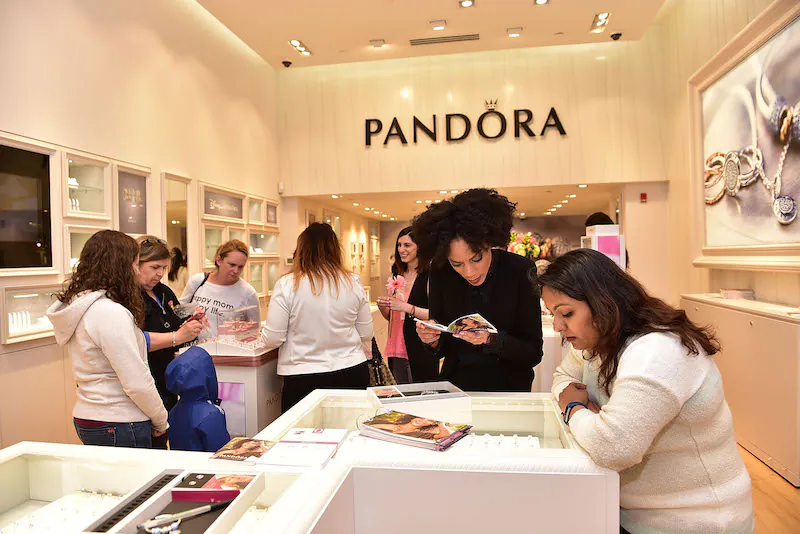
Pandora A/S, a Danish jewelry brand once a darling of the global affordable luxury market, announced in August that it would double the number of planned store closures in China to 100 from 50. This decision will reduce its store network by more than half and marks the company’s most significant retrenchment since entering the Chinese market a decade ago.
Pandora’s decline in China symbolizes more than just a corporate setback. It reflects the fading aspirations of a once-confident middle class, leading to a fundamental transformation of China’s consumption landscape.
Pandora’s story began in 1982, when Danish goldsmith Per Enevoldsen and his wife, Winnie, opened a small jewelry shop in Copenhagen.
The brand’s global success stemmed from a simple yet powerful concept: the charm bracelet. Introduced in 2000, each Pandora charm was designed to represent a personal memory, enabling customers to “tell their own story” through jewelry. This emotional connection, paired with a vertically integrated business model—Danish design, Thai manufacturing, and global retail—helped Pandora achieve efficiency and aspirational appeal. By the early 2010s, Pandora had become one of the world’s top three jewelry companies, selling more than 100 million pieces annually.
When Pandora entered the Chinese market in 2015, the timing could not have been better. The Chinese economy was still expanding rapidly, and a confident middle class was eager to express personal taste and individuality through consumption. Pandora’s charms filled the gap between luxury and fast fashion; they appeared sophisticated yet remained affordable. The brand’s marketing message, “One charm, one story,” resonated with a generation eager to express their identity.
The charms also carried emotional meaning—friendship, love, travel, and dreams—creating long-lasting memories.
Between 2016 and 2019, Pandora’s success in China was extraordinary. Sales increased by 175 percent in 2016 and reached a record high of 1.97 billion Danish kroner by 2019.
The exchange rate of one U.S. dollar to Danish kroner averaged between 6.4 and 6.7 Danish kroner per U.S. dollar from 2016 to 2025.
At its peak in 2019, the company had expanded to more than 240 stores, and China accounted for approximately 9 percent of the company’s global revenue.
The brand’s rise was fueled by the era’s defining sentiment: optimism. The Chinese middle class believed that their economic ascent was stable and permanent. Buying a charm bracelet wasn’t just consumption; it was participation in the shared dream of upward mobility and self-fulfillment.
However, as the company’s success was built more on China’s consumption boom rather than on meaningful cultural integration, its foundation soon crumbled when the economy slowed.
The turning point came after 2020, with the COVID-19 pandemic accelerating the decline. In China, sales dropped sharply from 1.9 billion Danish kroner in 2019 to 416 million Danish kroner in 2024. In the first quarter of 2025, revenue fell by another 11 percent year-over-year, even though the brand’s global sales continued to grow modestly.
Several forces explain this collapse. The most fundamental shift was in consumer psychology. In the mid-2010s, Chinese shoppers were driven by emotion and aspiration; by the mid-2020s, they had turned pragmatic and risk-averse. Economic slowdown, high youth unemployment, and declining property values shattered the illusion of endless growth.
Consumption became practical and cautious. Jewelry was no longer about stories or symbols but rather about value and security. Gold, once considered old-fashioned, made a strong comeback because it retains value and can be resold. Pandora’s silver charms could not compete with that.
Product quality also played a major role in Pandora’s fall in China. Its charms—made primarily from sterling silver alloys and enamel—tarnish over time. Chinese customers complained about the tedious cleaning process. On the secondhand market, Pandora jewelry was almost worthless. Once buyers realized that the light luxury image did not match the actual quality, the trust that supported the brand disappeared.
Meanwhile, competition intensified. At the top end, established luxury houses like Tiffany and Bulgari launched youthful collections aimed at the same millennial audience Pandora had once dominated. At the domestic level, Chinese brands such as Chow Tai Fook and Chow Sang Sang reinvented gold jewelry with sleek, modern designs that combined aesthetic appeal with investment value. Emerging designers such as HEFANG Jewelry gained traction among young consumers through savvy online marketing and pop-culture collaborations.
Pandora, in contrast, was slow to adapt to the digital age. The company still relied heavily on physical stores and traditional ads. As of August, online sales accounted for less than 20 percent of its revenue in China. This left the brand disconnected from young consumers who prefer to shop online.
Rising costs made things worse. Last month, the price of silver reached an all-time high. In the past year, Pandora had to raise prices globally multiple times to protect profits, which only made its products less appealing. Meanwhile, its decision to operate most stores directly led to higher rent and staffing costs, a burden that became harder to bear as sales fell.
In an attempt to recover, Pandora implemented new strategies, including opening stores in luxury malls, signing young celebrities as brand ambassadors, and partnering with brands such as Disney and Marvel. However, these moves failed to reverse the trend. The initiatives generated momentary buzz but not loyalty or sustained sales.
Interestingly, Pandora’s global story tells a different tale. In the second quarter of 2025, the company’s global revenue rose by 4.5 percent, driven mostly by the U.S. market, where sales increased by 8 percent. American consumers continue to embrace the charm bracelet’s playful versatility, even repurposing charms into hair accessories and belts.
The contrast reflects a deeper reality: In societies with stable economies, personal expression remains central to consumer identity, whereas in regions experiencing slower growth and uncertainty, consumers tend to focus more on caution and financial security.
Pandora’s retreat from China thus carries symbolic weight beyond jewelry. It marks the quiet end of China’s light luxury era, the decade-long boom that thrived on middle-class optimism and aspirational consumption.
Many foreign brands targeting the same consumer groups in China have been struggling or are in the process of exiting the country, including MUJI, Zara, and Carrefour.
Pandora’s empty stores across Chinese malls now stand as reminders of a lost dream. In this story of decline, we glimpse not merely a company’s missteps but the transformation of an entire society after the illusion of endless prosperity has vanished.
Views expressed in this article are the opinions of the author and do not necessarily reflect the views of The Epoch Times.
 Friends Read Free
Copy
Facebook
Tweet
Friends Read Free
Copy
Facebook
Tweet