
Commentary
This fall, five Canadian provinces (plus the city of Yellowknife) will hold municipal elections. In three of those provinces—B.C., Manitoba, and Ontario—school board elections will coincide with elections for mayors and councillors.
Typically, municipal election turnout is lower than for either provincial or federal elections. School board elections net even lower turnouts—sometimes as low as a meagre 1 percent to 2 percent of eligible voters—despite the fact that trustees play a significant role in our public education system.
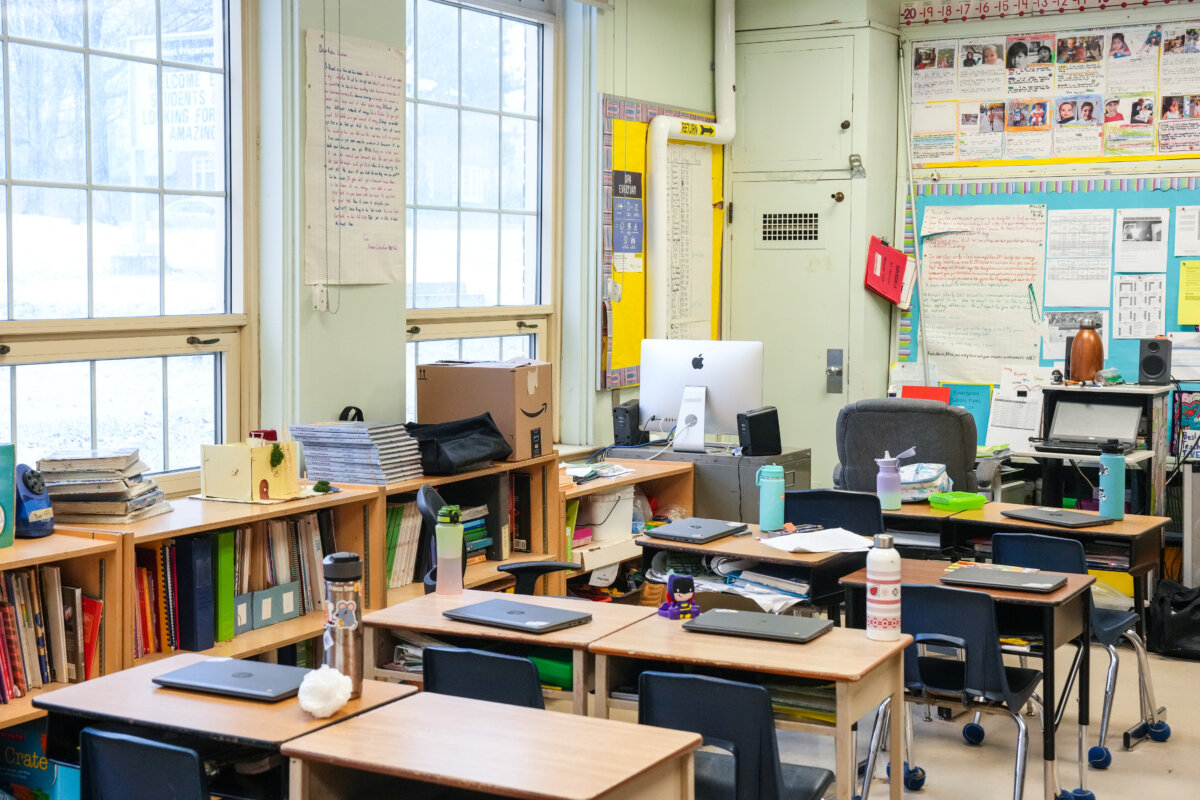
School board trustees are not simply token representatives of the public; they exercise real authority within our education systems. Aside from the provincial ministers of education, trustees are the only democratically accountable representatives with a say in how well our children are educated. They set school polices, establish school district budgets and manage public funding in the hundreds of millions of dollars, hire superintendents, and hold schools accountable for their performance.
Research suggests that boards that set high expectations and develop specific policies to improve student learning have an “observable and positive impact on student achievement.” Ultimately, that’s what their work is supposed to be about: maintaining high education standards. The Manitoba School Board Association states that “student achievement is a school board’s primary reason for existence.” The Ontario Public School Board Association claims trustees ensure the system consistently produces “excellent results in student achievement and well-being.”
As Canada continues to weather the stormy seas of international politics and economic realignment, maintaining a highly educated and skilled population will be crucial for our ongoing success, let alone our continued sovereignty.
Canadian historian Hilda Neatby once said: “Education supplies all other industries, including those concerned with the government and the defense of the country. If the educational industry falters it necessarily follows the whole structure of the nation is threatened.” That means far more than simply producing students who have “job ready” skills. We also need citizens with the capacity for independent thought, who have knowledge of history and a clear sense of how our liberal democratic system is supposed to function.
However, if the primary job of school board trustees is to set high expectations and improve student achievement, international tests are telling us that there is a lot of work to be done.
During the previous two decades, Canada’s scores on the Programme for International Student Assessment (PISA) have been steadily declining in science, mathematics, and reading. PISA, which is administered every four years by the Organization of Economic Cooperation and Development, assesses the knowledge and skills of 15-year-olds and “gives insights into how well education systems are preparing students for real life challenges and future success.”
Canada’s science scores have dropped 24 points since 2006. In mathematics, our scores declined sharply over the last 23 years from 532 to 485. Reading has slipped from 534 to 490. All three subjects are the lowest ever recorded by PISA since Canada started doing these assessments in 2000. (Note: 500 points is the benchmark—meaning, that was middle-of-the-road 26 years ago.) For context, the OECD maintains that a drop of 30 to 40 points corresponds to roughly an entire year of formal schooling lost.
In other words, Canadian students are more than a year behind where they were a couple decades ago.
We can no longer afford complacency. It’s urgent that we not only arrest this slide but reverse it. Our national independence and future prosperity depend on it.
School board elections are opportunities for Canadians to hold their trustees accountable and to demand better results. These elections are consequential, and they matter more than most people realize.
And if there is a silver lining around the fact that voter turnout is dismally low for school board elections, it might be this: when you cast your ballot, your vote will carry a much greater weight in determining who is ultimately elected.
David W. Livingstone, PhD, is a senior fellow with the Aristotle Foundation for Public Policy.
Views expressed in this article are the opinions of the author and do not necessarily reflect the views of The Epoch Times.
 Friends Read Free
Copy
Facebook
Tweet
Friends Read Free
Copy
Facebook
Tweet