
At least four people were reported dead from Hurricane Isaias on Saturday, with nearly 500,000 residents in Florida, Alabama, and Georgia still without power by Saturday evening.
According to updates from local authorities, two of the deaths were in Florida and two in Alabama.
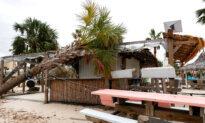
After Isaias made landfall as a Category 2 storm Oct. 9 near Destin, Florida, Gov. Ron DeSantis confirmed Saturday morning that 448,000 in the state were without power as of 7 a.m.
In some counties, such as Santa Rosa County, Holmes County, Washington County, and Walton County, more than 80 percent of residents were without power, he said.
In addition, over 320,000 people in Alabama and over 125,000 people in Georgia were without power on Saturday morning, according to poweroutage.us.
By 9 p.m. ET Saturday, 487,000 residents across Florida, Alabama, Georgia, and Mississippi were still without power.
After making landfall, Hurricane Isaias moved north through the Florida Panhandle and affected states including Alabama and Georgia.
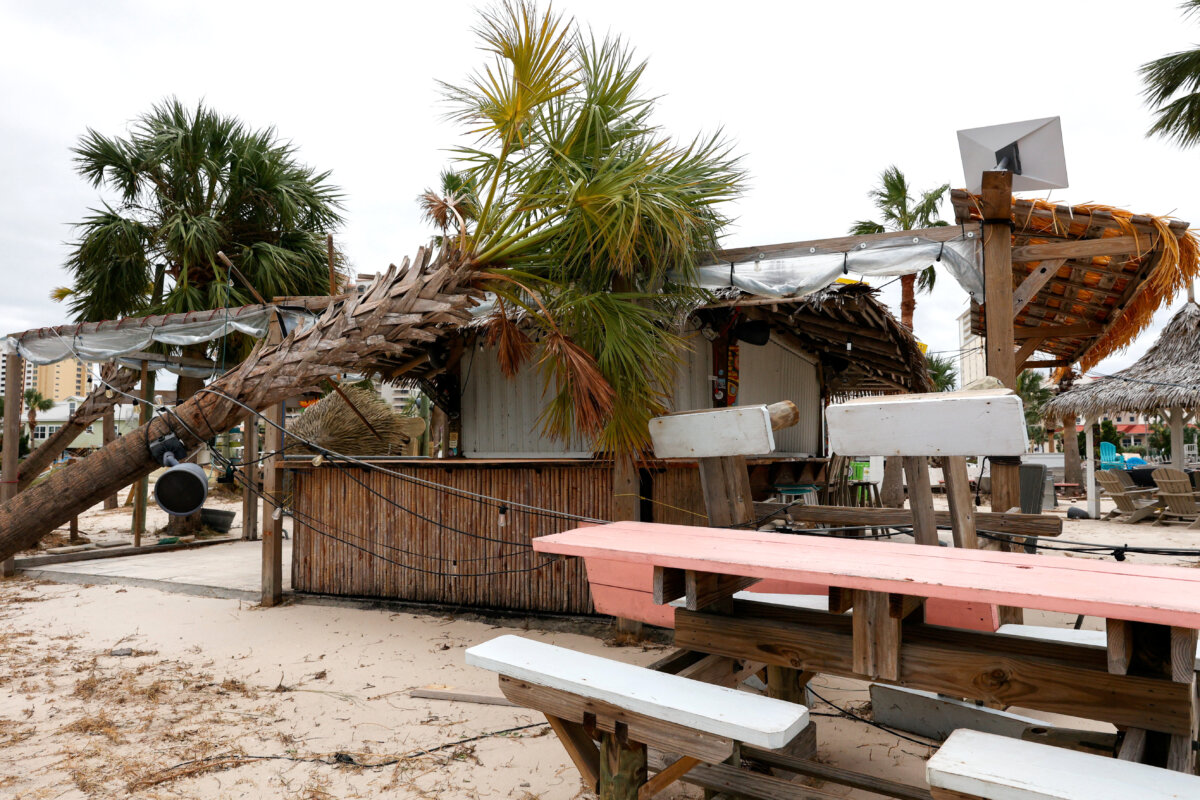
The hurricane produced wind gusts of up to 116 miles per hour near Santa Rosa Sound and over 100 miles per hour near Pensacola and Panama City Beach, according to DeSantis. The governor said water levels were roughly 5.5 feet higher than normal as a result of the storm.
Pensacola Mayor DC Reeves said the city’s airport was damaged in the storm and that the runway was open only to non-commercial aircraft. He encouraged residents to stay off the roads due to downed power lines and road blockages.
As of 5 a.m. on Saturday, Hurricane Isaias had weakened to a post-tropical cyclone with sustained winds of approximately 35 miles per hour.
“Although the center of the storm has moved out of Florida, the threat of flooding remains,” DeSantis said, adding that rain totals of four to eight inches were expected in Florida’s Panhandle and Big Bend areas over the weekend.
DeSantis initially reported that the state had not confirmed any fatalities as of Saturday morning. However, he noted that there was a news report of a fatality caused by a downed tree in Florida’s Escambia County.
In a separate video message on Oct. 10, Escambia County Sheriff Chip Simmons confirmed the reported fatality.
“We have had one fatality. A tree fell on a house, and unfortunately took the life of a lady. And our thoughts and prayers are obviously with that family,” he said.
Simmons later reported another storm-related fatality in Escambia County caused by a home generator accident.
The sheriff said a man was killed by the fumes of a generator because it was not properly ventilated. In addition to the fatality, four other individuals were hospitalized due to the fumes.
Simmons warned people not to operate generators indoors and to ensure that generators are properly ventilated.
Alabama Gov. Kay Ivey released a statement on Saturday afternoon confirming that two Alabama residents had been killed as a result of the hurricane. The governor announced that crews were working to restore power and clear debris throughout the state and that all major roadways had been reopened.
“This storm brought in heavy winds throughout Alabama, taking down trees, knocking out power and doing some damage,” she wrote in a statement on X.
“Fellow Alabamians, please continue being smart today as cleanup continues. Safety for y’all is the main thing today.”
In addition to the fatalities, a sheriff’s deputy in Alabama’s Dale County sustained minor injuries overnight after a tree fell and crushed his vehicle while law enforcement officials were assisting a driver during the storm.
After a video of the incident was shared on social media, the Dale County Sheriff’s Office said the deputy was able to return home to his family after being treated for minor injuries.
DeSantis told reporters that the state’s search-and-rescue teams were ready to carry out operations in affected communities in Florida and would prioritize areas experiencing “significant flooding and storm damage.” He added that the state had completed 150 emergency missions.
“We have not yet received any request for search and rescue deployment, and I take that as an optimistic sign, but our resources are prepared in the event that the need arises, particularly with respect to any flooding that may occur on the back end of this storm,” he said.
The governor said that Interstate 10, U.S. Route 98, and all of Florida’s state-owned bridges had been reopened by Saturday morning.
Jared Perdue, executive director of the Florida Division of Emergency Management, and Attorney General James Uthmeier also addressed concerns in the aftermath of the hurricane early Saturday.
Perdue said the state’s priorities included clearing roadways, removing debris, and reopening transportation routes that would allow utility crews, emergency personnel, and supplies to reach the areas impacted by the storm.
“Our goal is to help communities stabilize, restore essential services, and begin returning to normal operations as quickly as possible,” he told reporters.
Perdue also advised people to avoid unnecessary travel, follow the instructions of emergency management officials, and stay away from standing water near power lines and any damaged electrical equipment.
Uthmeier warned on Saturday that scammers could attempt to take advantage of the situation by gouging prices on recovery supplies, fuel, and groceries. He encouraged residents to report potential scammers at myfloridalegal.com.
“We have been getting some reports of text messages going to residents throughout the Panhandle purporting to offer tree service in coordination with your insurance company,” he said. “These appear to be scams. Do not respond.”
In a Saturday advisory on social media, the National Hurricane Center said heavy rainfall associated with the remnants of Hurricane Isaias is expected to spread northward into the Tennessee Valley, the Southern Appalachians, and the Southeast.
The National Hurricane Center warned that flash flooding, urban flooding, and landslides were possible in the affected areas.
Hurricane Isaias marked the Atlantic’s first hurricane of the season, which began on June 1.
The hurricane was initially projected to make landfall near Alabama’s Mobile Bay area before ultimately landing near Destin.
T.J. Muscaro contributed to this report.
 Friends Read Free
Copy
Facebook
Tweet
Friends Read Free
Copy
Facebook
Tweet