
In Cleveland, new students at several schools across the city were pleasantly surprised by their cafeteria last month.
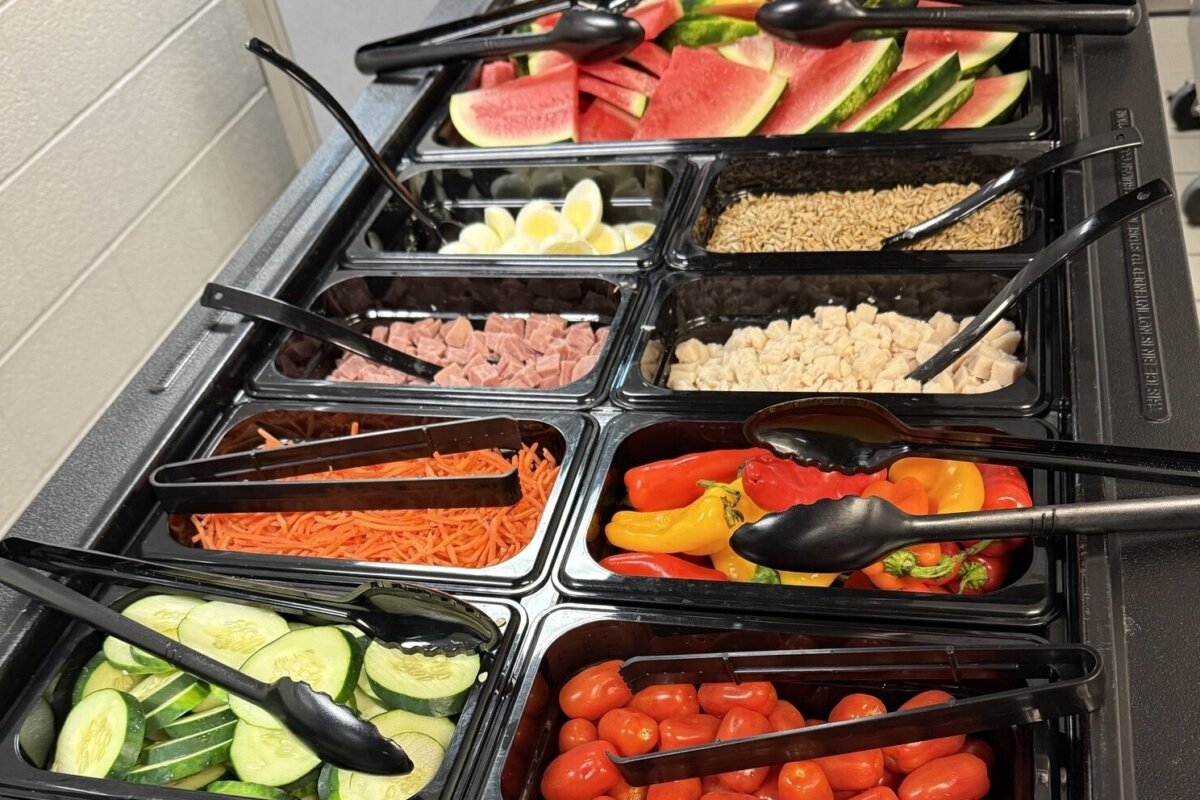
A shiny new buffet counter with locally sourced produce and a variety of cold meats and eggs replaced packaged salads with wilted lettuce, bland-looking vegetables, and minimal protein. Cilantro-lime rice made with just five ingredients has also been a popular choice lately, said Robert Gorman, executive director of nutrition services for the Cleveland Metropolitan School District.
“We’re getting back to the basics,” he told The Epoch Times. “If there’s a will, there’s a way. If you want to serve locally, you can.”
Public schools in Santa Fe, New Mexico, also have salad bars with local fruits and vegetables, plus beef from a nearby ranch included in the hamburgers, Frito pies, and Bolognese pasta sauce, said Diana Tarasiewicz, the district’s student nutrition director.
Both districts received support from the Colorado-based Chef Ann Foundation, which works with school leaders to replace ultra-processed foods with whole ingredients.
The Make America Healthy Again federal Harvest to Hallways initiative, announced by the U.S. Department of Agriculture and Health and Human Services just ahead of the current semester, will allow these districts and thousands of others to improve school nutrition and connect with local farmers for years to come.
The bipartisan Scratch Cooked Meals for Students Act, meanwhile, might see action in the upcoming congressional session. The bill was referred to a Senate committee in late May. It would establish a pilot program for replacing heat-and-serve operations in school cafeterias with scratch-cooking methods.
At the state level, legislation related to restricting unhealthy ingredients or incentivizing partnerships with local farmers was proposed or passed in Alaska, California, Maryland, Massachusetts, New York, and Pennsylvania, according to the National Conference of State Legislatures.
Ultra-processed foods are often defined as those that are chemically manipulated with ingredients such as corn, soy, and wheat extracts to extend shelf life. Artificial ingredients are used to replace the vitamins and minerals that are lost as a result of processing and packaging.
Ultra-processed foods are less filling yet contain more calories than minimally processed foods, leading consumers to eat faster and consume more.
Collectively, these laws and incentives could bring a sea change for school nutrition, said Lori Nelson, the Chef Ann Foundation’s executive director of school food operations.
“A key fact: there are six times more school cafeterias than there are McDonald’s,” she told The Epoch Times.
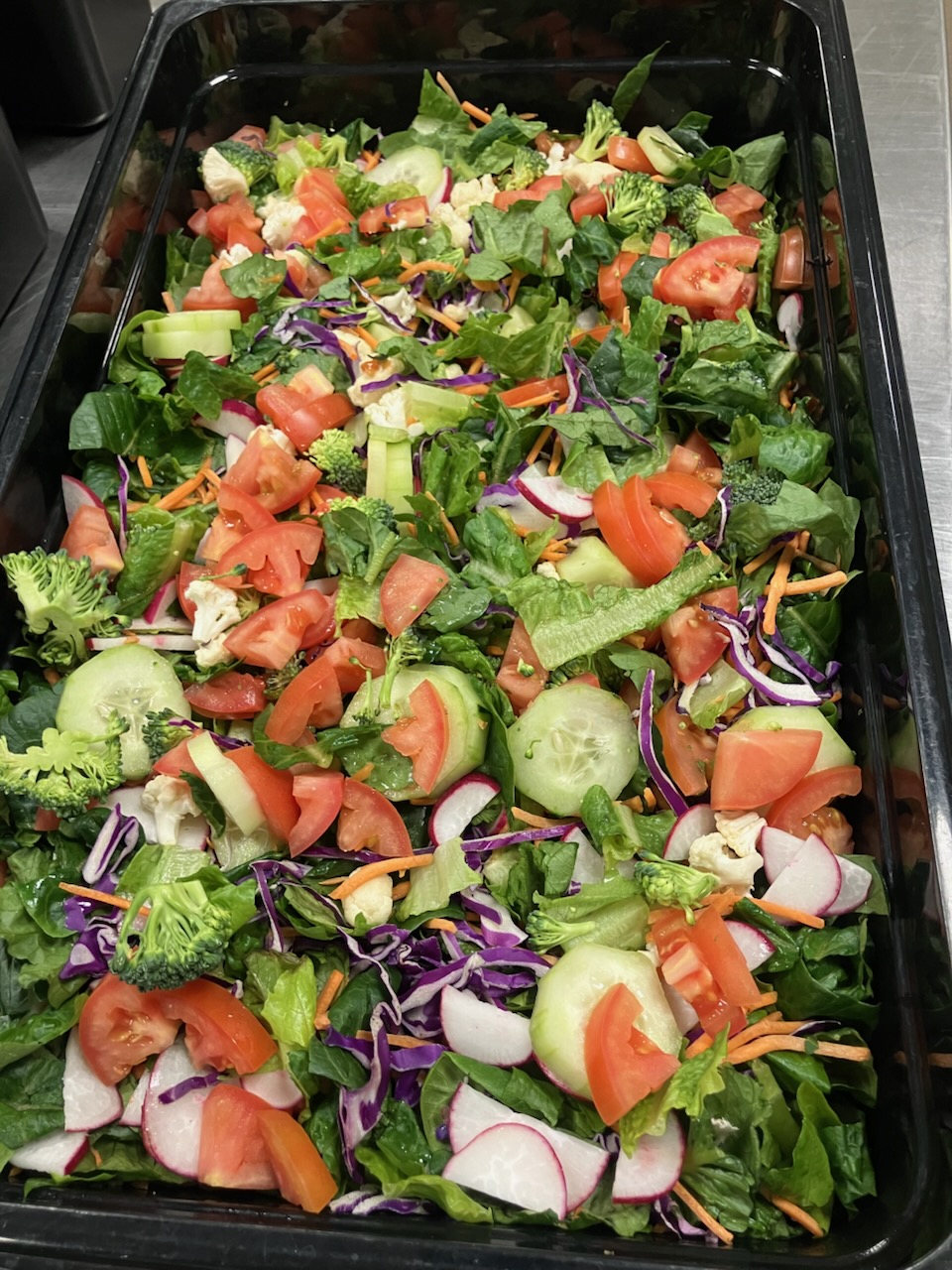 A mixed salad at Capital High School in Santa Fe, N.M. (Courtesy of Diana Tarasiewicz, Santa Fe Public Schools)
Salad bars, for example, prompt more concerns over cleanliness and require staff to watch the students.
“You need point-of-sale staff to make sure the kids don’t just take a dozen eggs,” Gorman said.
Even though Ohio, like other northern states, has a short growing season, there are creative ways to buy fresh foods from local producers. Gorman contracts with hydroponic lettuce growers and nearby bakers who make bagels and pizza dough.
New Mexico, by contrast, starts the school year just as local farmers are harvesting apricots, peaches, and beans, Tarasiewicz said.
“The month of August is the month of abundance for us,” she said.
Both districts have reported less food waste since scratch cooking operations were ramped up. Moreover, Santa Fe has a district-wide composting system where discarded food is used for soil improvements. This also provides a science lesson for younger students, Tarasiewicz said.
Gorman said he is pleased with the reduced amount of packaging. The paper wraps previously used for grab-and-go hot sandwiches and the plastic salad containers cost the district several thousand dollars over the course of a school year.
It will take more than just guidance, money, and recipes to improve school nutrition practices at a mass scale, Nelson said.
Districts should provide adequate time and arrangements for children to eat their lunch, she said. Lunch period requirements are virtually nonexistent, and ideally kids should have recess before they eat.
“They get the sillies out and then go to lunch hungry, eat with a purpose, and get back to schoolwork,” Nelson said. “If you can give 30 minutes for lunch, you should.”
 Friends Read Free
Copy
Facebook
Tweet
Friends Read Free
Copy
Facebook
Tweet