
Commentary
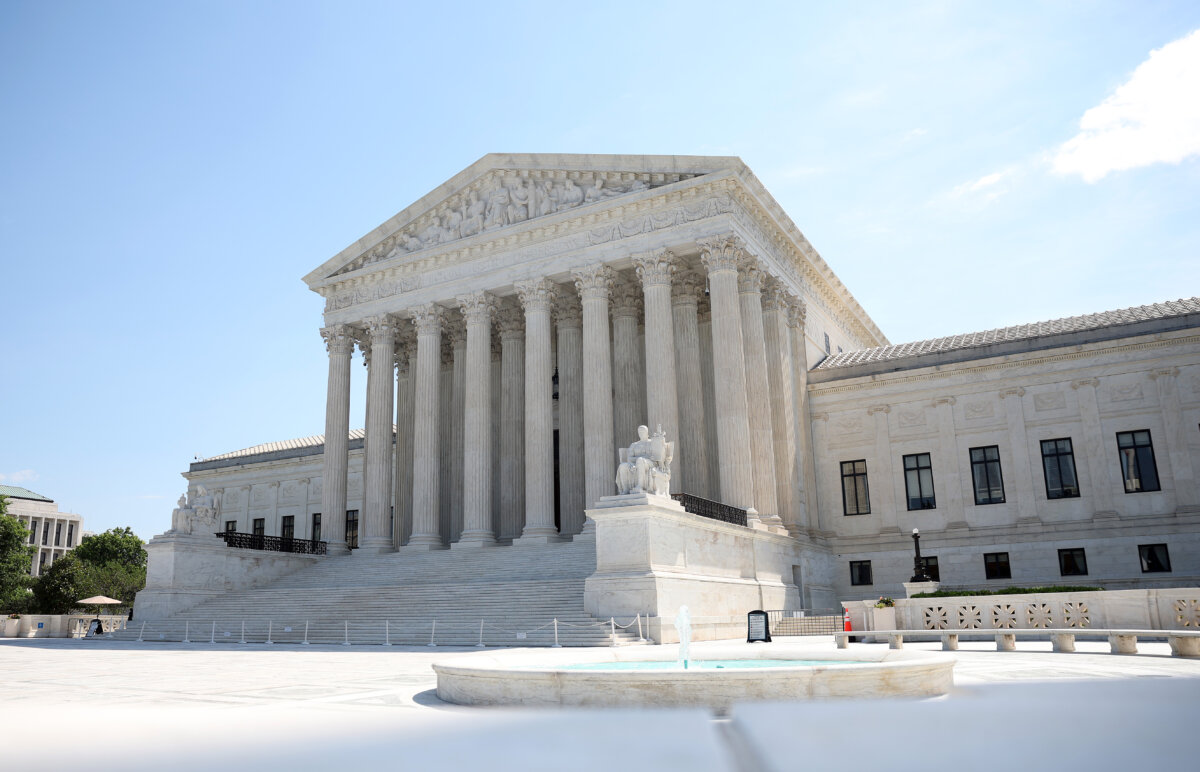
We’ve been waiting for this. The Supreme Court finally decided to take on the critical issue. Can the duly elected president of the United States fire a long-serving, high-level member of the protected civil service? Yes, he can, answered the court, thus overturning 90 years of precedent.
If you are hearing about this for the first time, you might think: Of course he can fire an agency employee if that agency sits under the executive branch. That’s what voters elected him to do. That’s what the Constitution says.
The Constitution has three branches of government: judicial, legislative, and executive. Each is responsible for its domain. The president is the head of the executive branch, so of course he is the boss, same as the CEO of any company.
There is nothing mysterious about this. The real mystery is why we ever believed otherwise.
The trouble began in 1883 with the Pendleton Act, which created the civil service, designed to be insulated from politics. No one at the time imagined what it would become. But gradually through the decades, the civil service morphed into the greatest barrier to democratic government ever, more imperious and impervious to public wishes than any old-world monarchy. It remains that today, not only in the United States, but also in most industrialized countries.
Bureaucracy rules the world.
Sometimes presidents have wanted to challenge the power of this new force in politics.
The case Humphrey’s Executor arose during the New Deal era under President Franklin D. Roosevelt. In 1933, Roosevelt sought to remove William E. Humphrey, a conservative Republican Federal Trade Commission (FTC) commissioner appointed by President Herbert Hoover, because of policy disagreements. Humphrey opposed aggressive antitrust enforcement and New Deal expansions. The Federal Trade Commission Act of 1914 protected commissioners with fixed terms and for-cause removal only.
Humphrey refused to resign; Roosevelt fired him anyway. Humphrey died shortly after, and his estate sued for back pay. The Supreme Court unanimously (9–0) agreed that the estate should be paid because he was wrongly fired. In doing so, the court believed that it was restraining the presidency.
Justice George Sutherland’s opinion describes the FTC as exercising “quasi-legislative” (rulemaking, investigating, reporting to Congress) and “quasi-judicial” (adjudicating unfair trade practices) functions, not core executive enforcement. Unlike a postmaster in Myers v. United States (1926), in which the court had affirmed broad presidential removal power for purely executive officers, FTC commissioners were “experts” meant to act impartially, free from “political domination.” Congress intended the agency to be nonpartisan, gaining experience through stable tenure. Allowing at-will removal would undermine this independence.
This decision entrenched the “independent agency” model that dominated in the 20th century: multimember commissions such as the FTC, Securities and Exchange Commission, National Labor Relations Board, Federal Communications Commission, and others with staggered terms, partisan balance requirements, and for-cause protections. This was the top layer of what became a fourth branch of government: agencies wielding vast regulatory power but insulated from direct electoral accountability via the president. Proponents saw it as essential for expert, stable administration immune to partisan whims; detractors viewed it as undermining Article 2’s vesting of executive power in the president and the unitary executive theory.
Subsequent cases chipped away at Humphrey’s logic without fully overruling it. In Seila Law LLC v. Consumer Financial Protection Bureau (2020) and Collins v. Yellen (2021), the court struck down for-cause protections for single-director agencies exercising substantial executive power, emphasizing the president’s need for control to fulfill the take care clause. The majority noted that Humphrey’s was limited to multimember “expert” bodies with mixed functions, but modern agencies such as the Consumer Financial Protection Bureau or FTC wield executive authority, including enforcement, rulemaking with binding effect, and penalties.
Humphrey’s relied on a false “quasi” distinction. All agency action ultimately executes the law under Article 2. Historical practice at the founding showed broad presidential removal authority for executive officers or anyone in his branch. The decision enabled unaccountable bureaucracy, in which unelected officials pursue agendas diverging from the elected president’s. It also created practical issues: Divided government leads to agencies at war with the White House, slow policy shifts, and diffusion of responsibility.
In his second term, President Donald Trump fired FTC Commissioner Rebecca Kelly Slaughter (and others at agencies such as the National Labor Relations Board and Merit Systems Protection Board) over policy misalignment. Lower courts initially blocked some under Humphrey’s. The Supreme Court took up Trump v. Slaughter. On June 29, 2026, the court overturned the old precedent in a 6–3 decision, with Chief Justice John Roberts writing for the majority.
The ruling holds that the FTC’s for-cause removal provision violates separation of powers. The president, as head of the executive branch, must control those executing the laws. Humphrey’s mischaracterized agency functions and created an impossible limit on Article 2 authority. The decision effectively subjects leaders of independent agencies to at-will removal (subject to Senate confirmation for replacements), aligning them more closely with the president’s agenda.
This resolves the critical issue: The president can fire executive branch officials, restoring constitutional hierarchy. It overturns a century of precedent enabling a protected civil service class autonomous from democratic control.
The decision should be expanded to restore a people’s government. It should apply to anyone in the executive branch, all the millions of people working in 400-plus agencies. Trump can now presume that he finally has the authority to govern.
No, this does not create a dictatorship. It subjects the civil service to normal standards of the private sector: at-will employment. Voters elect the president to execute policy, not insulated bureaucrats. It could accelerate deregulation, antitrust shifts, or other priorities.
Does this create an imbalance with the power of Congress? If so, Congress can abolish these agencies or move them to legislative control, like the Library of Congress.
For 100 years, the legislature kept expanding government power and flicking its fleas over to the executive branch with the expectation that the president wouldn’t really be in charge. Well, welcome to the new world. The president is in charge just as voters expect him to be.
This new decision—Trump was brave and correct to push this through the courts and finally test a huge issue of law—rejects a rigid “fourth branch” and invites a complete rethinking of debates from the Progressive Era. It fits a pattern of recent rulings curbing agency independence and Chevron deference.
The mystery is why we ever accepted limits on presidential firing. The Progressive consensus favored technocracy; today’s polarization and regulatory reach revived originalist scrutiny. The decision marks a significant rebalancing toward elected control over the administrative apparatus.
The real enemy of liberty and democracy has been hiding in plain sight for longer than a century. It’s the administrative state. A key pillar has just been knocked out from underneath its foundations.
To be sure, on the same day, the court carved out a special exemption from this rule for the Federal Reserve. The majority, citing nothing in the Constitution, said central banks have always been independent of politics and must remain so. That opinion makes no legal sense in light of the Slaughter opinion. In this case, the dissent was correct: The Fed is part of the administrative state and should be subject to presidential authority.
Views expressed in this article are the opinions of the author and do not necessarily reflect the views of The Epoch Times.
 Friends Read Free
Copy
Facebook
Tweet
Friends Read Free
Copy
Facebook
Tweet