
Commentary
Every November, families across America come together to share a meal. It’s supposed to be a moment of gratitude, a pause from the noise of daily life. Yet for many, that same table now feels tense before anyone sits down. The food hasn’t changed, but the world around us has.
The American Psychological Association’s 2024 Stress in America survey showed that nearly a third of adults reported that the political climate has caused strain between them and their family members and said they limit their time with family because they don’t share the same values.
In a time when everything feels loud, uncertain, and divided, many people carry stress into their homes without even realizing it. We brace for conflict the way we once braced for bad weather. We hold our breath, tighten our shoulders, and hope we can make it through one more conversation without things falling apart.
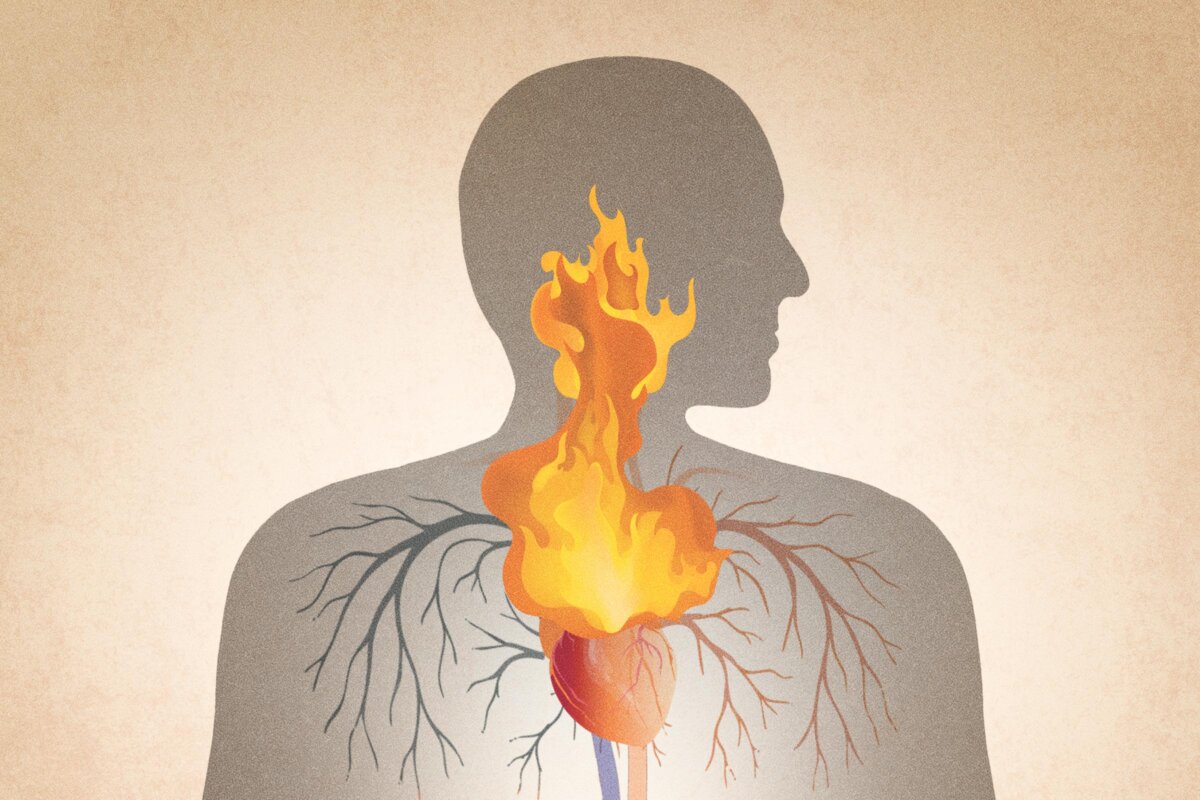
It might seem like a problem of opinions—politics, media, or the latest controversy—but what we’re really experiencing goes deeper than that. It’s physical. Our bodies themselves are on high alert.
Scientists who study how the brain and body respond to social stress—called social neuroscientists—have found that our nervous systems can get stuck in a state they call social vigilance. It’s the biological version of always looking over your shoulder.
When we feel unsafe, unheard, or dismissed, the body prepares to defend itself. The heart rate rises, stress hormones surge, and the brain shifts from calm reflection to protection mode. It doesn’t matter whether we’re facing a physical threat or an emotional one—the same systems light up.
That’s why someone can feel physically drained after an argument or even after reading upsetting news. The body doesn’t separate mental and physical stress. To the nervous system, a threat is a threat.
Unfortunately, our society still treats mental and physical health as two separate things, as if the head and the body run on different wiring. We have one kind of doctor for the mind, another for the heart, and almost no understanding that they operate through the same chemistry. We take pills for anxiety but ignore how little we sleep. We treat blood pressure but not the financial stress or social tension that raise it. We call depression a chemical imbalance but rarely ask what’s causing those chemicals to shift in the first place.
Modern neuroscience tells a different story. Studies led by Naomi Eisenberger, George Slavich, and Steve Cole at the University of California–Los Angeles show that emotional pain, such as rejection, humiliation, and exclusion, activates the same brain and hormone systems as physical injury. The same cortisol that fuels anger inflames the arteries. The same inflammation that drives heart disease worsens anxiety and depression.
In our bodies, it’s not two systems. It’s one. And it’s overwhelmed.
When the body feels unsafe, the mind narrows. Stress hormones suppress the brain’s higher functions, such as reason, empathy, and long-term thinking. They strengthen the parts wired for fear and reaction. The more threatened we feel, the less we can listen, the less we can trust, and the more certain we become that we’re right and everyone else is wrong.
That’s how good people end up shouting across dinner tables, online threads, and even neighborhoods. It’s not because we’ve lost our values; it’s because we’ve lost our calm.
For most of human history, stress came in waves. A storm would pass, the danger would fade, and the body would return to peace. But today, peace rarely comes. Every screen and speaker in our lives runs on urgency: breaking news, endless debates, alerts, and notifications. The body never gets the signal that it’s safe again.
The irony is that gratitude, the emotion Thanksgiving was built upon, can’t exist in that state. You can’t feel thankful and threatened at the same time because they run on opposing biological circuits. As neuroscientist Stephen Porges explains in his Polyvagal Theory, the body’s calm and connection system, powered by the vagus nerve, shuts down when the brain perceives danger. Emotions such as gratitude and trust activate this calming circuit, slowing the heart and lowering cortisol, while threat triggers its opposite: the fight-or-flight response that floods the body with adrenaline. One system must quiet for the other to speak.
That’s why the simple act of breathing slowly, sharing a meal without distraction, or saying grace can calm the body as powerfully as any medication. Gratitude is not sentimental. It’s physiological.
But the problem is that too many of us have forgotten how to listen to the body at all. We’ve handed that job to experts, algorithms, and corporate solutions that profit from our disconnection. We’ve been told we’re not qualified to understand ourselves unless we have a degree or a diagnosis. That message has kept us dependent, distracted, and divided.
You shouldn’t have to be a scientist to know when your body is overwhelmed. You can feel your pulse quicken. You can notice your breath shorten. You can tell when you’re reacting instead of responding. These are the body’s natural signals. And learning to hear them is the first step toward freedom.
The good news is that calm isn’t something you have to buy or earn. It’s built into your biology. When you slow your breathing, lengthen your exhale, or take a quiet moment before speaking, the vagus nerve signals safety to the brain. The heart rate drops, cortisol decreases, and the prefrontal cortex—the seat of reason and compassion—comes back online.
If we want to rebuild trust in families, in communities, and in our nation, we have to start not with politics, but with physiology. We have to calm our bodies before we can hear one another again. That begins with simple acts: silence before speech, breath before reaction, presence before persuasion.
So this Thanksgiving, before the conversation turns to the news or the next worry, take a moment to notice your body. Your breath. Your heartbeat. The weight of your chair. The warmth of being alive. Remember that every person across from you is operating on the same built-in survival system. When we understand that, compassion returns.
Beneath the noise, the arguments, and the storms, we are made of the same chemistry, wired for connection, designed for calm, and still capable of gratitude.
Views expressed in this article are the opinions of the author and do not necessarily reflect the views of The Epoch Times.
 Friends Read Free
Copy
Facebook
Tweet
Friends Read Free
Copy
Facebook
Tweet