
Commentary
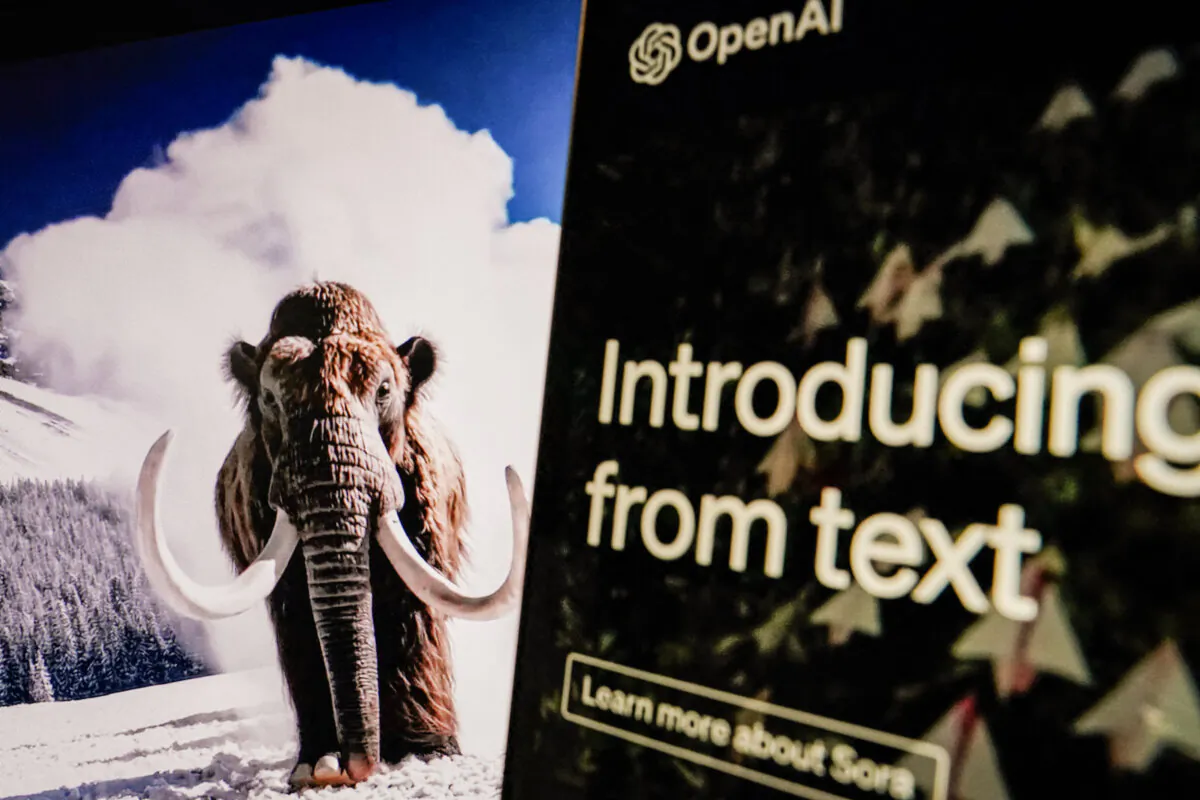
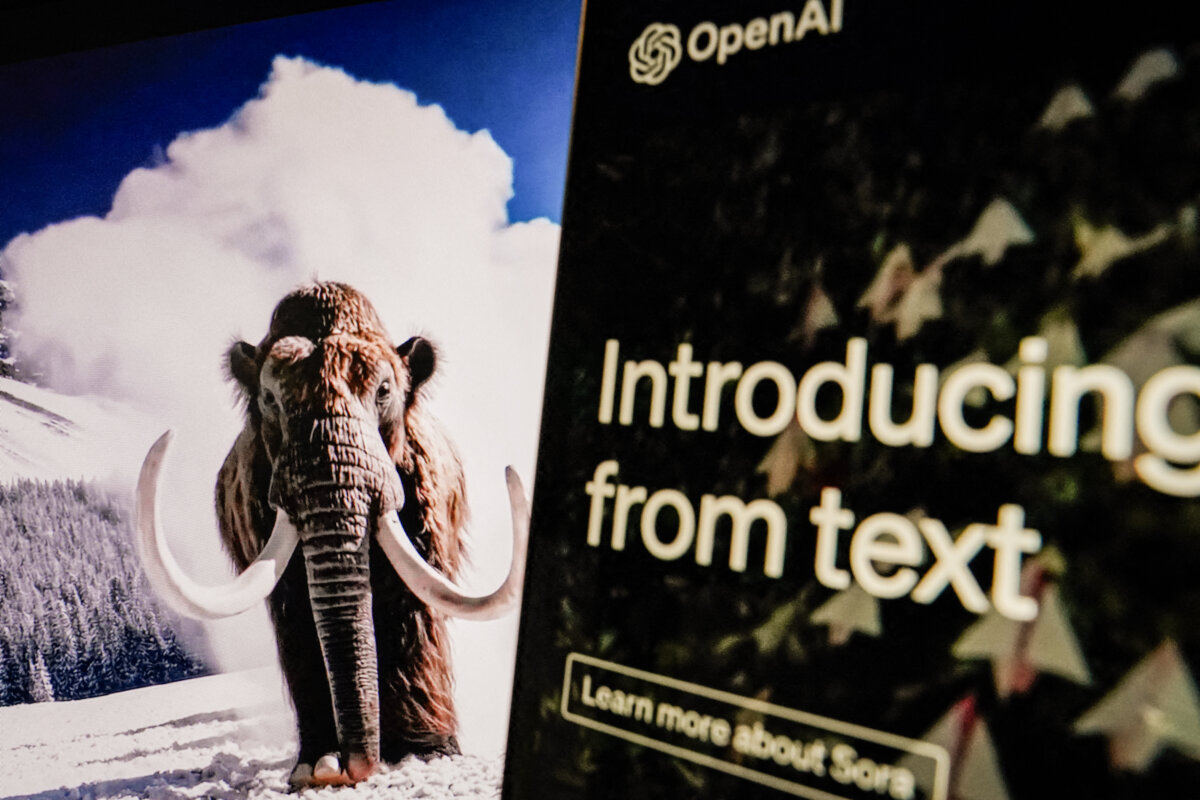
When OpenAI, the maker of popular artificial intelligence app ChatGPT, recently released its latest offering, Sora 2, it wasn’t just another software update. It was the moment machines began to outpace imagination.
In less than five days, more than 1 million people downloaded the program, making it even more popular than ChatGPT—the world’s most widely used AI app—despite that it’s available only in the United States and by invitation only.
Sora 2 can generate entire videos from a few lines of text: bustling city streets that never existed, interviews with people who never lived, and landscapes that only existed before in dreams. The results are mesmerizing and also deeply unsettling.
Soon after the app’s release, the internet was flooded with videos of celebrities, historical figures, and even deceased loved ones. Michael Jackson dancing while shoplifting at a 7-Eleven. American presidents saying words they never said at places they’d never been. Countless clips of Robin Williams giving new monologues years after his death. His daughter, Zelda Williams, posted a public plea asking people to stop sending her AI-generated versions of her father: “If you’ve got any decency, just stop doing this to him and to me, to everyone. … It’s NOT what he’d want.”
For the first time in history, culture itself is being coauthored by systems that don’t know what truth is and that can’t care.
Generative AI, or “GenAI,” refers to a new kind of AI that can create text, images, music, and video by learning from enormous datasets of existing human work. Unlike traditional programs built from fixed rules, these models are grown rather than coded. They are trained on billions of words and images, absorbing the patterns of human expression until they can convincingly imitate them.
That imitation is the source of both wonder and controversy. The data come from everywhere—online art, journalism, books, social media posts, and even private websites—often scraped without consent. That’s why multiple lawsuits have been filed by authors, artists, and media companies accusing AI companies of large-scale copyright infringement. But the deeper problem isn’t ownership—it’s origin.
Each generation of these models contains less human data and more machine-generated data recycled from previous iterations. With every update, something alien is added into the mix, and the boundary between what’s human and what’s synthetic grows blurrier, and even the engineers can’t quantify the ratio. The result is a synthetic culture: a vast stream of content that looks and sounds human but isn’t.
AI developers have often described these systems as a kind of “alien technology,” not from another planet, but from a form of intelligence so different from ours that we can’t predict how it will evolve. The systems may imitate some human functions but do not follow any human or natural cycles as we would describe them.
Synthetic culture imitates the surface of creativity without sharing its soul. It reproduces emotion without feeling it, narrative without memory, art without awareness. What began as assistance has become authorship.
We can now watch movies written, acted, and scored by no one; listen to songs whose performers never breathed; and read novels without an author. In all of human history, we’ve never consumed stories that weren’t born of human experience—until now.
And like with every cultural shift, a new language is invented. We now have words such as “AI slop,” a term for mass-produced, low-quality synthetic content. Critics compare it to ultra-processed food: cheap, abundant, and addictive, but empty of real nourishment. One reviewer, after seeing the output from Sora 2, lamented: “They promised us that AI that would cure cancer. Instead, we got Sora 2.”
Just as processed food fills the body without feeding it, synthetic culture can fill the mind without truth. Zelda Williams said of the videos being made with her father’s likeness: “You’re not making art, you’re making disgusting, over-processed hotdogs out of the lives of human beings, out of the history of art and music, and then shoving them down someone else’s throat hoping they’ll give you a little thumbs up and like it. Gross.”
Two decades ago, social media promised connection and instead delivered isolation. We learned how endless feeds shrink attention spans, amplify anxiety, and replace dialogue with dopamine. That digital revolution changed how we relate to fellow humans. This next revolution—the rise of synthetic culture—may change what we are.
Media theorist Neil Postman warned decades ago that technology doesn’t just serve culture; it becomes culture. He wrote that every new medium redefines what truth means and how it’s recognized. Television, he said, turned all serious discourse into entertainment. The internet accelerated that trend. And now, with AI, the medium itself has learned to invent the message.
Social media taught us to perform rather than connect; generative systems now tempt us to generate rather than create. Both replace reflection with reaction and truth with trending consensus.
Real creativity is truth translated through imagination. It requires time, mastery, and inner stillness. It refines not only the work, but also the soul. Synthetic creativity rearranges fragments of past expression to simulate originality. The result can astonish us, but it cannot transform the one who made it, because no one made it.
Genuine art still moves us differently. We can sense the presence of conscience behind the craft, the pulse of lived experience, the moral tension between beauty and truth. When that presence disappears, culture becomes consumption. Easier tools don’t mean deeper creativity.
The strangest part of this new world is that no one seems fully in charge. People assume it’s the users guiding it with prompts, the engineers programming it, the regulators regulating it, or the corporations funding it. But ask any of them where this is truly headed, and the answer is the same: No one really knows. The algorithms are too complex to trace, their training data too vast to audit, their feedback loops too fast to steer.
What began as a human invention has become an autonomous cultural organism, fed by human input but no longer guided by human intention. It’s not a conspiracy, it’s cultural drift. And when no one steers culture, we risk automating creativity and devaluing truth. We create motion without meaning.
Truth has always been a moral pursuit, not a technical one. When we stop seeking it, our tools start shaping us in their image. That’s the cultural crisis bubbling beneath the noise of progress. Cultural crises are not new, but this one has a unique target: consciousness. If we become addicted to input, we become allergic to reflection—the seed of human creativity and wisdom. The worst outcome of the hybrid age isn’t deception; it’s indifference. We are dulled by endless distraction, and apathy leads to the surrender of agency.
The first step out of drift is awareness—seeing that no one else is driving. We still can. We can’t turn back the clock, nor should we. The synthetic is now woven into the cultural bloodstream. But we can decide whether it becomes a mirror for awakening or for amnesia. We must teach not only how AI works, but also how it works on us. AI literacy should include ethics, psychology, and philosophy, not just productivity hacks. Knowing how to use AI is not the same as understanding what it’s doing to your perception.
Reflection is the antidote to recursion. If the synthetic age is about infinite input, our response must be deliberate stillness: art, prayer, conversation, contemplation.
The next decade will decide whether this hybrid culture becomes a renaissance or a regression. That choice belongs to humans who remember that culture is a moral ecosystem, not a marketplace. Reclaiming the driver’s seat doesn’t mean rejecting technology. It means restoring truth as the destination and creativity as the vehicle.
We are living through one of history’s great inflection points. The machines we’ve made are learning to imitate us faster than we’re learning to understand them. The speed is astonishing, but speed is not destiny. We still have the wheel in our hands. The solution isn’t to outpace the machine—it’s to outgrow the illusion that it’s driving.
Views expressed in this article are the opinions of the author and do not necessarily reflect the views of The Epoch Times.
 Friends Read Free
Copy
Facebook
Tweet
Friends Read Free
Copy
Facebook
Tweet