Commentary
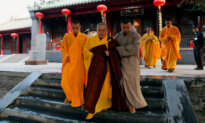
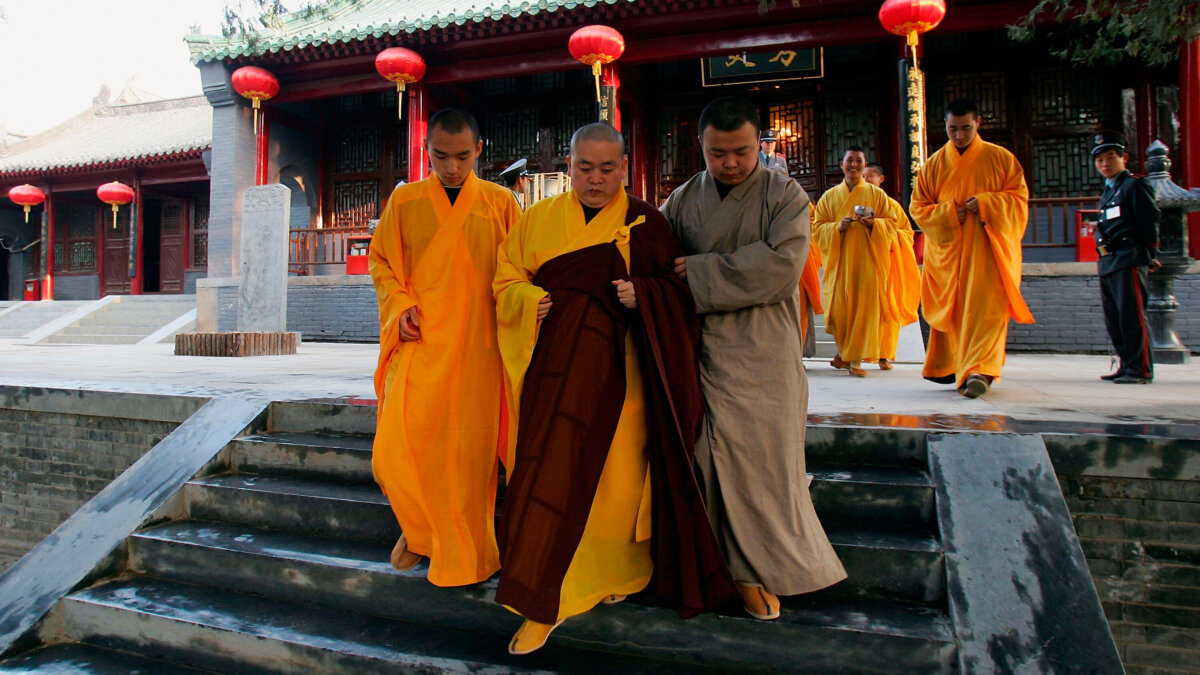
Shi Yongxin, the longtime head of China’s renowned Shaolin Temple, has been sentenced to 24 years in prison. He is not an isolated case. Behind him lies the Chinese Communist Party’s systematic reshaping and erosion of religious faith. This pattern can be traced throughout the history of the People’s Republic of China.
According to People’s Daily, on May 29, a Chinese court sentenced Shi to 24 years in prison and fined him 3.5 million yuan (about $517,350). The charges are both revealing and ironic: embezzlement, misappropriation of funds, accepting bribes as a non-state employee, and offering bribes.
According to the court, Shi embezzled more than 130 million yuan (about $19.2 million) in organizational assets, misappropriated more than 150 million yuan (about $22.2 million) for personal use, accepted bribes exceeding 11 million yuan (about $1.6 million), and paid more than 5 million yuan (about $739,000) in bribes to government officials.
A Buddhist monk is supposed to detach himself from worldly pursuits. How did he end up committing offenses more commonly associated with Chinese Communist Party (CCP) officials? These crimes are tied to the exercise of power and influence. They point not merely to personal failings but also to a system that made them possible. The question is: Where does the problem really lie?
Who Protected Shi?
Shi’s misconduct did not come to light only recently. More than a decade ago, whistleblowers publicly accused him not only of the offenses cited in the recent verdict but also of maintaining relationships with multiple women and fathering children.
Yet even though they received these reports, the authorities denied the allegations and continued to protect him for another decade. Who was shielding him?
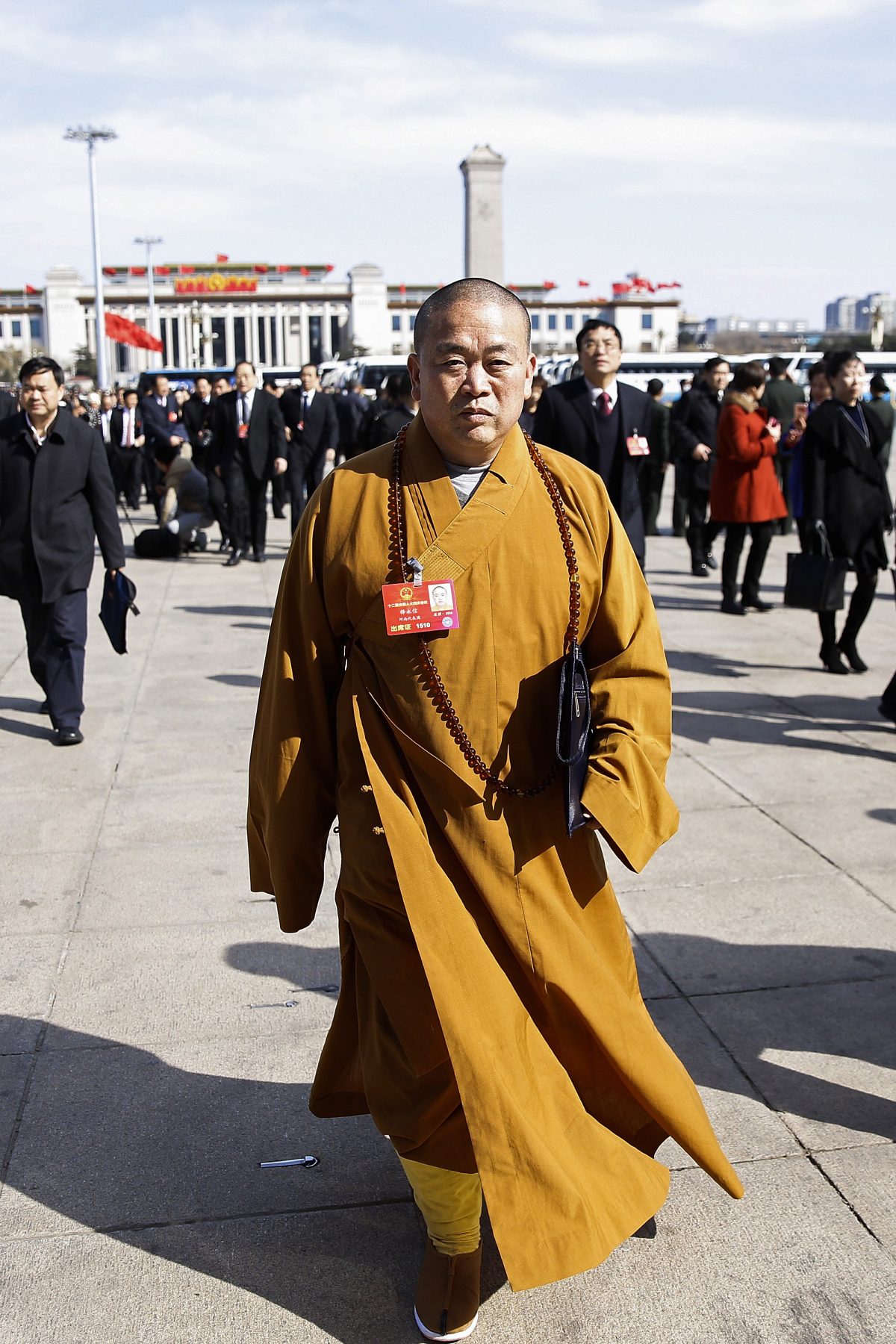
The earliest known protector was Li Changchun, then the Party secretary of Henan Province. Shi established ties with Li during the Shaolin Temple’s 1,500th-anniversary celebration in 1995. Li later became a member of the Politburo Standing Committee and a key ally of former Chinese leader Jiang Zemin.
During the Jiang era, Shi was awarded titles such as deputy to the rubber-stamp National People’s Congress and president of the Henan Buddhist Association. Under Hu Jintao, he earned further honors, including being recognized as a national inheritor of Shaolin Kung Fu as part of intangible cultural heritage, serving as honorary chairman of the Henan Youth Federation, and holding the position of president of the Henan Buddhist Academy.
During Chinese leader Xi Jinping’s tenure, Shi also served as a member and Standing Committee member of the Henan People’s Political Consultative Conference and as vice chairman of the Chinese Buddhist Association. As a religious figure, he would ordinarily be expected to participate only in the consultative system.
Yet Shi also served as a delegate to the National People’s Congress, underscoring the extraordinary level of official favor and protection he enjoyed. Even during Xi’s sweeping anti-corruption campaigns, Shi remained untouched for more than a decade and continued to rise.
Shi’s protection appears to have extended beyond any single individual. It was rooted in a political environment that spanned the administrations of Jiang (1989–2002), Hu (2002–2012), and Xi (2012–present).
The Commercialization of Religion
The CCP’s approach to religion focuses on the “Sinicization of religion.” This idea is inherently problematic, as religion naturally transcends national and ethnic borders. For example, Buddhism had centuries of adaptation after arriving in China, evolving into forms quite different from its Indian roots. In reality, the CCP’s interpretation of “Sinicization” is less about making religion Chinese and more about aligning it with Party ideology.
Commercialization is merely the visible method; the deeper objective is to weaken people’s faith and redirect their loyalties. This process affects all religions across China, and the Shaolin Temple is only one example.
Under Shi’s leadership, commercialization expanded through organizations such as the Shaolin Warrior Monk Troupe, Shaolin Industrial Development Co., and Shaolin Film and Television Company. Like any profit-driven enterprise, these organizations pursued economic gain.
These activities diverge from traditional Buddhist teachings, which focus on simplicity, inner peace, and detachment from worldly affairs. This shift is why Shi earned the nickname the “Shaolin CEO.” Over time, he began to operate more like a businessman than a spiritual practitioner. His participation in large-scale commercial and construction ventures also opened doors to corruption and bribery.
There is a reason monks traditionally leave secular society behind and pursue spiritual cultivation in remote mountain monasteries.
The Politicization and Bureaucratization of Temples
Shi was also a political monk. His roles in national and provincial Buddhist associations, along with his status as a National People’s Congress delegate, had little to do with religious practice and much to do with politics and administration.
The Chinese Buddhist Association largely functions as an administrative body overseen by the State Administration for Religious Affairs through the CCP’s “united front” system. The united front is the Party’s mechanism for managing and co-opting non-Party groups, including religious organizations, ethnic minorities, business leaders, overseas Chinese communities, and pro-Beijing Western politicians. The CCP uses this mechanism to advance its objectives while maintaining political control.
The regime recognizes only five official religions, and believers are expected to affiliate with state-approved religious organizations. Unregistered churches and house congregations that reject official oversight are deemed illegal and often face suppression.
This bureaucratic structure extends down to individual monasteries. Under the Chinese Buddhist Association’s regulations, candidates for abbot are nominated by temple management bodies or outgoing abbots, undergo internal review, and are then submitted to local Buddhist associations for approval. Even the terms of office mirror those of government officials: five years per term, with a maximum of two consecutive terms.
A Rise Closely Aligned With Political Campaigns
Shi’s rise to prominence closely paralleled several major political developments in China. The pattern is striking enough to be difficult to dismiss as a mere coincidence.
The Shaolin Warrior Monk Troupe made its first public appearance in June 1989 in Hainan Province, southern China, as part of a commercial initiative to support local government efforts to attract investment. In December of the same year, the troupe traveled to Japan, where it staged more than 10 performances under the banner of promoting Shaolin martial arts. Over the following three years, it appeared frequently on the international stage, touring countries including Belgium, Italy, and South Korea.
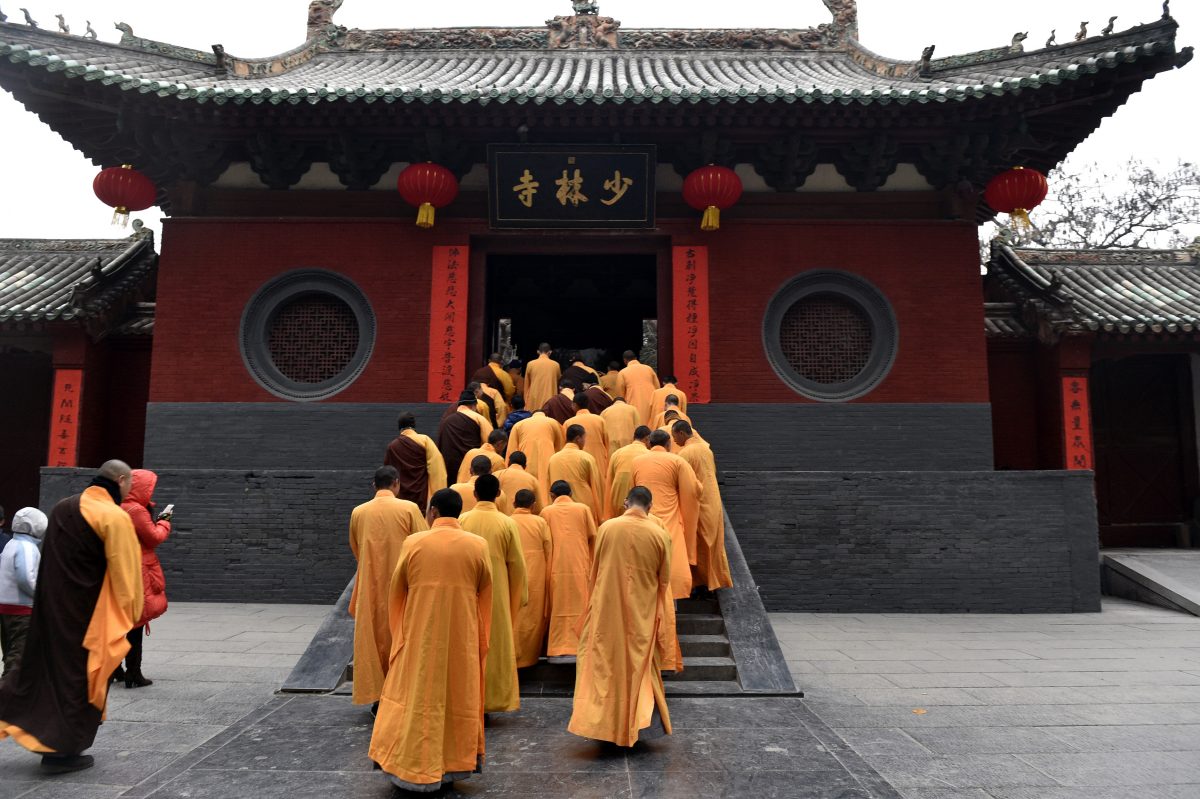
These early activities unfolded at a time when Beijing was facing intense international condemnation and diplomatic isolation in the aftermath of the Tiananmen Square massacre of June 4, 1989. Against this backdrop, the troupe’s overseas performances carried a political significance that extended beyond cultural exchange.
Rather than being purely religious or cultural undertakings, these international tours served as a form of overseas united front work. They also offered an early indication that Shi was positioning Shaolin Temple as a political asset capable of advancing Party interests and serving broader state objectives.
A second turning point came in 1995. As noted earlier, Shi established a connection with Li, the Party secretary for Henan Province, during the celebrations marking the 1,500th anniversary of Shaolin Temple, thereby formally cultivating personal ties with senior CCP officials.
The next major milestone came in August 1999, when Shi was officially installed as the 30th abbot of Shaolin Temple, with approval from the State Administration for Religious Affairs and the Chinese Buddhist Association. The timing was again significant. It came just one month after Jiang launched the nationwide campaign against Falun Gong, at a moment when official religious organizations were being mobilized to support the persecution.
Falun Gong, also known as Falun Dafa, is a spiritual discipline and meditation practice with moral teachings based on the principles of truthfulness, compassion, and tolerance. It gained widespread popularity in China during the 1990s—official estimates placed the number of practitioners at 70 million or more—before being abruptly banned by the Chinese communist regime.
Like other religious leaders in China, Shi responded by aligning himself closely with the authorities. In the years that followed, he repeatedly echoed the regime’s criticism of Falun Gong and used his position at Shaolin Temple to openly support the CCP’s campaign against the practice.
A more recent example further illustrates the Shaolin Warrior Monk Troupe’s political function. In May 2024, it participated in the “International Martial Arts Festival” in Russia as part of a bilateral cultural exchange program. The event took place at a time when Beijing continued to maintain close ties with Moscow despite extensive Western sanctions imposed following Russia’s invasion of Ukraine.
Connections With the Military Establishment
Shi also maintained unusually close ties with China’s military and security apparatus.
Under his leadership, the Shaolin Warrior Monk Troupe expanded into a network of martial arts schools. Some of these institutions developed cooperative relationships with units of the People’s Armed Police and the People’s Liberation Army (PLA), becoming recruitment channels for military and special operations personnel.
For example, promotional materials from a Shaolin Temple school state that the school collaborates with the People’s Armed Police, former PLA special forces units, and the PLA Marine Corps. The same materials also claim that graduates have been recruited by elite military formations, anti-terrorism units, airborne special forces, and the Central Guard Bureau.
Whatever one makes of these claims, they suggest that Shi’s influence extended well beyond religious affairs into areas closely tied to the state’s security apparatus.
A Political Figure in Monastic Robes
Viewed in this broader context, Shi appears less like a traditional Buddhist monk and more like a political figure operating within the religious sphere. His significance lay not merely in commercializing the Shaolin Temple but also in helping integrate one of China’s most famous Buddhist institutions into the CCP’s political system.
This interpretation is reinforced by Shi’s own history. He was reportedly expelled from the monastic order twice. If the selection of a Shaolin abbot had been determined solely by the temple’s internal religious procedures, it is difficult to see how he could have ultimately assumed the position. His elevation appears to have depended on political backing from outside the monastery.
From this perspective, Shi was not an anomaly but a product of a larger system.
Under CCP rule, the Party exercises authority over the military, the government, the media, schools, state institutions, and virtually every major sector of society. Religion is no exception.
Even though it has long been regarded as a symbol of Chinese Buddhism and martial arts culture, the Shaolin Temple has been incorporated into the same political framework. In that sense, Shi’s rise was not simply the story of one monk. It was the product of a system that had steadily reshaped religious institutions to serve Party objectives.
Views expressed in this article are the opinions of the author and do not necessarily reflect the views of The Epoch Times.
 Friends Read Free
Copy
Facebook
Tweet
Friends Read Free
Copy
Facebook
Tweet