
Commentary
If you were a young student in the 1920s in the United States, you would have been carefully schooled in the lives of the Founding Fathers, the ideals of the country, the structure of government, and the deep history from the colonial period all the way through World War I. In the course of this, there would have been a strong emphasis on the pride of this country at the time, which were the innovators and creators of the Gilded Age.
In the living history of every family at the time, parents and grandparents would tell stories of horses kept for transportation, ice houses for the refrigerator, life on the farms, work from early teen years without the aid of electricity or telephones, with probably some stories of the Civil War thrown in. It was a time of huge change, but it created a deep dedication to remembering the past.
Part of the drive here was to assure a coherent civic culture in a period of demographic change. In the past, too, people found an anchor and stability after the years of a terrible war and growing change with massive technological shifts and the inexorable move from an agricultural life to an urban life. History and pride in the past was the glue that held it all together.
Publishing for masses of people was only a decade deep, and every middle-class home now wanted a full library, much of it centered on pride in American history and civic consciousness. Publishing was big business. Among the truly wonderful books to appear, by the magnificent interpreter of the American commercial experience named Orison Swett Marden (1848–1924), is “How They Succeeded: Life Stories of Successful Men Told by Themselves” from 1901.
Marden was just fantastic, an outstanding writer and diligent interviewer. As founder of Success Magazine, he made it his business to know everyone of note, study their values, and chronicle their lives—from which he drew big lessons. The public ate it up. He was a bestseller time and time again and you can see why if you pick up one of his books. He seemed to capture America at its best, by which I mean to observe all the ways in which a classless freedom of opportunity unleashed human energy and creativity as never before.
When I first read him, I felt this wild joy of enthusiasm for life despite all difficulties. Suddenly the world around me opened up as full of opportunities I had not previously seen. I felt great determination to overcome obstacles that were in front of me, treating them not as insurmountable misfortunes but rather as tests of my own courage and perspicacity. This was all by design, because this is exactly the lesson he taught. Indeed, he wrote an entire book called “The Joys of Living.”
I was thinking of him because I just saw a quote attributed to him: “Success is not measured by what you accomplish but by the opposition you have encountered, and the courage with which you have maintained the struggle against overwhelming odds.” That’s it exactly. Call me cheesy if you want, but I find this not only true, but also deeply inspiring. This is indeed the measure of success.
The book mentioned above discusses great achievers of the previous generation and how they became successful. He covers all the Gilded Age geniuses and digs deeply into their backgrounds. In each case, he tells a story of grueling work, irrepressible curiosity, vibrant creativity, deep disappointments, and indefatigable courage to overcome.
The reader comes away with a remarkable realization: There is no greatness without suffering, no real success without struggle, no achievement without disappointment, and no big social change without men and women of courage to make it so.
Some examples include:
- Marshall Field (merchant): Born in 1835 on a poor, rocky Massachusetts farm. Parents wanted their boys to “amount to something.” As a boy, he “determined not to remain poor.” Father got him a place in the nearest village store; he worked long hours, saved every cent, and strictly attended to business, always aiming to become a merchant.
- Alexander Graham Bell: As a young man, worked as a night teacher for the deaf while studying. Showed early intense concentration and perseverance on practical goals (sound and speech). His boyhood involved disciplined self-study and experimentation.
- Helen Gould (philanthropist): As a little girl in the wealthy Gould home, she saw poorer children passing by and, from her own allowance, began giving them comfort and help. Her father encouraged this early charitable work; she dug, raked, and planted in gardens like a “farmer’s girl,” emphasizing practical sympathy and hard work over idleness from childhood.
- Philip D. Armour (meatpacking): As a teenager (in about the 1850s), left home on foot for the California gold rush with a neighbor boy, carrying only a carpet sack and new boots. They traveled by canal, wagon, and oxen, then on foot; he dug ditches, mined claims, cooked, kept hens, and traded gold dust for groceries. Struck pay dirt quickly despite illness and little money.
- John Wanamaker (department store pioneer): At 14, had almost no capital but showed strong ambition. Began in retail work; by 16, started with a small clothing store (“Tower Hall”) through innovative effort and customer focus. His early capital was minimal, built on youthful energy and organizing power.
- John D. Rockefeller (oil baron): Born into a modest family; as a boy he showed early habits of strict economy and careful saving. Developed the habit of keeping exact accounts of every cent he earned or spent. Began working as a clerk/bookkeeper at age 16 in Cleveland for a small salary.
- Andrew Carnegie (of great fame): Born poor in Scotland; immigrated to America as a child with his family. He started work at age 13 as a bobbin boy in a cotton factory, changing spools for $1.20 per week. Worked as a telegraph messenger boy, running messages on foot all day and then became a telegraph operator (self-taught), working long hours and studying at night. Later he worked at the rolling mill, learning every detail of the manufacturing process from the bottom up.
Talk about lives of wild and interesting adventures. This book includes interviews with the men and women themselves, telling stories and revealing all their secrets. When I read this book for the first time, I reflected on my own early work digging wells, moving pianos, fixing roofs, and doing department-store maintenance, and I found myself grateful for every job. Of course, I cannot valorize my history as they did theirs, but the lesson sticks.
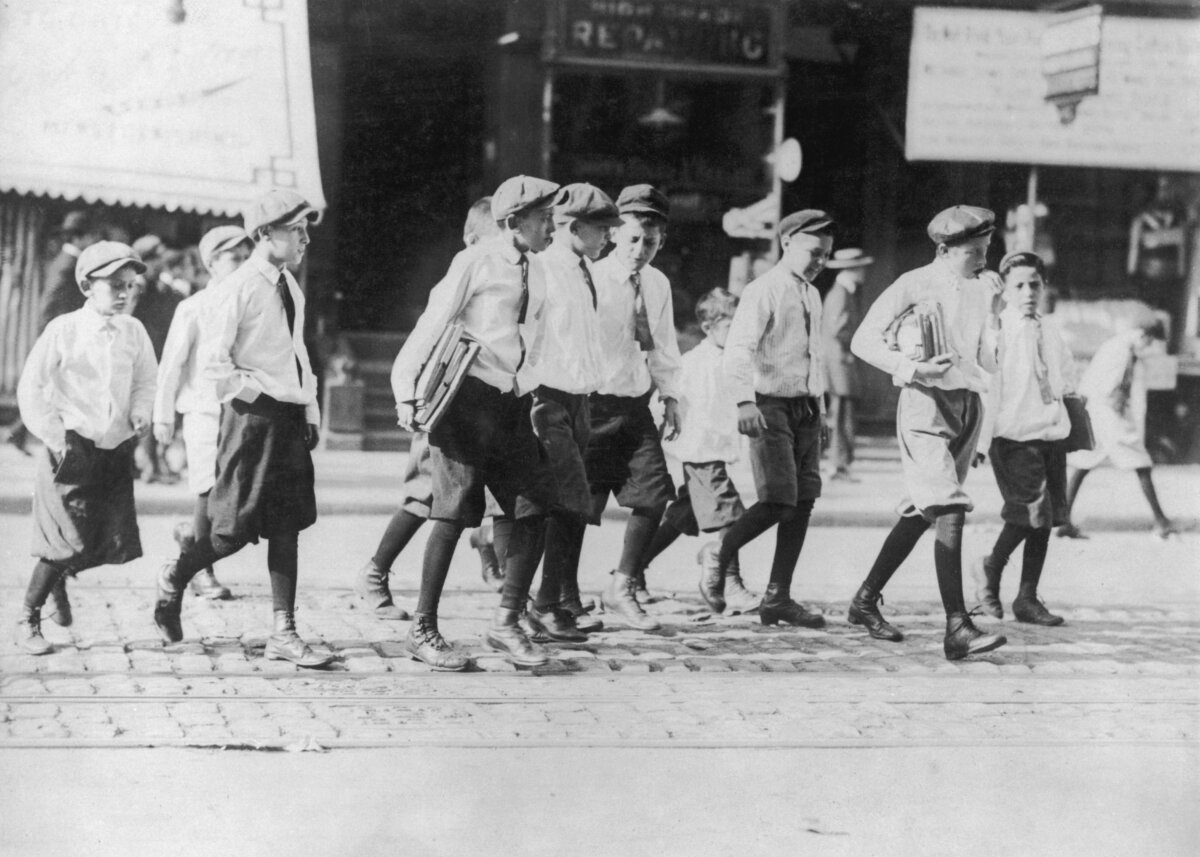
It’s strange how in the second half of the 20th century, American culture came to turn its back on this history, even banning the kind of work they did at the age at which they did it. Someone somehow concluded that everyone would be better off stuck in desks until the age of 22. We are paying a very heavy price for this decision, with several generations raised without any genuine formation of an actual work ethic.
It’s not an illusion that many people younger than 30 today are under the impression that wealth just falls from the skies and that the only real goal in life is to entertain oneself as much as possible. This is a catastrophe, but one that might be fixing itself as the value of the college degree keeps falling and labor markets are locking up.
I would like to suggest that Marden, a genius from a century ago, might also be a key to guiding us out of our current plight.
Views expressed in this article are the opinions of the author and do not necessarily reflect the views of The Epoch Times.
 Friends Read Free
Copy
Facebook
Tweet
Friends Read Free
Copy
Facebook
Tweet