Commentary
On November 11, when circumstances permit, I have always been inclined to honour those who fought and died for our freedom from the grounds of a local Legion on the South Shore of Nova Scotia. This year, I was obliged to watch the Ottawa event on TV.
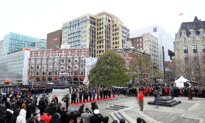
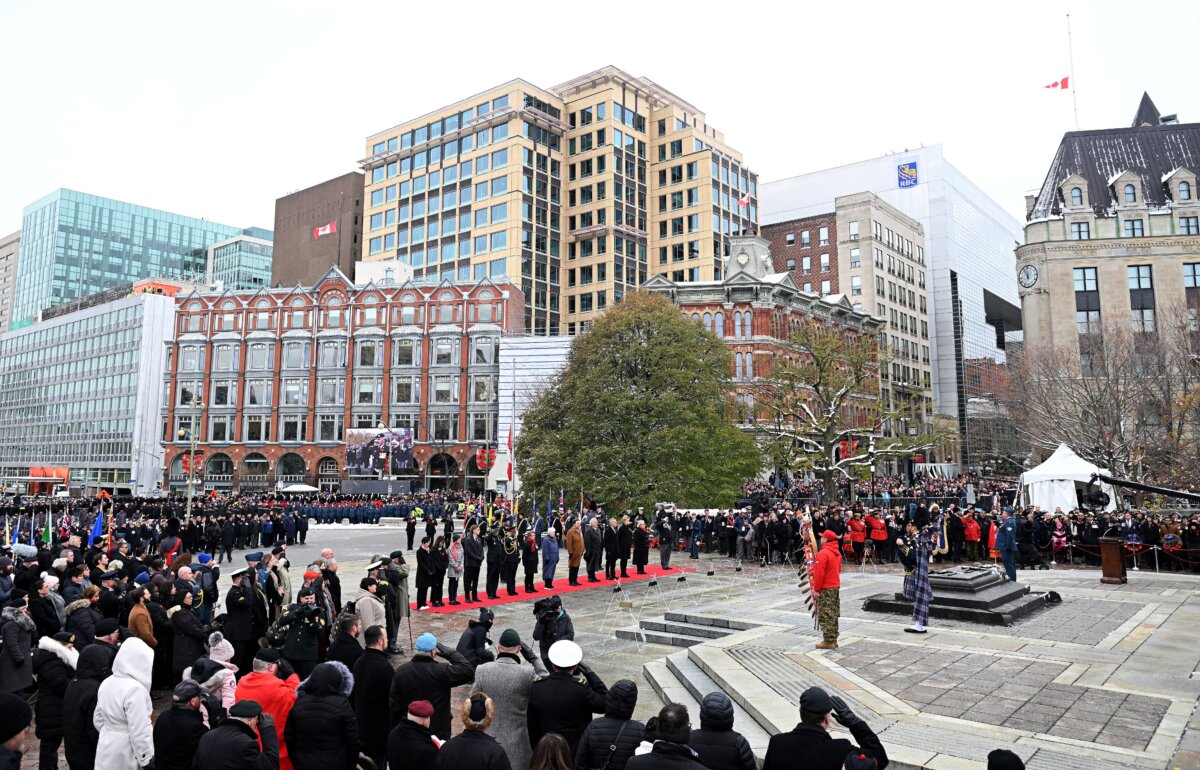
There is little doubt that Canada’s National Remembrance Day ceremony in our capital city remains a solemn public ritual. It is marked by the traditional moment of silence, the piper’s lament, and the laying of wreaths at the National War Memorial.
This year, however, I couldn’t help thinking that there’s a troubling omission in the ceremony. Among the governor general, the prime minister, the military, and veterans’ organizations, no representatives of His Majesty’s Loyal Opposition or other parliamentary parties were invited to lay a wreath on behalf of the millions of Canadians they also represent, and that’s the case every year.
At first glance this may seem a minor detail of protocol, but it raises a larger question about what, and whom, the ceremony is meant to represent. In a parliamentary democracy built on the coexistence of government and opposition, the omission is more than symbolic. It risks narrowing a national act of remembrance into a gesture of regime loyalty rather than democratic unity.
A Tradition That Hasn’t Kept Pace
The present order of the Ottawa ceremony follows the Royal Canadian Legion’s Table of Precedence. The governor general, representing the Crown, lays the first wreath, followed by the prime minister, the Silver Cross Mother, and senior military officials. Veterans, cadets, and youth groups follow. The arrangement emphasizes continuity and hierarchy: Crown, government, military, citizenry.
The structure of this ceremony dates back decades. It has never formally excluded opposition parties—it simply never included them. Over time, that omission has hardened into an obsolete conventional wisdom.
Contrast this with Canada’s peers in the Commonwealth. In the United Kingdom, party leaders line up together at the Cenotaph on Whitehall, laying their poppy wreaths moments apart. The Australian and New Zealand national ceremonies in Canberra and Wellington do the same. In those countries, remembrance visibly belongs to the entire polity, not merely to the government of the era.
Canada, almost alone among parliamentary democracies, treats its national day of remembrance as a function of the Crown and executive power rather than of parliament as a whole.
A Language of Symbols
Ceremony is a language of symbols. Who stands where, and who speaks or acts, expresses a view of the nation itself. The current Canadian arrangement implies that unity arises from deference—from the Crown, through the government, to the people. It reflects a top down conception of national identity, inherited from a different age.
But Canada today is a parliamentary democracy, and in that system the nation is represented not by the government alone but by the entire House of Commons—government and opposition together. The Canadian Armed Forces swear allegiance to Crown and country, meaning service to all citizens through democratic institutions. To recognize only the current governing side in the national act of remembrance subtly distorts that constitutional reality.
More importantly, it risks forgetting what Canadian soldiers actually fought for. From the trenches of 1914 to the beaches of 1944, to war in Korea, and action in Kandahar, Canadians understood themselves to be defending a civilization founded on free institutions, accountable government, and the right to dissent. To omit the parliamentary opposition from the national ceremony is to overlook the very democratic balance those veterans died to protect.
Unity Through Inclusion, Not Silence
Defenders of the current practice sometimes argue that including opposition leaders would politicize a solemn occasion. Yet the evidence from other democracies shows the opposite. In Britain, Australia, and New Zealand, opposition leaders lay wreaths without fanfare or speech. Their gesture is silent, respectful, and unifying.
In fact, excluding opposition leadership creates the greater danger of politicization. When only a single party is invited to act on behalf of the nation, the ceremony implies that patriotism is the property of only those in power. The symbolism may be unintended, but its effect is unmistakable: it blurs the line between the state and a parliamentary majority.
Democratic unity does not require unanimity. It requires visible respect across lines of difference. Including the opposition would demonstrate that remembrance transcends politics precisely because democracy itself allows for disagreement. It would show that Canadian unity rests on pluralism, not conformity.
A Role for the Loyal Opposition
The phrase “His Majesty’s Loyal Opposition” captures the heart of Westminster democracy. Opposition is not treason; it is loyalty through accountability. The opposition’s duty is to question government while remaining faithful to the constitutional order both sides share.
Including opposition parties on Remembrance Day would not dilute loyalty to the Crown—it would complete the constitutional picture. The Crown symbolizes continuity, the government symbolizes administration, and the opposition symbolizes scrutiny. Together they form the structure of responsible government.
For many young Canadians, Remembrance Day is one of the few civic rituals they encounter each year. Seeing political adversaries united in silence before the memorial would teach, more powerfully than any civics lesson, that disagreement and devotion to the nation are entirely compatible.
Updating the Ceremony
Updating the ceremony would be simple. The Royal Canadian Legion, in consultation with Veterans Affairs Canada and the Speaker of the House of Commons, could add the Leader of the Opposition and leaders of other recognized parties to the official order of wreath-laying. No new law is needed—only the will to recognize that remembrance belongs to the entire democratic community.
The Legion has adapted before. It has expanded recognition to include indigenous veterans, women, and new Canadian communities. Extending the same principle of inclusion to all parliamentary parties would not break tradition; it would renew it in light of Canada’s democratic maturity.
Honouring What Was Fought For
Remembrance Day is about more than recalling the past; it is about reaffirming the kind of country Canada aspires to be. The men and women who served did not die for a government or a ruler. They died for a free, plural, and accountable democracy—one that rests on the interplay between power and principle, leadership and opposition.
To include opposition leaders in the national ceremony would not politicize remembrance; it would complete it. It would remind Canadians that democracy itself—contentious, imperfect, yet enduring—is the most precious legacy of those who sacrificed their lives.
A century after the Great War began, Canada should ensure that its most sacred national ritual reflects not only loyalty to the Crown, but also fidelity to the democratic ideals that generations of Canadians fought to preserve.
Views expressed in this article are the opinions of the author and do not necessarily reflect the views of The Epoch Times.
 Friends Read Free
Copy
Facebook
Tweet
Friends Read Free
Copy
Facebook
Tweet