
Commentary
The year was 1974 and the Disco revolution was in its infancy, seeking to displace the sloppy alienation of mainstream rock with clean, danceable music, technological sophistication, and new sounds. On the radio appeared a funky rendering of Richard Strauss’s “Also Sprach Zarathustra,” a work named for the 1885 philosophical novel by Friedrich Nietzsche.
Even at the age of 10, I knew this song from the classical repertoire because this was my beat. Most people knew the song as the theme from “2001: A Space Odyssey,” which I had not seen (and still haven’t!). The song hit the pop charts.
It begins slowly with some synthesized growling sounds which gradually turns into an emergent beat, followed by some wonderful riffs on the keyboard, on the instrumental choice of the time, the thrilling Fender Rhodes. That line of backup established, the song begins with its wild drama, while the Rhodes piano keeps the groove between brass phrases.
What struck me at the time was the obvious integrity. Yes, it was disco, but it was also deeply respectful of the original source, a meritorious update that felt like a real revelation at the time. The sheer popularity of the song kicked the disco movement into overdrive because it captured the urban sophistication for which the style wanted to be known.
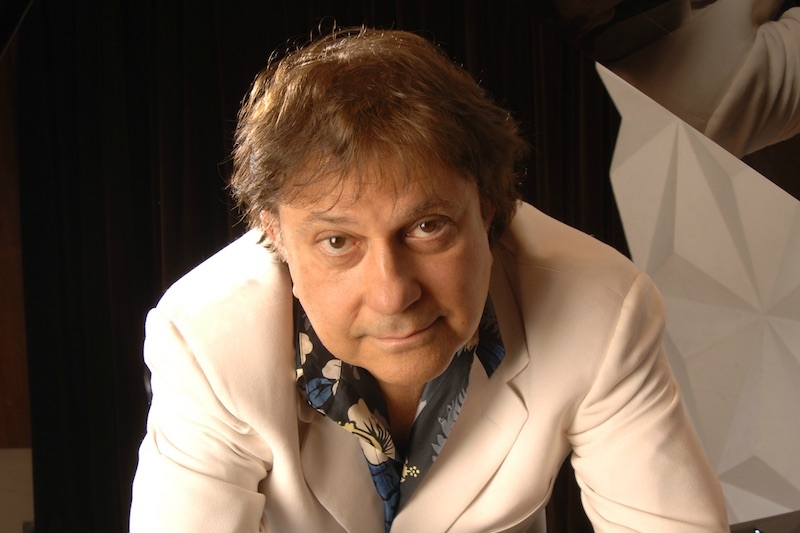
The genius behind the song was a Brazilian pianist and arranger named Eumir Deodato. He had a new album out from which the track was drawn. The album contained other wonderful pieces including a re-treatment of a famous ballad by Claude Debussy (“Prelude to the Afternoon of a Faun”) and many others.
It was not merely crossover music. It seemed like something brand new that carried its own weight. The constant presence of the Fender Rhodes became the signature—probably the greatest keyboard innovation since the fortepiano of the 19th century.
For this reason, the song and the album were acceptable to me, even though I considered myself already to be a classical music snob. Indeed, I rigged up my turntable stereo to wake me each day to the first symphony of Gustav Mahler. If you know the piece, you can see why. It is about a forest waking up gradually, first with the dawn, then the birds, then the animals. That’s how a fifth grader wants to wake. Right?
In any case, I became a wild fan of this Deodato guy, his entire sound and approach, something that sustained itself long after his hit tune left the charts. I bought all the future albums and loved them all. Most of the time they featured this wonderful instrument, the Fender Rhodes. They had a funky beat and fantastic arrangements. It was obvious to me that he was a genius.
Just consider his rendering of Beethoven’s “Moonlight Sonata.” Great horns, flutes, strings, and tremendously exciting backbeats. Creative. Thrilling. With Deodato’s classic style of left-hand punctuation and right-hand melodies crafted as only he could. It all feels so fresh and alive.
Same with his version of George Gershwin’s “Summertime” from “Porgy and Bess” or his own version of “Rhapsody in Blue.” Just wow.
What you find with such songs is a fascinating technique. Lay down a beat. Establish a piano obligato. Bring in the guitars. Get the congas grooving. Then the song appears and you think “Oh yes, I know that one.”
You know who else did this? J.S. Bach. In his job as an organist at a parish, he was told that he could only really work with established hymns. No problem, he said, as he added glorious accouterments to them that made the songs more popular than ever. Many of Bach’s biggest hits really amounted to bringing a new sensibility to standard material.
So it was with Deodato.
It’s interesting now to listen to some of his music today. I suspect that for many people today, it might sound like archetypical disco with predictable lines and rhythms, even the very caricature, including the wah-wah guitar and periodic use of the police whistle that was strangely popular for a while.
What we don’t know is that Deodato is the originator of most of what might sound like cliches now. It’s like so many lines from the movie “The Godfather”—they sound cheesy until you realize that the movie created the archetype.
Same with Shakespeare. It’s so much embedded into the culture that it becomes too easy to forget that it was a wonderful innovation. Deodato was the architect of the whole sound of the period.
What I’m discovering only now is that this man, now 83, has had a mighty career, one that intersects with the biggest stars and songs of the past half-century. As a producer, arranger, and musician, he has more than 500 albums to his name. You read that right, 500. It seems amazing.
You know how every wedding party includes the song “Celebration” by Kool & the Gang? That’s Deodato’s work as producer and arranger. Same with “Ladies’ Night” and “Too Hot.” Listen to them again. These are not normal pop songs. They are cinematic in scope and musically sophisticated while accessible.
Other artists who worked with Deodato: Frank Sinatra, Antônio Carlos Jobim, Airto Moreira, Aretha Franklin, Roberta Flack, Bjork, and k.d. lang. You know the song “Killing Me Softly” by Roberta Flack? The string arrangements are stunning. Again, that’s Deodato. Who knew?
Once you realize this, his presence in the evolution of pop emerges as an ominous fact. He is everywhere, never asking for the spotlight but rather glad to be in the background, working his precision magic, creating sounds that are evocative and fresh, tapping into the special something that drives the ear to pay attention and the soul to feel a sense of happiness and togetherness.
He was raised in Brazil, a dedicated musician who started on accordion and moved to piano and composition, always with the influence of his country’s style in his mind. He brought that to the United States and created something entirely new. I admit that I adored it even at the time, and was shocked when a sector of my social group turned against it, swearing to kill disco. I recall feeling intimidated by the emergent ethos, always saying under my breath: “I actually rather like it.”
Looking back, I see now that it was the musicians who liked this stuff the most because the performances were virtuosic and innovative, requiring the difficult blend of instrumental competence combined with genius arrangements. You are not going to get this with The Rolling Stones, sorry for saying so.
As a fascinating biographical point, you know Justin Bieber? He is married to Hailey Bieber, as you probably know. What you might not have known: She is Deodato’s grandchild. That’s right, he is grandfather to one of the most famous couples in all pop music today. That’s how much he is part of the American music scene, even if he is not frequently celebrated for his huge role.
To my ear, his music has lasting value and deserves rediscovery in every generation.
Views expressed in this article are the opinions of the author and do not necessarily reflect the views of The Epoch Times.
 Friends Read Free
Copy
Facebook
Tweet
Friends Read Free
Copy
Facebook
Tweet