
Commentary
In a famous essay, penned less than 10 years after the American Declaration of Independence, German philosopher Immanuel Kant posed a timely question: What is enlightenment?
Kant described “enlightenment” as humanity’s escape from “self-incurred immaturity”—a condition in which individuals surrender their judgment to the authority of others rather than thinking for themselves. He contended that true enlightenment requires courage. It demands that men and women abandon the safety of intellectual dependency and assume responsibility for their own reasoning. Think for yourself, Kant urged.
For more than two centuries, the Enlightenment has been celebrated as a great liberation of the human mind. It ended the authority of absolute monarchs, challenged dogmatism, advanced scientific inquiry, and established the principle that no human institution should be immune from scrutiny.
Today, however, despite enjoying unprecedented access to information and education, people are increasingly reluctant to exercise independent judgment. Rather than cultivating inquiry, they instinctively defer to experts. Rather than considering competing opinions, they seek approved narratives. Rather than struggling with doubt, they search for authoritative certainty.
The irony is profound. The civilization that promised liberation from conformity is now inclined to accept new forms of tutelage: forms cloaked in a reflexive deference to presumed expertise and illusions of progress.
Mass Formation
This paradox lies at the heart of an insightful book by Belgian psychologist Mattias Desmet. In “The Psychology of Totalitarianism,” Desmet asserts that modern societies have become susceptible to a phenomenon he calls “mass formation,” a process in which large numbers of people become psychologically attached to a common narrative that provides meaning, identity, and emotional security. The resulting compliance is not imposed solely through force. In fact, individuals willingly participate because the narrative relieves discord and produces an intense sense of belonging.
Desmet’s analysis offers a challenge to our deepest modern assumptions. Enlightenment thinkers sought to understand reality through reason and scientific investigation. Their achievements were extraordinary and indispensable. But over time, enlightened confidence in reason hardened into something narrower and more rigid: a mechanistic worldview that reduces human beings to biological and economic units, measurable and manageable through technical expertise.
In this condition, we cease to be independent moral agents and instead become objects to be optimized. Society increasingly organizes itself around quantification and expert management. The scientific method—a valuable tool for investigating reality—gradually gives way to scientism, the belief that technical expertise can answer not only empirical questions but moral and existential ones as well.
The consequences of this are profound. As traditional sources of meaning weaken, social bonds erode, and individuals become increasingly isolated. Modern societies achieve material prosperity while generating loneliness, anxiety, and alienation. According to Desmet, such conditions create fertile ground for mass formation. Once disconnected from meaningful faith, family, community, and nation, people become intensely receptive to ideological narratives that explain their distress and offer collective solutions. Formational narratives provide more than explanation. They produce an unquestionable collective purpose.
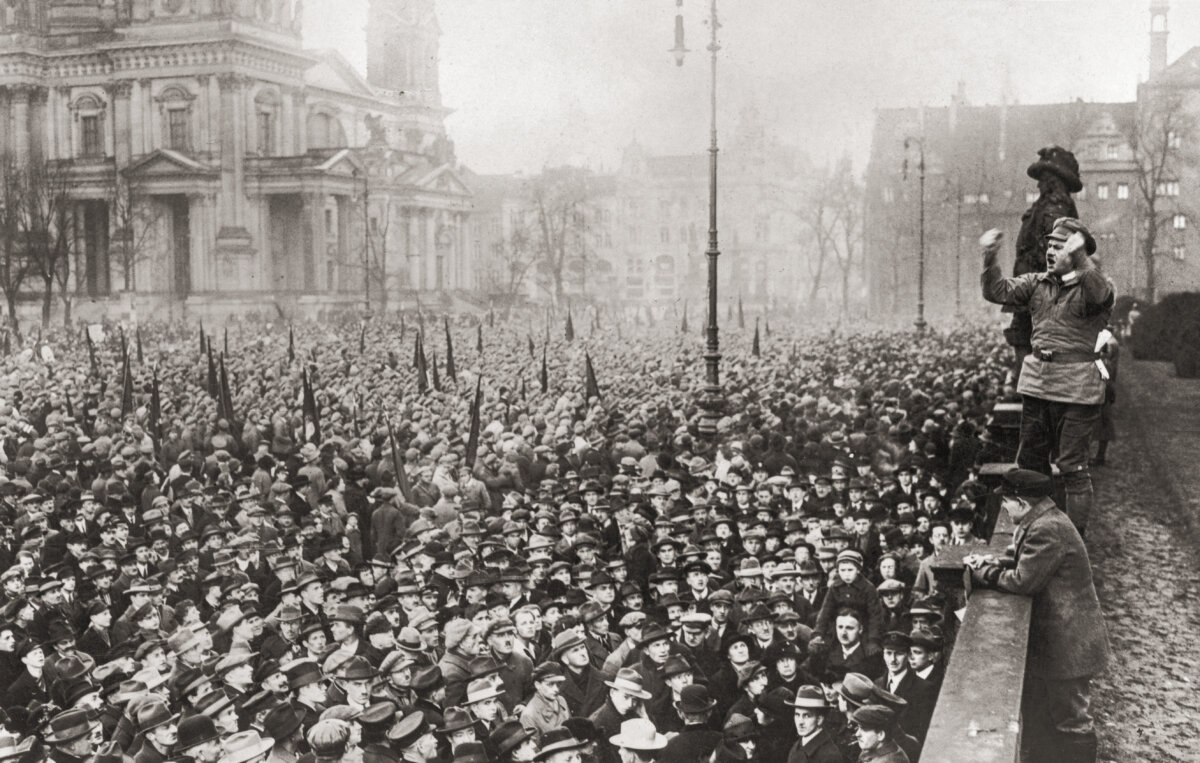
Desmet’s insight helps explain one of the most puzzling developments of the 20th century: the enduring fascination many Western intellectuals displayed toward the Soviet experiment despite overwhelming evidence of its repression and failure. Communism offered what modernity increasingly lacked: a comprehensive explanation of history, a compelling account of injustice, a clearly identifiable enemy, and a promise of eventual redemption. It transformed complexity into certainty. For vulnerable believers, Marxism functioned not merely as an economic alternative but as a secular faith. History possessed a direction. Human suffering had a cause. Revolution would deliver salvation.
The Peril of Tutelage
The peril, of course, is that movements dedicated to human liberation frequently produce systems of extraordinary orthodoxy. Independent thought becomes subordinate to ideological dogma. Dissent becomes heresy. Individuals are expected to submit to historical necessity as interpreted by designated authorities. The promise of emancipation ends in new forms of dependency.
What makes Desmet’s analysis particularly relevant is his suggestion that the psychological structure underlying totalitarian movements survives even when the ideological content changes. The human need for certainty, belonging, and meaning remains constant. Different eras simply supply different narratives—from communism to progressivism to contemporary wokism.
Present-day progressive ideologues differ from classical Marxists in terms of specific objectives. But they retain a similar moral architecture. Social reality is interpreted primarily through systems of power. Society is divided into categories of privilege and oppression. Individuals are encouraged to understand themselves chiefly through group identity. Moral legitimacy is tied to one’s position within this framework. Most importantly, dissent is interpreted not as legitimate disagreement but as evidence of moral turpitude.
The present apparatus supporting these beliefs differs from that of earlier revolutionary movements. Instead of party commissars, authority is exercised through academic and professional institutions, bureaucracies, artists, entertainers, corporate policies, and social media. The mechanisms are softer but no less powerful. Social sanctions and public shaming replace imprisonment and execution. Reputation becomes the currency through which conformity is enforced.
The language employed is always revealing. Restrictions are presented as protections. Surveillance becomes safety. Censorship becomes harm reduction. Compliance becomes inclusion. Dependence becomes empowerment. Tutelage becomes indoctrination.
The objective is not just compliance but moral obedience. This is where Desmet’s warning intersects most clearly with Kant’s original vision. The danger facing free societies is not merely that governments might become authoritarian. The deeper danger is that citizens may voluntarily relinquish the difficult task of independent judgment. Faced with uncertainty and complexity, many will prefer the comfort of approved conclusions delivered by sanctioned authorities.
Dare to Know
In an ideological era heavily influenced by cultural Marxism, mass formation has led to the dominance of identity politics, polarization, mutual distrust, and suspension of the “Golden Rule” that fosters reciprocity. This all contributes to the erosion of what American scholar Francis Fukuyama described as a nation’s “social capital.”
In these unfortunate circumstances, tutelage is attractive because freedom is demanding. To think independently requires accepting ambiguity. It requires tolerating disagreement. It requires accepting the possibility of error. Above all, it requires personal responsibility. Citizens who reason for themselves cannot simply blame experts, institutions, or political movements for their conclusions. They must own them.
Mass formation also provides an easy escape from the anxiety of disagreement. It allows individuals to dissolve themselves into a collective identity and participate in a larger narrative that supplies them with meaning and certainty. In return, they are required to surrender their human curiosity and intellectual integrity.
The result has been a great reversal of the modern age. The Enlightenment sought to free mankind from psychological vulnerability. Yet the institutions created in its wake increasingly encourage new forms of dependency. Political language disguises the new reality, but the totalitarian temptation remains the same—the desire to exchange liberty for certainty and criminalize opponents.
Mankind’s challenge is not to reject science, reason, and expertise. It is to resist transforming them into objects of unquestioned faith. Genuine science remains skeptical. Genuine enlightenment remains self-critical. Genuine freedom requires the courage to question prevailing orthodoxies, even when those orthodoxies claim the mantle of progress itself.
Kant’s call remains as relevant today as it was in the 18th century: “dare to know.” The preservation of a free society ultimately depends upon citizens who are willing to think for themselves rather than surrendering their judgment to those who promise certainty in exchange for obedience.
Two hundred and fifty years after America’s Declaration of Independence, renewing the promise of the Enlightenment may well depend upon the West’s capacity to recover the virtue of courage.
Views expressed in this article are the opinions of the author and do not necessarily reflect the views of The Epoch Times.
 Friends Read Free
Copy
Facebook
Tweet
Friends Read Free
Copy
Facebook
Tweet