Commentary
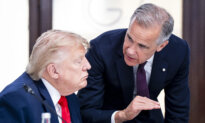
When U.S. President Donald Trump returned to Washington from Beijing and later spoke in a Fox News interview about the prospects of securing the release of Jimmy Lai, his words immediately caught the attention of many Hongkongers worldwide. Trump described the outlook as “not positive.”
The remark was blunt, emotionally heavy, and difficult for many of Lai’s supporters to hear. Yet perhaps that honesty also reflected the harsh geopolitical reality surrounding Lai’s case.
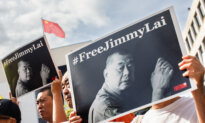
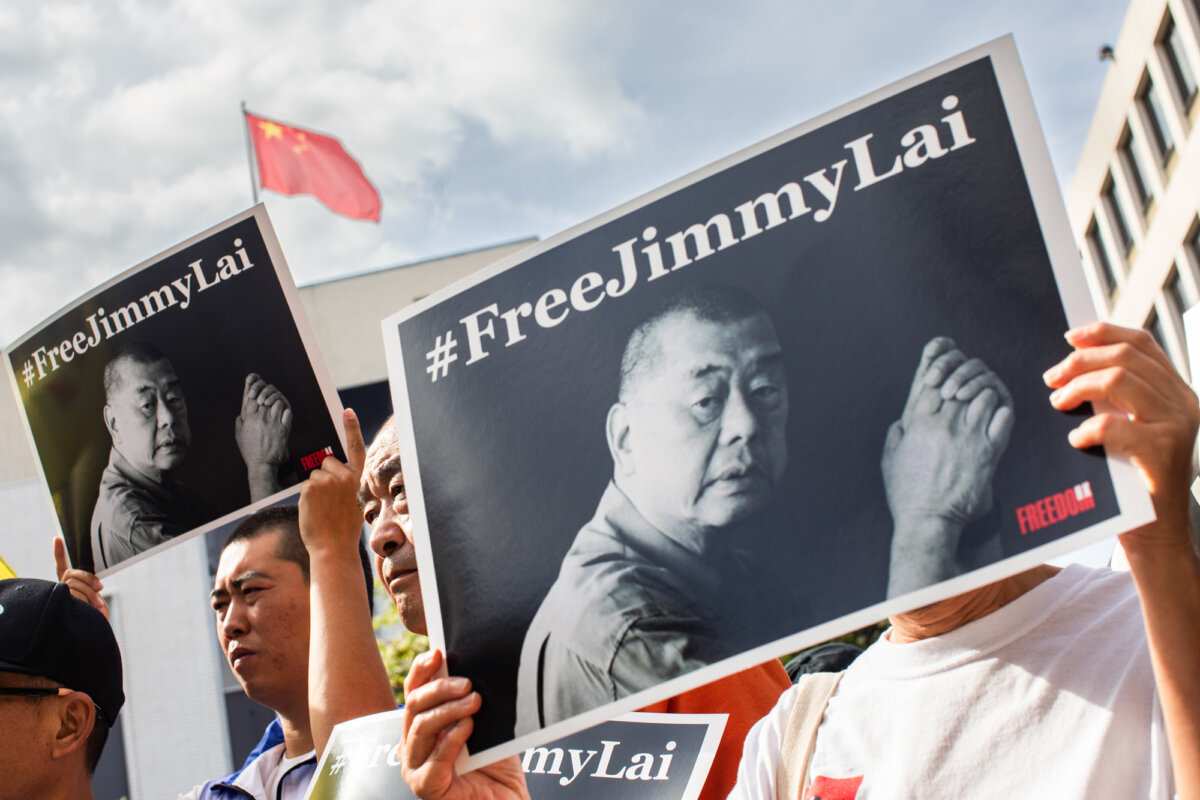
For years, Lai’s imprisonment has represented far more than the detention of one individual. To many around the world, his case symbolizes the shrinking space for free speech, religious conviction, political dissent, and human dignity in Hong Kong under the tightening control of the Chinese Communist Party (CCP).
The battle for Lai’s freedom is no longer simply a humanitarian appeal. It is now deeply tied to U.S.–China rivalry, national security tensions, economic negotiations, espionage concerns, and the political calculations of Chinese leader Xi Jinping.
Still, “not positive” should not be mistaken for hopeless. History repeatedly reminds us that some of the deepest moral and spiritual victories often emerge when circumstances appear darkest.
Lai and the Spirit of Hong Kong
From a humanitarian perspective, Lai’s continued imprisonment appears increasingly difficult to justify internationally. He is now 78 years old, and concerns about his health continue to mount. The prolonged detention of an elderly Catholic publisher, successful entrepreneur, and self-made businessman—qualities that once helped shape Hong Kong’s economic spirit—has drawn criticism across many democratic societies.
Lai’s personal story has always mirrored part of Hong Kong’s rise. He arrived in the city as a poor immigrant and built a successful business empire through hard work, risk-taking, and entrepreneurial drive. Those values once defined Hong Kong itself.
Yet today, the very qualities once celebrated in Hong Kong—independent thinking, media freedom, entrepreneurial courage, and openness to the world—have become politically sensitive in the current climate. To the CCP, Lai represents something larger than an individual.
He symbolizes defiance.
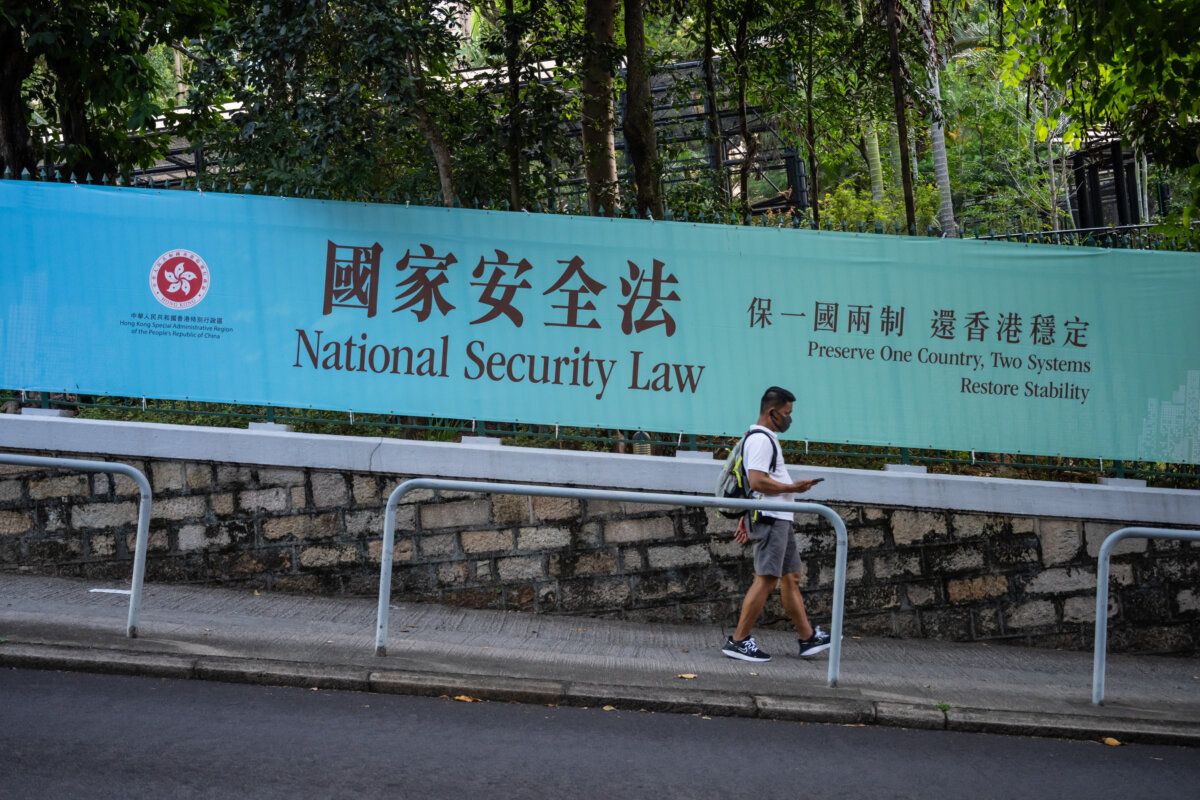
Lai openly supported the pro-democracy movements in Hong Kong. He used media platforms to criticize authoritarianism. Most importantly, he refused to fully retreat after the implementation of the Beijing-imposed national security law.
Apostle Paul: Imprisoned but Spiritually Free
For many Christians, Lai’s imprisonment carries a deeper spiritual dimension.
According to the New Testament, the Apostle Paul spent years imprisoned under the Roman Empire. Yet some of the most powerful writings in the Bible were written while he was confined. Books such as Ephesians, Philippians, Colossians, and Philemon were all composed during periods of imprisonment, suffering, and uncertainty.
Rome imprisoned Paul’s body, but it could not imprison his faith.
In many ways, Lai’s situation echoes that same spiritual paradox. Reports describing Lai’s drawing of Jesus carrying the cross have become deeply symbolic for many Christians and Hong Kong supporters around the world. The image represents more than personal devotion. It reflects faith in action under suffering. Even when physical freedom is delayed or redirected, spiritual conviction can remain alive and powerful.
For many believers or people with faith, Lai has become more than a publisher or businessman. He has become a symbol of conscience under pressure.
The Apostle Paul once wrote in prison that “the Word of God is not chained.” That message still resonates today. Prisons may confine the body, but they do not always defeat the human spirit.
Trump, Rubio, and the Limits of Diplomacy
The Trump administration and figures such as U.S. Secretary of State Marco Rubio clearly understand the seriousness of Lai’s situation. Rubio, in particular, has spoken publicly and repeatedly about political prisoners in Hong Kong and the broader erosion of freedoms under Beijing’s rule. But understanding the problem and solving the problem are two very different things.
To the Lai family, the U.S. delegation’s recent 48-hour trip to Beijing was not simply a diplomatic or business mission. It felt like a rescue mission. When a 78-year-old man remains imprisoned for years, and his health continues to raise concern internationally, every summit meeting feels urgent. Every diplomatic opening feels precious. At the same time, Lai is no longer a mere bargaining chip that can be easily exchanged through quiet diplomacy.
The recent identification of Eileen Wang, the former mayor of Arcadia, California, in the Los Angeles region, further complicates discussions surrounding U.S.–China tensions and potential diplomatic negotiations. According to U.S. federal prosecutors, Wang was accused of acting as an unregistered agent for the Chinese regime and allegedly assisted in promoting pro-Beijing narratives through media and influence activities connected to Chinese officials.
Wang’s case reflects Washington’s broader concerns over foreign influence operations and alleged covert political activities linked to the CCP. Over the years, the United States has prosecuted numerous Chinese nationals, naturalized citizens, and visiting scholars accused of espionage-related activities connected to the CCP.
This raises an uncomfortable but increasingly discussed question: Could some of these individuals eventually become part of a prisoner exchange for Lai’s release?
Historically, prisoner swaps between rival powers are not unusual. The Cold War itself produced multiple examples. But Lai’s case may not fit neatly into that framework. Beijing appears determined to frame his imprisonment not as an international issue but as an internal matter tied to national security and sovereignty. That positioning makes compromise politically difficult for Xi’s leadership.
What Does Xi Have to Gain by Keeping Lai in Prison?
This may be one of the most important questions surrounding the entire situation. From Beijing’s perspective, Lai represents political symbolism far beyond his age or health condition.
For Xi, releasing Lai—even based on health concerns and humanitarian grounds—may still be viewed internally as a sign of weakness.
Authoritarian systems often fear precedent. If one high-profile political prisoner is released because of sustained international pressure, humanitarian appeals, or diplomatic negotiations, others may begin to believe that outside pressure can succeed again.
From Beijing’s perspective, that may create political risks far beyond Lai’s individual case. At the same time, prolonged imprisonment also carries risks for China internationally. If Lai’s health deteriorates further in prison, global scrutiny could intensify significantly. A humanitarian tragedy involving a globally recognized prisoner could further damage Hong Kong’s international reputation and deepen criticism toward Beijing.
Solitude, Faith, and the Fear of Time
Another difficult reality remains Lai’s health. What happens if his condition deteriorates even further? That question quietly hangs over every diplomatic discussion surrounding his imprisonment. Ironically, solitude itself may also be shaping Lai in ways the authorities never intended.
Throughout history, prison has often transformed political prisoners spiritually and psychologically. Isolation can destroy a person, but it can also deepen conviction, reflection, and faith. Those close to Lai often describe a man deeply rooted in spiritual peace despite extraordinary uncertainty.
This is perhaps where Trump’s “not positive” remark becomes emotionally significant. The statement forces supporters to confront reality honestly. Diplomatic summits may not suddenly unlock prison doors. International pressure may remain limited by larger geopolitical priorities. Yet difficult circumstances do not automatically eliminate hope.
History repeatedly shows that moral victories often arrive slowly, painfully, and unpredictably. The Apostle Paul likely never imagined that letters written from confinement would shape civilization for nearly 2,000 years. Similarly, Lai’s witness may ultimately carry influence far beyond the prison walls intended to silence him.
China Rarely Makes Political Releases Easy
Many Hongkongers already understand this reality well: Under the rule of the CCP, political prisoners are rarely released easily. The system is designed to project strength, patience, and control. Concessions are seldom presented as concessions. Humanitarian appeals often collide with ideological rigidity and concerns about political authority.
Yet history also reminds us that no political system remains unchanged forever. Empires rise. Empires decline. Governments harden. Governments evolve.
And sometimes, unexpectedly, doors that once appeared permanently closed eventually open. For now, Trump’s remark on Fox News may indeed sound discouraging. But even in difficult moments, this is not necessarily the end of the story.
Views expressed in this article are the opinions of the author and do not necessarily reflect the views of The Epoch Times.
 Friends Read Free
Copy
Facebook
Tweet
Friends Read Free
Copy
Facebook
Tweet