
Commentary
The creek on my property has been identified as live water for recorded history. When I first took over this land, it ran clear and bright, almost tropical, that particular blue that comes from the high limestone of the Texas Hill Country. Even the ponds held that turquoise color year-round. The springs gurgled. The water moved.
Sometime around May 2022, it stopped.
The creek dried up. My irrigation well began to struggle. The drought kept coming, and it hasn’t really let up since.
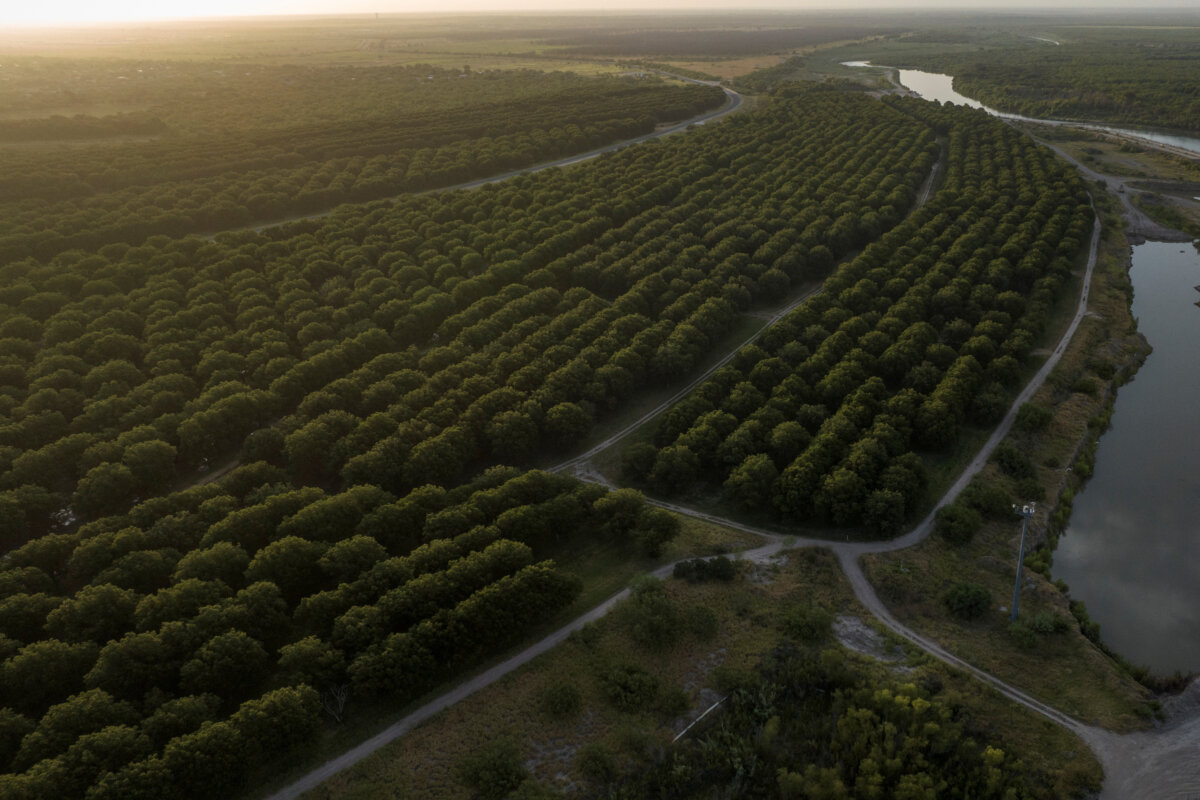
In 2023, we planted $50,000 worth of pecan trees. Then came a stretch of 100 days above 100 degrees. Even with irrigation, they could not survive. I watched them die one by one. I want to be clear about something. That is not a complaint about the weather. When a farmer talks about drought, he is not complaining. He is talking about survival. The weather is the difference between whether everything you have built keeps going or falls apart.
I pray for rain more times a day than I can count. I would do a rain dance if I thought it would work. But prayer and rain dances are not a water strategy, and neither is telling people to use fewer plastic straws. At some point, we have to start talking about how to refill the cup.
This summer brought a reminder of how fragile that balance has become. On July 4, devastating floods tore through Kerr County. Lives were lost. Homes were destroyed. The grief from that day will stay with this community for a long time. And yet that was nearly the only meaningful rain we received all summer. We mourned those losses, then watched the ground dry out again.
So I have been thinking about water—not just my water, but all of it.
The conversation we usually hear goes something like this. There are too many straws in the cup, so we need to limit the straws. Restrict wells. Mandate conservation. Use less. I understand the instinct. It is the bank account way of thinking about water. Save what you have so you do not overdraw.
But that conversation keeps missing something important. We are not just drinking from the cup. We are making the cup smaller.
That said, I am not pretending land management is the only thing affecting our water. There are plenty of pressures on it right now. Massive data centers use enormous amounts of water to cool the machines that power the cloud. Cities continue expanding into rural land. Development replaces pasture and brush with roads, rooftops, and parking lots that shed water rather than absorb it.
Some people point to weather modification, others to population growth or industrial use. I understand those concerns, and many of them are real. But this article is not trying to solve every water problem in the world. It is focusing on something closer to home—what landowners and communities can actually do with the ground beneath our feet to rebuild the natural water cycles that once kept places like the Texas Hill Country flowing.
Every time land is clear-cut and left bare for half the year, we lose the living systems that pull moisture from the air and hold it in the soil. Every time a hillside gets bulldozed for another planned community, and there are more of them every year out here, we replace living ground with concrete and compacted earth that sheds water instead of absorbing it. Parking lots. Bare fields. Monocultures stretching to the horizon. All of it changes the way water moves across the land.
When plants cover the ground, they are doing more than just holding soil in place. They are part of the water cycle itself. Plants pull moisture from the soil and release it back into the atmosphere through transpiration, helping form clouds and small localized rain cycles. But they also work in the other direction. Their roots open the soil, create pathways for water to move downward, and help rainfall soak into the ground rather than run off the surface. Living plants move water both up and down, feeding the atmosphere above and the aquifers below.
When that living cover disappears, those small water cycles begin to disappear with it. Rain does not necessarily stop altogether; when it finally comes, it becomes less frequent and more extreme. Instead of steady rains that soak into the land, we get floods that rush across hardened ground and disappear as quickly as they arrived.
The design was perfect. We are the ones who broke it.
This is not really a climate argument. I am not talking about global temperature models or carbon theories. Those conversations tend to go in circles. What I am talking about is land. Land management is local. It is practical. And it is something we actually have the power to change.
The goal is not just to survive the drought. The goal is rebuilding the small water cycles that make drought less devastating in the first place. That is regenerative agriculture in its simplest form. Taking responsibility for the land and managing it in a way that makes it more alive, not less.
The cedar conversation in Texas is a good example of how complicated this can get. Cedar is often blamed as the villain, a thirsty tree stealing water from everything around it. I am not convinced that is the whole story. I have a 300-year-old cedar on my property, technically a juniper ash, though no Texan will ever call it that, standing between my playground and my parking lot. It has never been watered, and it has survived this drought just fine, probably thousands of droughts before I ever arrived here.
The problem is not cedar itself. The problem is cedar mismanagement. When cedar grows too dense, its canopy catches rainfall before it ever reaches the ground. Water lands on the needles, sits there briefly, then evaporates back into the air and blows somewhere else. It never touches the soil. It never feeds the aquifer.
The answer is not clear-cut cedar. The answer is managing it.
Bamberger Ranch in Texas proved that in a way that is hard to ignore. When they purchased thousands of acres there, the land was dry. The creeks were gone. The springs were gone. Wells were failing. Their approach was simple. Any cedar they could not wrap their arms around, they left. Any cedar small enough to wrap their arms around, they cut. Then they cleared the lower branches of the remaining trees, opening the canopy so rainfall could actually reach the ground.
The results were remarkable. Wells returned. Streams returned. Springs began flowing again. And they did it during the same drought the rest of us have been struggling through. That is not a theory. That is land stewardship.
There are other things we know how to do as well. Keeping the soil covered with living plants as much of the year as possible. Planting cover crops. Growing perennial grasses. Moving livestock frequently so animals can graze without destroying the land. None of these ideas is new. In many ways, they are very old. We abandoned them in the name of efficiency, and now we are watching the consequences show up in falling aquifer levels and dry creek beds.
People come out to the ranch sometimes and ask why we do things this way. Why go through the trouble?
The answer is simple. I have children.
When I look at my kids, I want to know I did everything I could. That means growing the highest quality food I can put in front of them. It means stewarding the land in a way that leaves it healthier than I found it. And it means refusing to accept the idea that drought is just something we have to live with while the land around us slowly dies.
We do not have a water problem.
We have a land problem.
And if we start fixing the land, the water has a way of coming back.
Views expressed in this article are the opinions of the author and do not necessarily reflect the views of The Epoch Times.
 Friends Read Free
Copy
Facebook
Tweet
Friends Read Free
Copy
Facebook
Tweet