Commentary
The ordeal of Finnish parliamentarian Paivi Rasanen, who just stood trial for a third time—after being acquitted twice—for a 2019 tweet in which she simply shared a Scripture verse and her faith-based views on marriage and sexuality, is a warning to all who value the right to speak freely across the world. When governments claim the power to police opinions, even peaceful expressions of faith can be dragged through the courts.
And now this promises to be a much more pervasive reality in Europe, as a result of the 2022 Digital Services Act (DSA). Ahead of the European Union’s review of the DSA, 113 international experts committed to free speech wrote to the European Commission, highlighting the law’s incompatibility with free expression and citing the possibility of worldwide takedown orders. Rasanen was a signatory to the letter, alongside a former vice president of Yahoo Europe, a former U.S. senator, and politicians, academics, lawyers, and journalists from around the globe.
The DSA gives the EU authority to enforce moderation of “illegal content” on platforms and search engines with more than 45 million monthly users. It enables bureaucrats to control online speech at scale under the guise of “safety” and “protecting democracy.”
However, EU member states may have different definitions of illegal content. Thus, under the law, anything deemed illegal under the speech laws of any one EU member state could potentially be removed across all of Europe. That means that the harshest censorship laws in Europe could soon govern the entire continent, and possibly the internet worldwide. And if platforms fail to comply, they face exorbitant fines, thus providing clear incentives to censor and none to promote free speech.
Late in October, the EU announced that Meta and TikTok will face fines of up to 6 percent of their global sales for accusations of violating the DSA on matters related to transparency. But the well-founded fear is that this law—which grants sweeping authority to European regulators to control online speech across such platforms, including X, YouTube, and Facebook—will enable the kind of censorship endured by Rasanen on a global scale.
Further, citizens in countries outside the EU such as the United States are at risk of facing new levels of censorship, because the DSA applies to large online digital platforms and search engines that are accessed within the EU but that have a global presence. It explicitly states that it has extraterritorial applicability, as it covers platforms used by people “that have their place of establishment or are located in the Union, irrespective of where the providers of those intermediary services [the platforms] have their place of establishment.”
Platforms are incentivized to adapt their international content moderation policies to EU censorship. If those platforms deem something “illegal” under EU rules, that content may be banned everywhere, even in countries with strong free speech protections.
U.S. Ambassador to the EU Andrew Puzder recently warned that the DSA threatens to censor American speech online. His warning came just after an admission from Google that Europe’s online censorship laws target American companies.
The U.S. House Judiciary Committee issued a report in July stating that the DSA “may limit or restrict Americans’ constitutionally protected speech in the United States.”
“Companies that censor an insufficient amount of ‘misleading or deceptive’ speech—as defined by EU bureaucrats—face fines … which would amount to billions of dollars for many American companies,” it states. “Furthermore, because many social media platforms generally maintain one set of content moderation policies that they apply globally, restrictive censorship laws like the DSA may set de facto global censorship standards.”
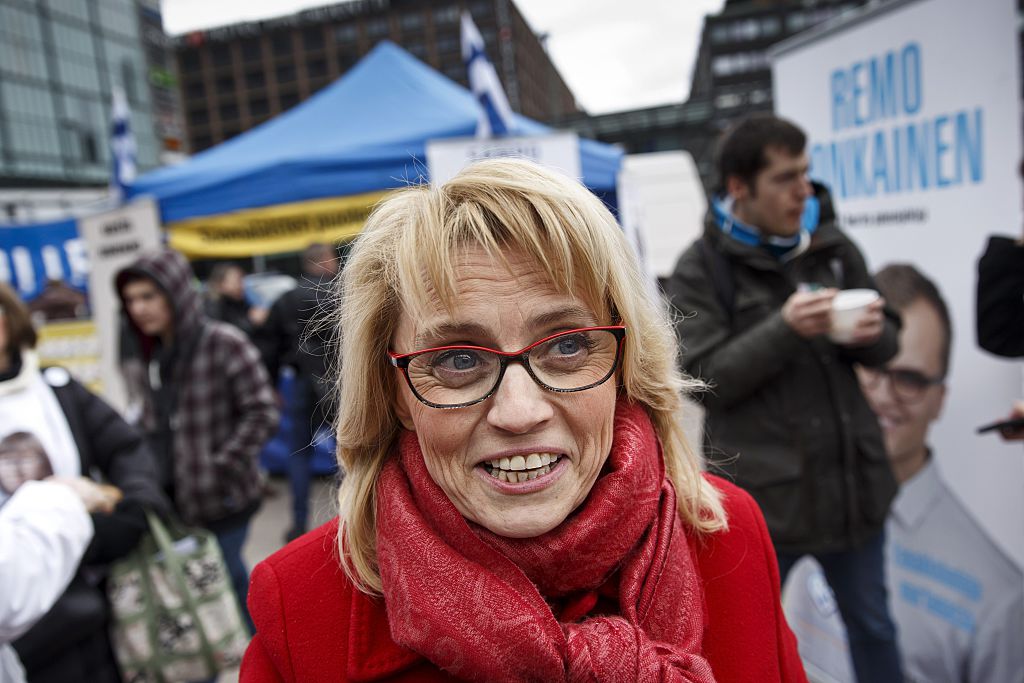
French Member of the European Parliament Virginie Joron concurred.
“The French digital regulator ARCOM told me they believe the DSA allows them to censor any post anywhere in the world using the DSA,” she said in a statement. “That means even an American citizen posting in Alabama could potentially have their online post taken down, even if the publication would be legal in the U.S.”
The DSA creates a censorship industrial complex consisting of an expansive web of outsourced content flaggers, national coordinators, monitoring reporters, and other authorities, with the European Commission at its head. It’s a business model dependent on finding content to censor and inconsistent with the standards of the rule of law. The threat the DSA poses to free speech is real. Resisting it is key to ensuring that its impact is blunted.
Brussels bureaucrats must not be allowed to position themselves as the world’s speech police. For the freedom of all people, we must resist the rise of a global censorship regime so that what happened to Rasanen doesn’t become the new online norm.
Views expressed in this article are the opinions of the author and do not necessarily reflect the views of The Epoch Times.
 Friends Read Free
Copy
Facebook
Tweet
Friends Read Free
Copy
Facebook
Tweet