Commentary
Ray Dalio, the billionaire founder of the Bridgewater hedge fund, says that the United States is now seen as an unreliable military ally, and so leaders are increasingly having relations with China that are “like a tribute system.”
In such a system, historically, weak nations pay tribute to a powerful emperor for the “privilege” of not being invaded. Sometimes the tribute is symbolic, and sometimes it’s a burdensome tax.
Dalio agreed with the statement presented to him by Bloomberg that China has a substantial say in the making of the “next world order.” He said the system in which “a tiny country in the United Nations could have the same vote as a huge country” was not practical and would evolve toward a tribute system. He predicted the acceleration of the “use of the renminbi as a world currency.”
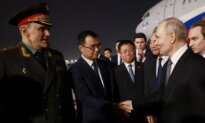
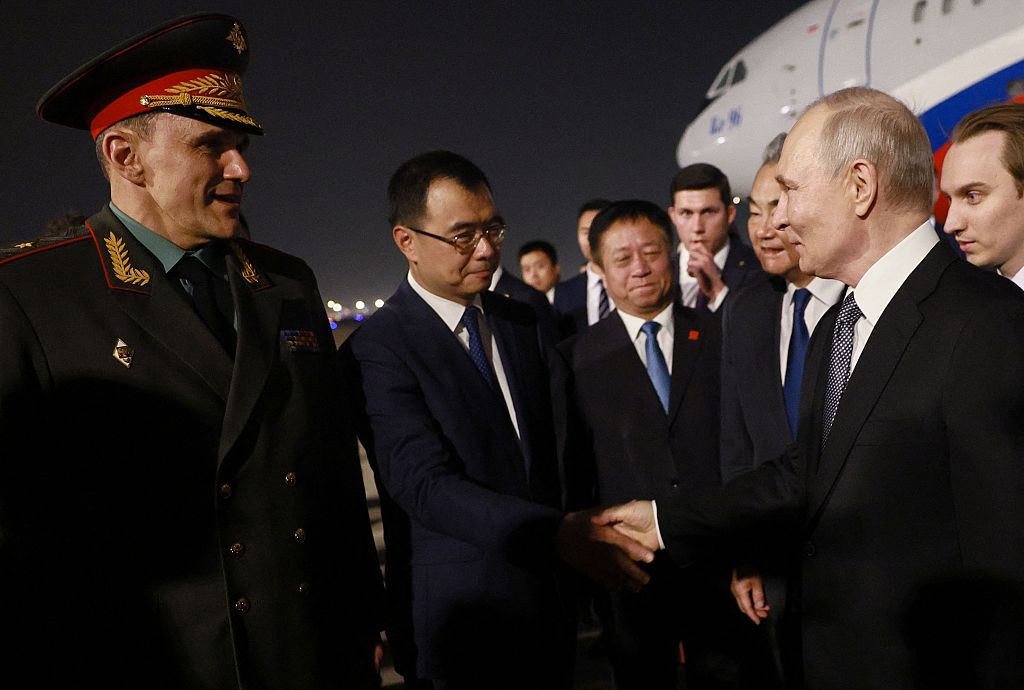
The Chinese Communist Party (CCP) likely agrees with much of this, but puts on a different face. On May 20, Chinese leader Xi Jinping accused the United States, in a veiled manner, of unilateral hegemonism. He did so in a speech before his Russian counterpart on the first day of President Vladimir Putin’s latest visit to China.
While Beijing and Moscow claim that the United States is hegemonic, the evidence points the other way. The United States has long promoted national sovereignty through decolonization of the old European empires and the promotion of democracy and territorial integrity through the United Nations system. China and Russia, in not embracing democracy and invading their neighbors, have since at least the 1960s repeatedly done the opposite.
Contemporary Sino-Russian relations provide evidence of a tribute system centered on Beijing in that Russia is now the junior partner. Xi continues to flatter Putin with the semblance of state-to-state visits on the basis of equality in their biannual meetings. But the two are anything but equal. China’s economy is about seven times that of Russia’s.
Sanctions against Russia over the Ukraine war forced Moscow’s energy exporters and dual-use military materiel importers into dependence on Beijing’s green light. The lack of a market for Russian oil anywhere else other than India gives Chinese refiners the bargaining power necessary to buy the oil at a discount compared with global market prices.
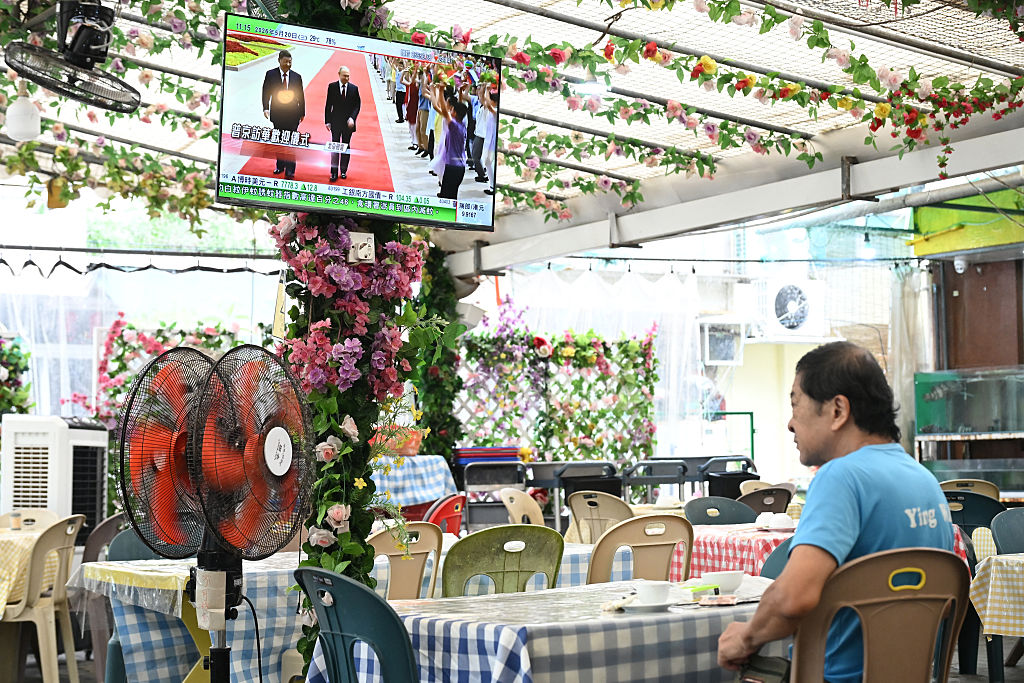
During Putin’s visit, the two leaders signed a joint statement in favor of a “multipolar world,” with Moscow and Beijing presumably two of the poles. They apparently would like to see themselves as regional hegemons with the ability to charge tribute from nations in their regional “spheres of influence.” They do not want to take the back seat to Washington as one among many nation-states in a U.S.-led international system that promotes democracy and human rights. The latter was their de facto status in the late 1990s, after the breakup of the Soviet Union and prior to China’s admission to the World Trade Organization and resultant export boom and breakaway economic growth.
Russia is grinding its economy and military power away in Ukraine without much new revenue as a result. Moscow is therefore more likely to recede as an international power compared with its Soviet superpower status than to achieve regional hegemony over its former empire.
China, however, is expanding its economy and military power. It achieves this through steady economic growth, not engaging in new wars, and appearing as the peacemaker while taking territories such as Hong Kong and islands in the South China Sea without firing a shot. This is a sounder strategy for an aspiring regional hegemon. Beijing will tax Hong Kong and demand concessionary rates for oil and gas extracted by countries with South China Sea claims, arguably the start of a tribute system beyond the old borders of China established shortly after the communist revolution of 1949. Such tribute is likely just a stepping stone toward regional and then global hegemony for the CCP, as evidenced by research on the topic that shows that global hegemony is the CCP’s ultimate goal.
The relations of U.S. corporations doing business in China provide more evidence that Beijing seeks tribute from the world. On the latest visit by President Donald Trump to China, he said that the American CEOs who accompanied him were there to “pay respect” to Xi and China.
White House trade and manufacturing adviser Peter Navarro said that the regime sees some of the U.S. CEOs as “useful idiots.” The CEOs increase their company’s short-term profits in China, which pads their salaries with large bonuses at the cost of transferring technology to Chinese companies that, in the long term, outcompete the U.S. industry. This “forced technology transfer” could be considered a form of tribute that counters the long-term interests of company shareholders. That arguably violates the CEO’s fiduciary duty to shareholders.
Despite the CCP’s immense influence over Russia, regional countries, and global CEOs, the regime’s short-term goal of achieving a regional tribute system will be hard with the United States and our allies standing in the way. Trump took a tough stand against China’s partner Iran for attempting to demand tribute of ships passing through the Strait of Hormuz over the past few months.
And Trump has broken the mold in containing China, including by imposing tough tariffs on the country, the “no deal” summit with Xi this month, and recent plans to speak with Taiwanese President Lai Ching-te. This would be the first phone call between sitting presidents of the two countries since 1979, when the United States broke off diplomatic relations with Taipei. Trump should use the call to support a democratic ally and demand that it pay at least 5 percent of its gross domestic product for defense (the new NATO standard). Whenever China sends its warships or coast guard near the waters of U.S. allies, the latter typically shadow them with their own such vessels. Taiwan will need more if it is to hold the line against Beijing.
China’s economic strength makes it difficult to push around through economic levers, as Dalio noted in his interview. At some point, the United States will need to take a military stand when the CCP attempts to further expand its control over trade routes, key cities such as Hong Kong, and vast areas of international waters such as the South China Sea. Whether the United States and our allies stand our ground in the future is not known, but if unopposed, the likelihood of the CCP becoming globally hegemonic only increases.
Views expressed in this article are the opinions of the author and do not necessarily reflect the views of The Epoch Times.
 Friends Read Free
Copy
Facebook
Tweet
Friends Read Free
Copy
Facebook
Tweet