The Chinese Communist Party has made OneBelt, OneRoad (OBOR, also known as Belt and Road) the cornerstone of its plan to expand its geopolitical influence.
The event began in 2018 as part of the OneBelt, OneRoad initiative (OBOR), China’s flagship foreign policy project of financing infrastructure projects overseas in a bid to gain geopolitical clout.
The Belt and Road Initiative (BRI)—also known as OneBelt, OneRoad or OBOR—is a plan for the Chinese regime to invest trillions of dollars to build critical infrastructures, such as bridges, railroads, ports, and energy facilities, in dozens of countries
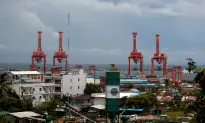
There is growing international concern about China’s ties with Cambodia, one of the earliest supporters of the OneBelt, OneRoad initiative (OBOR, also known as Belt and Road).
OneBelt, OneRoad
Beijing considers the Myitsone dam a key element to its other OBOR projects in Burma, according to a January analysis article published by online news site The Irrawaddy.
But all of them were based in the Sihanoukville Special Economic Zone (SSEZ), a key project of the Chinese regime’s OneBelt, OneRoad (OBOR) initiative.
Qingtian county police, according to Yan, focus on the mobilization of Chinese expatriates born in Qingtian or descents of these people for the purposes of “national security and service guarantee for the construction of OneBelt and OneRoad.”
B3W to Counter CCP's BRI
Since the CCP launched its global infrastructure development strategy through the "Belt and Road Initiative” (BRI, also known as OneBelt, OneRoad) in 2013, many countries have been mired in debt and corruption.
Italy is the only one of G7 countries that joined the Chinese Belt and Road Initiative (BRI, or OneBelt, OneRoad) aimed at expanding the Chinese political and military sphere of influence through opaque lending practices leading to debt traps.
Commentary
The Belt and Road Initiative (BRI, also known as OneBelt, OneRoad) is the Chinese regime's imperialistic and expansionist agenda in large parts of Eurasia, South-Asia, and Africa.
The Myitsone hydropower dam in Kachin state is one many multi-billion dollar infrastructure projects that form part of Xi’s flagship "OneBelt, OneRoad" (OBOR, also known as Belt and Road) initiative.
Beijing rolled out its OneBelt, OneRoad (OBOR, also known as Belt and Road) initiative in 2013, with the goal of establishing geopolitical clout by financing infrastructure projects throughout Southeast Asia, Africa, Europe, and Latin America.
The Chinese regime announced “OneBelt, OneRoad” in 2013 as a project to build geopolitical influence by financing infrastructure projects in more than 60 countries.
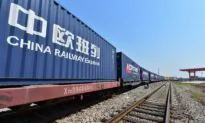
The Trans-Eurasia Logistics, also called the China Railway Express (CR Express), was launched in March 2011 and is a key part of the regime’s Belt and Road Initiative (BRI, also known as OneBelt, OneRoad).
Almost a year after Italy became the first G-7 country to sign on to the Chinese regime's flagship foreign policy project, the Belt and Road Initiative (BRI, also known as OneBelt, OneRoad)—drawing criticism from its Western allies—the country's initial
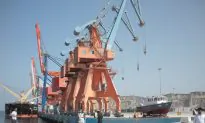
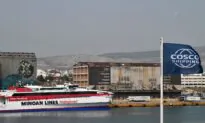
The visit culminated with the signing of an agreement for China Ocean Shipping Company (COSCO) to invest $660 million into Greece’s largest port as a European and African hub for China’s "OneBelt, OneRoad" (OBOR, also known as Belt and Road) initiative
Countering High-Tech Authoritarianism
The Chinese regime, the report stated, has been exporting its high-tech surveillance and censorship through the "OneBelt, OneRoad" (also known as Belt and Road) initiative, an infrastructure investment project
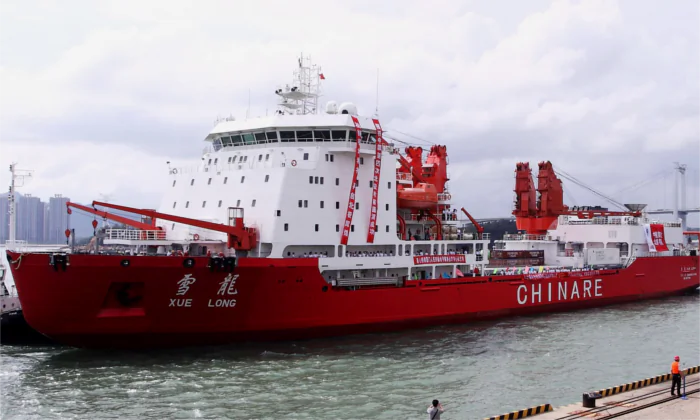
China announced its plan for a Polar Silk Road in January, wherein it will encourage shipping through the arctic region and develop infrastructure, similar to its OneBeltOneRoad (OBOR, also known as Belt and Road) initiative.
SASAC's Communist Party chief, Hao Peng, appeared in Hong Kong on Dec. 25 at a forum for the "OneBelt, OneRoad" (OBOR, also known as Belt and Road) infrastructure initiative and said that SOEs were looking for ways to cooperate in major projects in
The CCP is now actively promoting BDS via its "OneBelt, OneRoad" initiative. Among 137 signatory countries, more than 100 frequently use the BDS—most of them in Southeast Asia and Africa.
China is one of the biggest investors in Central Asia and a key trading partner for Kyrgyzstan, which Beijing has made a key part of its "OneBelt, OneRoad' (OBOR or Belt and Road) development project.
One of the largest recipients of World Bank capital has been China, which not only has ready access to capital markets but also runs an international development project of its own—the OneBelt, OneRoad initiative.
The corridor is part of China’s foreign policy of OneBelt, OneRoad (OBOR) initiative, rolled out in 2013 with the objective of increasing geopolitical influence, by building up trade routes linking China, Southeast Asia, Africa, Europe, and Latin America
According to a January 2018 editorial by state-run media Xinhua, China currently considers Greenland a strategic part of its Arctic ambition and its “Polar Silk Road”—an extension of its OneBelt, OneRoad initiative.
The Belt and Road Initiative Trap
For years, the Communist regime has tried to lure investment from Brazil through its Belt and Road Initiative (BRI, also known as OneBelt, OneRoad).