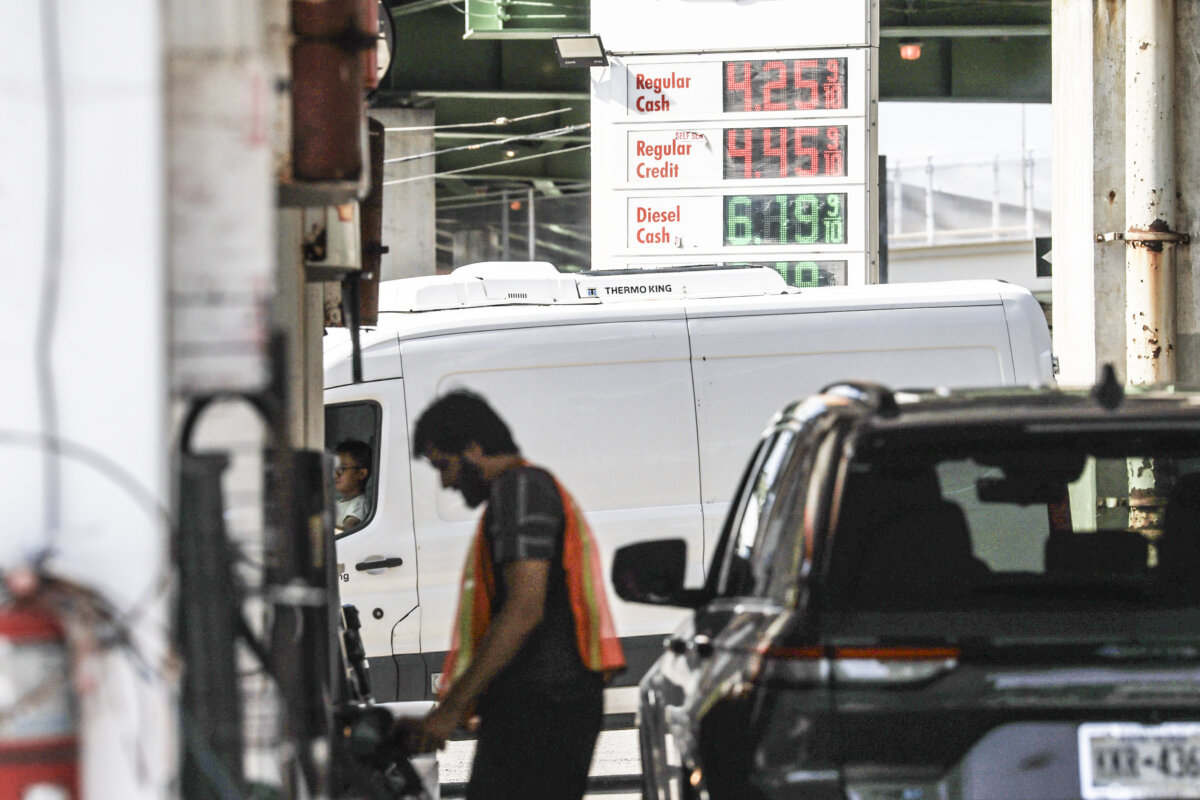

American travelers are facing record-high gasoline prices this Labor Day weekend as conflict in the Middle East and disruptions to global fuel supplies keep prices elevated.
The national average for a gallon of regular gasoline stood at about $4.15 on Saturday, according to the American Automobile Association (AAA). That is nearly $1 higher than a year ago.
This year’s Labor Day is now on track to become the first in history with a national average above $4 a gallon. The previous Labor Day record was $3.82 a gallon, set on Sept. 3, 2012.
GasBuddy analyst Patrick De Haan expects the national average to be around $4.03 on Labor Day, well above the previous record.
“Gasoline, while not at all-time records, is at its highest level ever recorded this late in the calendar year,” De Haan said.
Prices vary widely across the country.
AAA said California has the nation’s highest average on Saturday at $5.83 a gallon, followed by Washington at $5.50 and Hawaii at $5.40. Oregon, Alaska, and Nevada are all near or above $4.90.
At the other end, Indiana has the lowest average at $3.43, followed by Texas at $3.67. Oklahoma and Mississippi are just above $3.70.
Air Travel Also Costs More
Drivers are not the only travelers facing elevated costs.
AAA booking data shows domestic round-trip airfare for Labor Day is averaging about $750, up 2 percent from last year.
Travelers flying to the most popular domestic destinations face a much larger increase. Those fares are nearly 20 percent higher than a year ago, averaging close to $800 for a round trip.
International travelers, however, are seeing some relief. Average international airfare is down 4 percent from a year ago, according to AAA.
Oil, Fuel Supplies Under Pressure
Gasoline demand typically begins to decline near the end of summer as vacations end, and schools reopen, putting downward pressure on prices. This year, however, high crude-oil costs have outweighed the seasonal drop in demand.
Oil prices moved back above $90 a barrel this week, after renewed exchange of fire between the United States and Iran raised concerns about supplies moving through the Middle East.
The wartime disruptions in the Strait of Hormuz, one of the world’s most important oil-shipping routes, have been a major source of uncertainty.
Oil traffic through the waterway has improved from earlier disruptions. Energy Secretary Chris Wright said 17 million barrels of crude passed through the strait on Monday, the highest daily volume since shipments were disrupted by the war.
But continued fighting and threats to commercial shipping have kept energy markets on edge.
Another source of pressure has come from Russia, where Ukrainian drones target oil refineries deep inside Russian territory. Those strikes have tightened supplies of refined products like gasoline and diesel.
“While some oil shipments are apparently getting through the Strait of Hormuz, the dominant force propping up both gasoline and diesel prices is increasingly the growing loss of Russian refinery capacity,” De Haan said.
“Until that refining supply picture improves, both gasoline and diesel prices face continued upward pressure.”
Measures to Boost Supply
For the week ended August 28, American refineries were running at 98 percent of capacity, according to the Energy Information Administration. That was the highest utilization rate since August 2018.
The federal government has also taken steps to make it easier to move fuel around the country.
President Donald Trump extended a waiver of the Jones Act for another 90 days, through Nov. 15. The waiver allows some foreign-flagged vessels to carry fuel and other covered cargo between U.S. ports when qualified American ships are unavailable.
The Environmental Protection Agency has also relaxed seasonal fuel rules. An emergency waiver effectively ended summer-blend gasoline requirements early, beginning Sept. 1, allowing more gasoline to enter the market.
Gasoline supplies remain tight. U.S. gasoline inventories fell by 1.2 million barrels last week to 205.7 million barrels. That was about 6 percent below the five-year seasonal average.
 Friends Read Free
Copy
Facebook
Tweet
Friends Read Free
Copy
Facebook
Tweet