It is integrated into the Chinese regime's military-civilfusion, where civilian companies and research institutes are utilized for military purposes. It also hosts defense laboratories.
Citing the Chinese regime's military-civilfusion strategy, they argued it should be fully expected that the H20—and the AI models it enables—will be used for military applications.
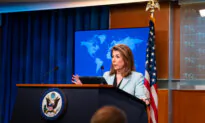
Department of State previously warned about the CCP’s strategy of Military-CivilFusion, which eliminates “barriers between China’s civilian research and commercial sectors, and its military and defence industrial sectors.
(Adek Berry/AFP via Getty Images)
Production of these videos reflects military-civilfusion, with state studios working alongside PLA units to ensure technical accuracy while maximizing emotional impact.
Although much of the DNA data gathering is done by private companies, they're still tools of the Chinese Communist Party (CCP) through its "military-civilfusion" policy.
State Department warns on its website how China uses “licit and illicit means” via its “military-civil” fusion strategy to acquire the world’s cutting-edge technologies in order to “achieve military dominance.”
China structures its industry through the CCP's "military-civilfusion," under which several shipyards of the China State Shipbuilding Corp. simultaneously produce commercial vessels and warships for the People's Liberation Army (PLA) Navy in the same
SJ Semiconductor is tied to China's Semiconductor Manufacturing International Corporation, which, along with its related entities, was sanctioned in 2020 for adhering to the Chinese Communist Party's (CCP) "military-civilfusion doctrine."
Thus, while the United States engages in kinetic operations and strategic positioning in and around Iran, Chinese companies—many operating under Beijing’s military-civilfusion doctrine—are quietly turning the region into a real-time laboratory for AI-driven
'Military-CivilFusion'
To that end, the select committee’s letter directly calls out Beijing’s "military-civilfusion" (MCF) strategy and the companies’ apparent role in assisting it.
Under the regime's strategy of “military-civilfusion,” many civilian resources serve the military sector. That civilian administrative system includes military university administrators and defense researchers.
For example, the company’s development of its Jilin-1 remote sensing satellites was based on Beijing's military-civilfusion (MCF) strategy, as outlined by provincial authorities in China's Jilin Province and the Equipment Development Department of China
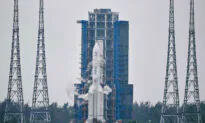
Relying on “military-civil” fusion, Beijing is projected to conduct more than 70 state launches and potentially exceed 100 total launches when commercial rockets are included, a sharp acceleration from the 92 launches carried out in 2025.
Alan Estevez, undersecretary of commerce for industry and security, said the administration is "committed to preventing the misuse of advanced U.S. technology and curbing the national security concerns raised by the PRC’s military-civilfusion."
State Department, military-civilfusion is an aggressive Chinese national strategy aimed at developing the most technologically advanced military in the world.
They said the company should be considered a “military-civilfusion contributor.”
In addition, the lawmakers urged the DOD to list six Chinese biotech companies, two of which, Origincell and MGI Group, were added on Monday.
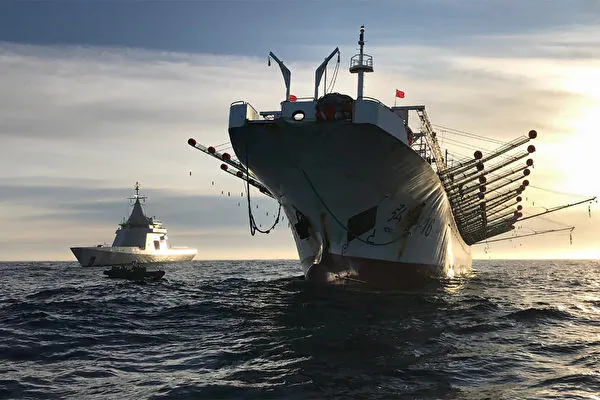
China’s fleets are more than just part of a fishing operation; they should be considered another facet of the ‘military-civilfusion’ program,” according to Fanell.
Following the recent Trump–Xi meeting, the U.S. government released an update to its list of Chinese companies linked to military-civilfusion activities, including major firms such as Alibaba, Baidu, and BYD.
Vigneault also raised concerns about partnerships between Canadian and Western universities and Chinese institutions linked to the regime's military and security sectors, highlighting issues related to Beijing's strategy known as "military-civilfusion
Commentary
Under China's "military-civilfusion" (MCF) strategy, its vast commercial shipping fleet can substantially augment the People's Liberation Army's (PLA’s) sealift capabilities, especially for large-scale operations such as a potential Taiwan
China’s ‘Military-CivilFusion’
Identifying and effectively mitigating the dangers posed by such companies has proven difficult, however, as the Chinese Communist Party (CCP) implements a “military-civilfusion” strategy in which all civil technologies
Additionally, China’s “military-civilfusion” spending, which integrates civilian industries into military development, also falls outside its defense budget.
Making an exact comparison between U.S. and Chinese defense spending is complex.
Beijing, committed to “military-civilfusion,” shows no sign of easing its scrutiny of returnees.
For Chinese students caught in the middle, every application, border crossing, or campus event can feel like a test.
Moolenaar asserted that the Chinese regime enforces a "military-civilfusion" and that this fusion erodes the barrier between the CCP and Chinese business entities.