Military-CivilFusion integrates the PLA with state-owned conglomerates, universities, and major tech companies, producing dual-use technologies designed from the outset to serve both civilian and military needs.

Therefore, the CCP has created its own version of CMI, which it calls “military-civilfusion."
The CCP aims to use military-civilfusion to build the most technologically advanced military in the world. However, according to the U.S.

Modernization With Military-CivilFusion
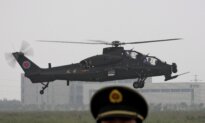
The Military-CivilFusion strategy is said to have the People’s Liberation Army (PLA) modernize by adopting technological innovations, such as quantum computing, big data, semiconductors, 5G, and Artificial Intelligence
The risk stems from Beijing's state-led strategy, known as military-civilfusion, aimed at harnessing research and technology from private-sector entities and researchers to aid its military modernization, which blurs the line between civilian and military
A new C4ADS report reveals that China through its Military-CivilFusion strategy seeks to fully-integrate its civilian industry base into the People’s Liberation Army supply chain.
China structures its industry through the CCP's "military-civilfusion," under which several shipyards of the China State Shipbuilding Corp. simultaneously produce commercial vessels and warships for the People's Liberation Army (PLA) Navy in the same
The Strategic Tablesetting
China's dual-use maritime strategy is rooted in the military-civilfusion doctrine, formalized under CCP leader Xi Jinping and elevated to a national strategy in 2015–2017.
Commentary
Under China's "military-civilfusion" (MCF) strategy, its vast commercial shipping fleet can substantially augment the People's Liberation Army's (PLA’s) sealift capabilities, especially for large-scale operations such as a potential Taiwan
The lawmakers also raised concerns over Beijing's "military-civilfusion" strategy, under which there is no separation between civilian products and industries and military research and development.
He warned that the CCP is employing a strategy called military-civilfusion that “deliberately erases” the boundary between the civil and the military sectors, meaning that Chinese trainees could become airmen for the Chinese military.
Thus, while the United States engages in kinetic operations and strategic positioning in and around Iran, Chinese companies—many operating under Beijing’s military-civilfusion doctrine—are quietly turning the region into a real-time laboratory for AI-driven
"Alibaba is not a Chinese military company nor part of any military-civilfusion strategy," the spokesperson said.
Alibaba is one of the world's largest e-retailers, and its stocks dipped after the Pentagon's list was briefly published.
More importantly, the reorganization aligns with the CCP's Military-CivilFusion framework's goal of integrating civilian platforms into military workflows.
Other names for this type of warfare include asymmetric, death by a thousand cuts, hybrid, military/civilfusion, unconventional, and war by other means.
Department of War, the People’s Republic of China (PRC) employs a “Military-CivilFusion” strategy to disguise its military development endeavours as civilian pursuits.
Department of State warned about the Chinese Communist Party's strategy of military–civilfusion, which eliminates “barriers between China’s civilian research and commercial sectors, and its military and defense industrial sectors.”
Department of State, the Chinese regime’s military-civilfusion strategy eliminates “barriers between China’s civilian research and commercial sectors, and its military and defense industrial sectors.”
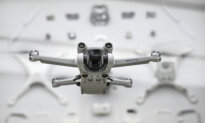
The Pentagon blacklisted DJI as a Chinese military company in 2022, noting that the Chinese regime requires all Chinese companies to allow it to use them as part of its military-civilfusion strategy.
State Department states on its website that China wants to become the first nation to transition to “intelligence warfare” via military-civilfusion, a strategy that includes theft to acquire advanced technologies, which include big data.