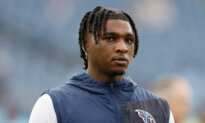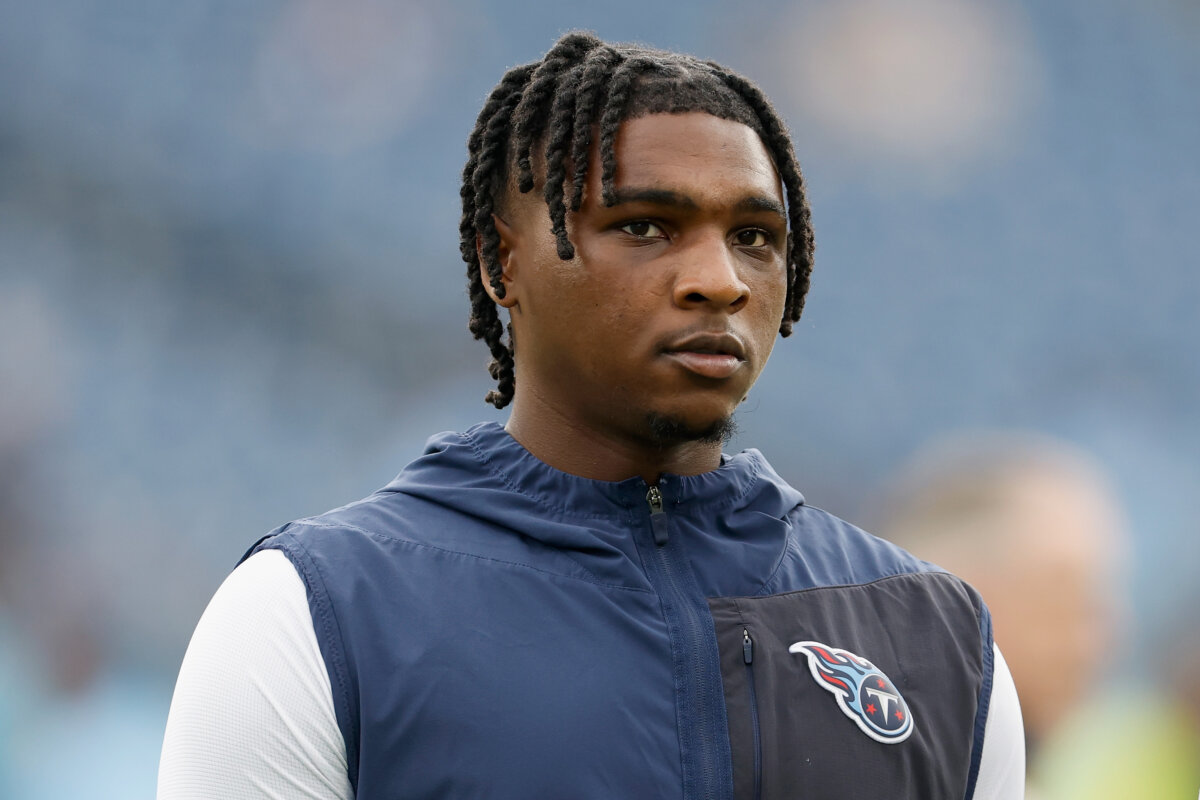
Tennessee Titans quarterback Cam Ward leaned out for his second season.
The former first overall pick showed promise in his rookie season. Going into his sophomore campaign, his focus is on becoming more durable to last through a full season, which means taking care of his body and watching what he eats. Ward is also learning to adapt to the game and his role as leader of the offense.
“I’m trying to get a little bit leaner, and just trying to stay durable for a long season,” Ward said at a press conference at OTAs Thursday. “I just continue to watch my diet more, continue to have more cardio, continue to just work on my body here, and then when I’m away from the building.”
Ward said he estimates he lost about 10 pounds. His listed playing weight is 219 pounds, so he is currently playing around or slightly under 210 pounds.
“I just think it’ll help me with durability, being faster, getting up in the pocket, then just trying to play to my speed, not no one else’s speed,” he said.
Ward said he is feeding himself differently, focusing on better nutrition.
“It’s really just watching the calorie limit, then watching the amount of protein and carbs that I need to put in,” he said. “Then what’s best for my body, how I feel, eating different things when I come to practice.”
The Titans drafted Ward first overall in the 2025 NFL Draft. Though he and the Titans went just 3-14, Ward showed promise during his freshman campaign, going 323 of 540 passing for 3,169 yards and 15 touchdowns against 7 interceptions. He rushed 39 times for 159 yards and 2 TDs. But he was also sacked a league-worst 55 times.
Besides trimming down, Ward is also trying to improve his process.
“Just being slower in the pocket, not getting to the top of my drop as fast before the receiver even makes his decision,” he said. “And just continuing to feel the tackles set, not putting them in bad situations, then just continuing to lead the football team.”
A common occurrence for young quarterbacks is the idea that the game slows down from their rookie seasons to their second years, as their mental processing acclimates to the speed of the game. Ward said he was getting more comfortable, but dismissed that notion.
“I wouldn’t think it’s slowing down,’ he said. “I just think we’re running faster plays, to where I can control a lot of it. Then I get to see angles of guys where they’re going, I just anticipate the throw.”
Ward is also recovering from a shoulder injury he suffered in the final game of the season. He said he has put the injury behind him and is continuing to work on his strength and conditioning to make sure he doesn’t get injured again.
As the quarterback, he is also adjusting to a leadership role with the team.
“I think it just gets better every year,” he said. “Learning new faces, with the coaching staff, with the new guys we’ve got on offense to defense, finding ways to motivate them, what gets them to stick if I can, then just trying to be a good teammate at the end of the day.”
One of those new faces is offensive coordinator Brian Daboll. Brian Callahan served as head coach and offensive play-caller before his firing mid-season; Mike McCoy served as interim head coach, and Nick Holz was OC. McCoy and Holz were not retained under new head coach Robert Saleh, who instead brought in the veteran Daboll. Ward said he is learning a lot from the mind that helped develop Josh Allen and Jaxson Dart.
“He’s a players’ coach,” Ward said of Daboll. “He wants what’s best for the team and the players. He’s going to put us all in great situations. And he’s had great offenses everywhere he’s been, whether he’s head coach or OC. So the biggest thing that I’m trying to do is get better and see it from an offensive play caller standpoint and why he’s calling this play, whether it’s first or second down, try to see where his mindset [is], but it’s been going good so far.”
 Friends Read Free
Copy
Facebook
Tweet
Friends Read Free
Copy
Facebook
Tweet