
The heat is on.
The FIFA World Cup 2026 could be the hottest tournament on record as internationally acclaimed athletes face off in 16 stadiums across the United States, Mexico, and Canada during sweltering summer months.
As the temperature rises, so do the stakes: A team’s performance could take a hit if its athletes do not properly prepare for the mental and physical pressure cooker of the multi-week sporting event, health experts warned.
Only four venues—Dallas, Houston, Atlanta, and Vancouver, Canada—have rooftops with air-conditioning, while the rest of the stadiums will leave soccer superfans and professional players feeling the heat during the steamy season in places like Miami, where the average high in July can reach the low 90s, climate data show.
“Core body temperature rises and athletes can lose up to 2–4 liters of fluid per hour through sweating,” Board Certified Orthopedic Spine Surgeon and Sports Medicine Expert Dr. Hooman Melamed told the Epoch Times via email.
If fluids are not replaced, blood volume drops, straining the cardiovascular system and causing a “significant decline in performance and decision-making,” Melamed said, which can be a game-changer on the field and within the athlete.
“If an athlete’s core body temperature exceeds 104 degrees F, it can lead to organ failure, brain swelling, internal bleeding, kidney failure, and/or death,” Melamed added.
He advised that athletes follow a specific diet during intense heat, which includes increased sodium and hydration requirements.
“As a sports medicine doctor, I’d tell my clients to increase sodium intake,” Melamed told the Epoch Times. “Consume carbohydrate-electrolyte beverages (a protein shake) [and practice] pre-hydration with 5–7 millilitres of fluid per kilogram of body weight at least four hours before competition.”
The Beverly Hills, California-based doctor added that athletes also tend to perform best when eating foods they are familiar with.
Some teams even went the extra (hundreds of) miles to fly in meat from their own countries.
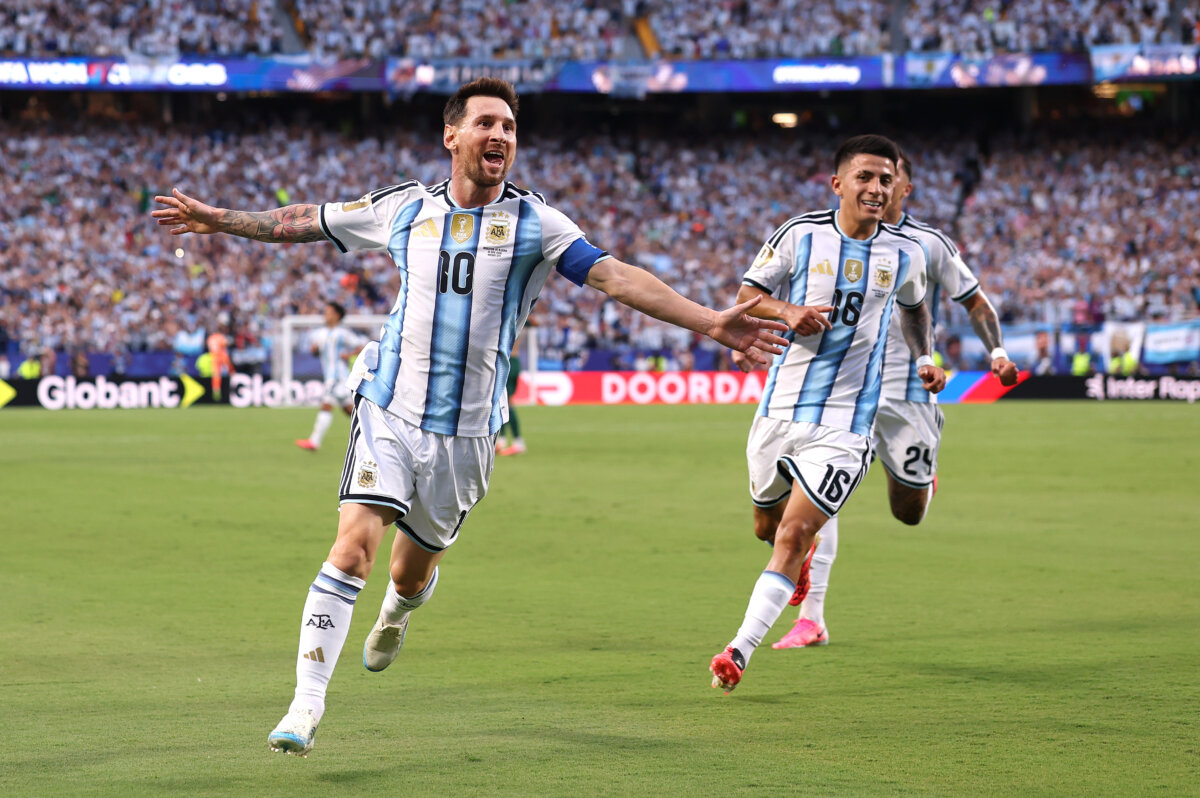
Argentina flew in beef to its base camp in Kansas City, which it also did during the tournament in Qatar, according to Uruguay officials and local reports cited by ESPN and Toronto Latinos.
Norway flew in 600 pounds of salmon, 250 pounds of cheese and 6,000 oranges for players, NBC Miami reported.
But diet isn’t the only factor keeping athletes alert on the green.
The climate conditions where players trained likely played a key role in early games, health experts added.
Many teams arrived at base camps across the United States, Mexico, and Canada weeks in advance to train and become accustomed to the climate.
“Athletes who are heat acclimated are going to perform better,” sports performance dietitian Briana Bruinooge said. “Athletes who train in hotter climates are therefore heat acclimated and have an advantage. Those in colder climates definitely have a disadvantage, but can become heat acclimated in two weeks.”
In order to become acclimated, a person needs to gradually increase their exposure to hot environmental conditions over a 7–14 day period, according to the Centers for Disease Control and Prevention.
Just over a handful of teams dove right into the burning temperatures ahead of the FIFA World Cup as managers from Uruguay, Tunisia, South Africa, the Republic of Korea, Iran, and Colombia had their base camps in Mexico for more than a week before the competition kicked off.
“Most likely the heat won’t be an issue since they would have already been heat acclimated after two weeks of playing and adapting to the heat,” Bruinooge said.
Only two teams opted to have base camps in the usually cooler Canada, which were the nation’s own team and Panama.
The rest of the teams filled up base camps across U.S. cities, with teams like the Netherlands, England, and Argentina all picking various sections near Kansas City, which has an average high of 90 degrees in July.
“They also have water breaks, which help to regulate body temperature by keeping them hydrated,” Bruinooge added.
FIFA has implemented mandatory hydration breaks midway through each half of every game in all stadiums.
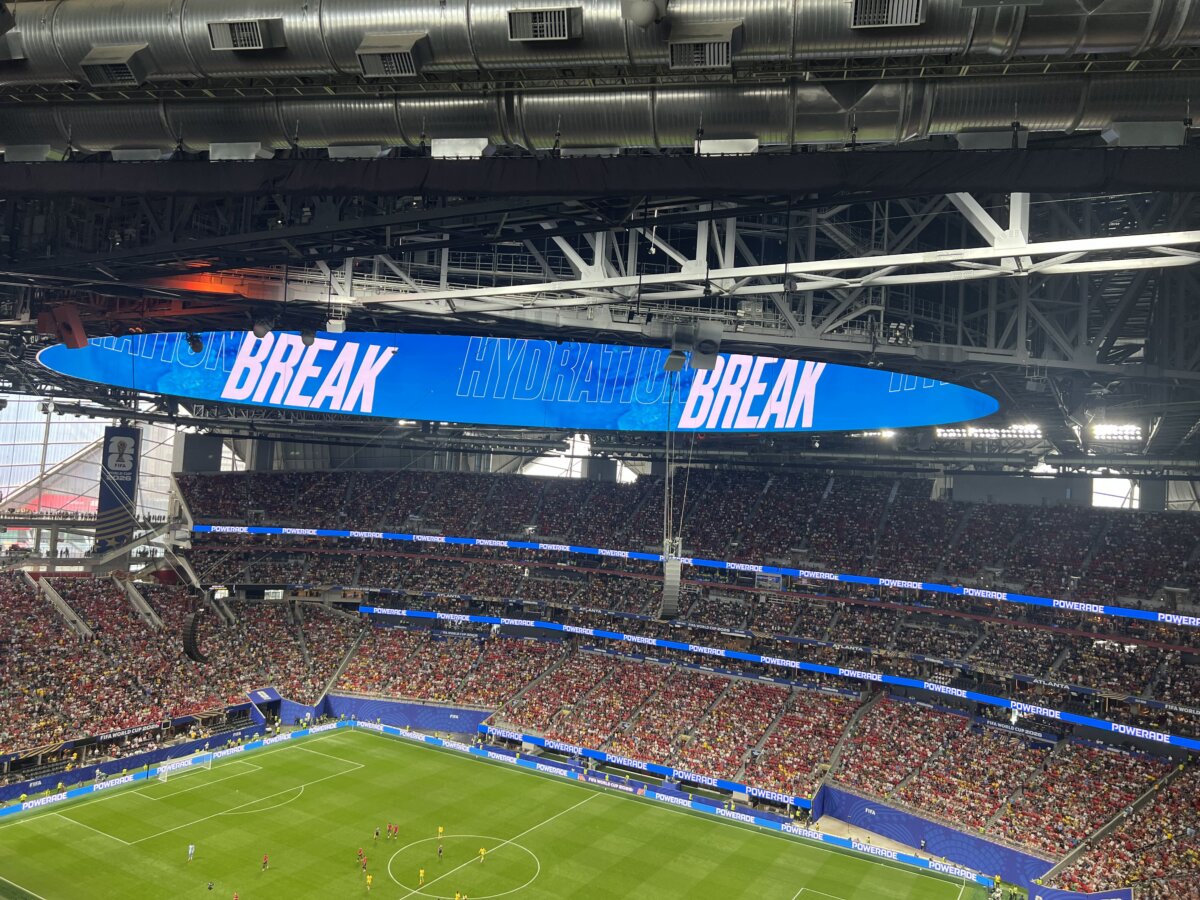
The brief pauses in the game came with controversy, as thousands of fans screamed “boo” inside of Atlanta Stadium on the June 18 game between Czechia and South Africa when the hydration breaks were called.
Some critics accuse the breaks of disrupting the game’s natural flow or giving coaches a chance to redirect their team’s approach.
As of 4:30 p.m. on June 22, Polymarket’s leaderboard of countries predicted to win the World Cup included France (20 percent), Spain (14 percent), Argentina (13 percent), England (13 percent), Portugal (7 percent), and Germany (6 percent).
The semi-final contests will take place on July 14 in Dallas and July 15 in Atlanta, which are both venues with retractable roofs and air conditioning.
The bronze final will happen in Miami’s outdoor stadium on July 28, which has an average high of 91 degrees in July, per U.S. climate data.
The final will take place at New Jersey’s outdoor stadium on July 19 in the city of East Rutherford, with daily highs averaging around 95 degrees in July.
 Friends Read Free
Copy
Facebook
Tweet
Friends Read Free
Copy
Facebook
Tweet