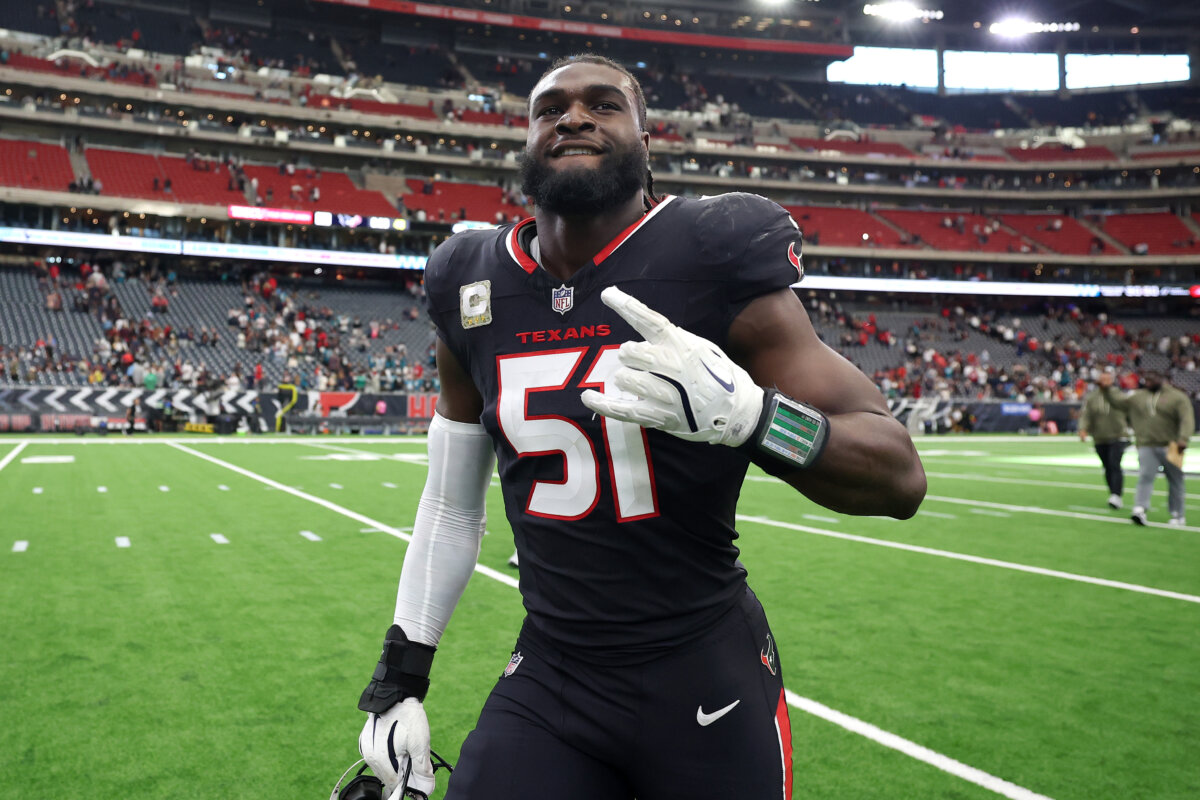

First Micah Parsons and now Will Anderson Jr.
NFL owners are offering larger deals for stars who don’t play quarterback. For years, quarterbacks have ruled the roost in terms of the league’s biggest contracts, but Parsons and Anderson have both matched those annual salaries in the past year.
Parsons, a five-time Pro Bowl linebacker, signed a four-year, $186 million contract extension with the Green Bay Packers in August 2025 after a trade from the Dallas Cowboys. Amid his $136 million guaranteed, Parsons is averaging $46.5 million a year.
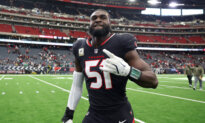
Anderson surpassed that on Friday with his deal with the Houston Texans. The two-time Pro Bowl defensive end landed a three-year, $150 million contract extension that will include $134 million guaranteed. He will make $50 million annually.
Both Parsons’s and Anderson’s annual numbers put them in the top 13 for the league when starting quarterbacks fall into the equation. It’s also more than several notable starting quarterbacks such as Patrick Mahomes, Daniel Jones, Matthew Stafford, and Sam Darnold.
Parsons and Anderson deliver impact on their teams that rival the impact of franchise starting quarterbacks, and it showed most of all in Dallas last season. The Cowboys’ defense slipped to the bottom of the league for defensive rankings in 2025 without Parsons.
Trade rumors have abounded for the Cowboys to move up in the NFL Draft to find a defensive leader to replace Parsons. The linebacker delivered 12.5 sacks, 27 quarterback hits, two forced fumbles, and 41 tackles in 14 games played last year with Green Bay.
Parsons did that in an injury-riddled season, and the Packers will expect more in 2026. Anderson led a defense that finished in the top 10 for yards and touchdowns allowed last season.
He tallied Parsons-like numbers in 17 games with 12 sacks, 54 tackles, three forced fumbles, and 23 quarterback hits. Most of all, Anderson helped the Texans win a third consecutive AFC South title.
It’s the kind of impact owners and general managers seek if a non-quarterback is going to get paid that well. Unlike Parsons, Anderson got paid before his team’s quarterback.
The Cowboys made Dak Prescott the highest-paid quarterback in the league before the 2024 season with a four-year, $240 million deal that averages $60 million annually. Instead of paying Parsons, Dallas traded him to a team that also has paid a quarterback big money.
Jordan Love ranks second for the biggest salary in the league with $55 million annually amid his four-year, $220 million deal with the Packers. Teams can afford to pay both a top quarterback and defensive star, but they have to be judicious with the salary cap constraints. In Anderson’s case, the Texans have quarterback C.J. Stroud on his rookie contract for up to two more seasons.
Stroud has a four-year, $36.27 million deal, which averages $9 million annually, but the Texans could be paying Stroud sooner. He could seek a bigger contract in lieu of his fifth-year option, and the asking price could be in the $50 million to $60 million range annually. Houston has a projected $22.76 million for 2027, according to Spotrac.
With Houston and Green Bay paying quarterback-like salaries to defensive stars, other non-quarterbacks around the league could be next. One to watch for is Cleveland Browns defensive end Myles Garrett.
He has been the subject of trade rumors, though the Browns have deflected them. The two-time NFL Defensive Player of the Year has a four-year, $160 million deal with the Browns that averages $40 million annually.
While that deal keeps Garrett in Cleveland on paper for the rest of the decade, the team’s on-field performance has been a concern for Garrett. The Browns’ three losing seasons in the past four years, coupled with the impact of the Anderson and Parsons deals, could encourage Garrett’s camp to seek greener pastures. Garrett could command north of $50 million annually after the Green Bay and Houston signings, and if the Browns found the right trade partner for Garrett, it could come true.
 Friends Read Free
Copy
Facebook
Tweet
Friends Read Free
Copy
Facebook
Tweet