
Commentary
SUMMIT, N.J.—Among golf’s four major championships, only the U.S. Open and The Open Championship provide a pathway for someone to come out of the shadows, demonstrate their golf skills, and earn one of the coveted spots in the final field.
Yes, it’s a long shot, but one that keeps hope alive for those with the gumption to try.
This year’s U.S. Open will be hosted by the venerable Oakmont Country Club just outside of Pittsburgh for a record 10th time. In the field will be the elite of golf—world-ranked No. 1 Scottie Scheffler and No. 2 Rory McIlroy are among the key players already exempted into the field.
In its earliest days, the U.S. Open was the domain of only a select few individuals—many of whom were amateurs with the time and money to hone their skills. As the years progressed, the rise of professional golf became the dominant aspect, and so did the number of people interested in competing for the national championship of American golf.
How big is the event now?
The United States Golf Association (USGA) which owns and runs the event, accepted a record 10,202 entries by the April 9 deadline for the 125th U.S. Open. Any player with a handicap index of 0.4 or lower, and any professional, was eligible to apply to play in the championship. This was the fourth time the USGA received more than 10,000 entries for the U.S. Open.
The process to get to a U.S. Open involves a series of qualifying events created to pare down the players to a championship field of 156.
There were 110 courses hosting 18-hole local qualifiers contested in 43 states, Canada, and Mexico from April 16 to May 19. Those advancing then teed it up at one of the 36-hole sectional qualifiers held in nine locations at U.S. sites, one in Canada, and four internationally.
In 1924, the USGA instituted qualifying events. Initially, they took place in two sections (east and west) the week before the championship. The number of sectional qualifying sites expanded over time, reaching 17 by 1926 and 35 by 1935.
In 2002, a two-stage system of qualifying was introduced, with 18 holes for local qualifying and 36 for sectional qualifying. The introduction of qualifiers provided a more open and accessible pathway for both professional and amateur players.
Interestingly, there have been notable players who have gone through the qualifying process and made a clear impact.
Two won the U.S. Open after qualifying through local and sectional qualifying—Ken Venturi (1964) and Orville Moody (1969).
In addition to these two, the following players won the U.S. Open after advancing through final qualifying: Gene Littler (1961), Julius Boros (1963), Jerry Pate (1976), Steve Jones (1996), Michael Campbell (2005), and Lucas Glover (2009).
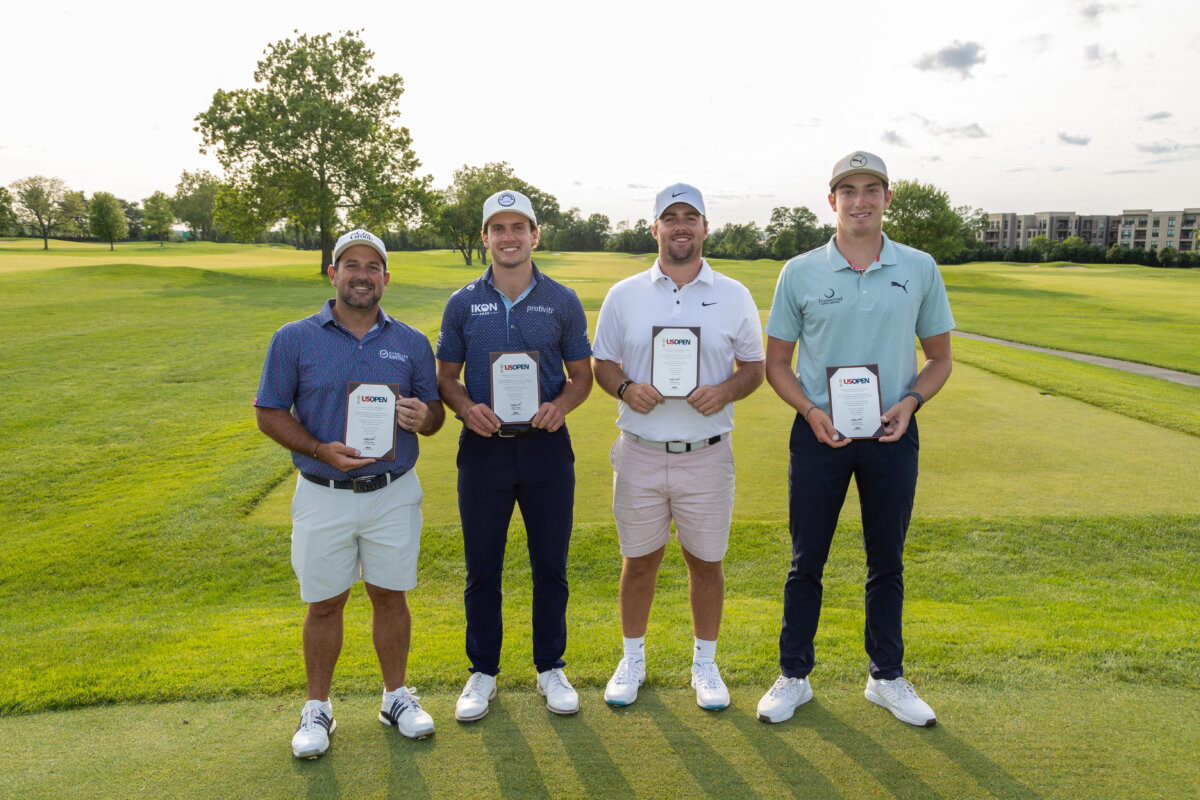
One of the 13 sites for sectional qualifying was Canoe Brook CC in Summit, NJ. The 78-man field had just four spots available and the scores were indicative of the talent involved. A score of 137 (-5) was needed to get one of the coveted four spots available to get to Oakmont.
Finishing second was Garden State native Chris Gotterup who attended Rutgers University and then transferred to Oklahoma in 2021-22, earning the Haskins and Jack Nicklaus Awards as the nation’s top collegiate player. Gotterup is now a member of the PGA Tour and will be playing in his second U.S. Open.
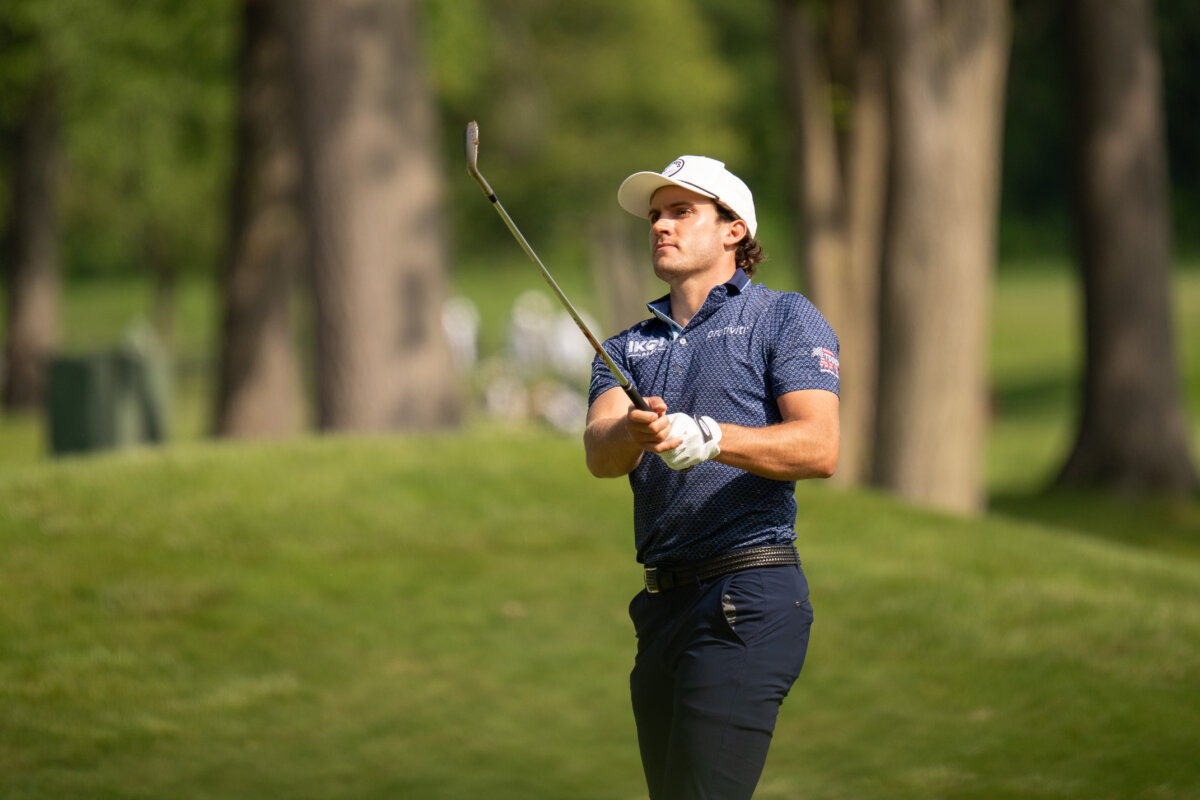
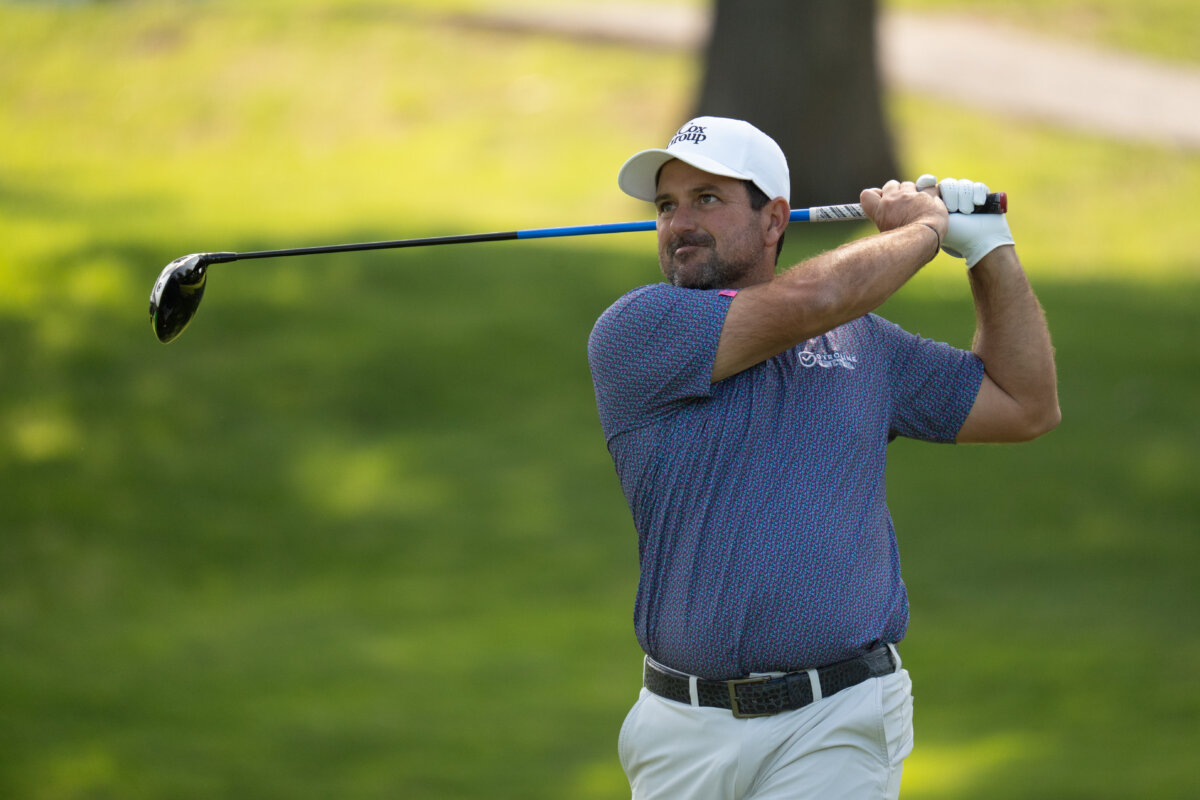
The low score was posted by Westchester-native professional James Nicholas with a total of 135 (67–68). Mexico-professional Roberto Diaz scored 136 (65–71) and for the second consecutive year Connecticut amateur and University of Virginia golfer Benjamin James secured the final position with a 137 total (67–70). James ended his day in a clutch fashion—making birdie on his 36th hole to avoid a possible five-way playoff with four other players.
Canoe Brook is no stranger to having hosted previous sectional qualifying events. Of particular note was when the 36-hole facility staged the 2006 event and Michelle Wie West, then 16 years old, nearly accomplished what no woman had ever done—qualify for the U.S. Open.
More than 200 writers were on the scene, plus satellite trucks from ESPN and Golf Channel. A makeshift media center was even created. The number of people present—over 5,000, caused officials to close the course and prevent even more people from arriving.
In years past the awarding of exemptions was not a topic for discussion. In 1953 after winning the Masters and U.S. Open, Ben Hogan traveled across the Atlantic Ocean to play in his only Open Championship. Even with Hogan’s impeccable record, the Texan had to play 36 holes in a qualifier just to advance to the championship at Carnoustie. Hogan would go on to capture the Claret Jug with his exemplary play.

Determining the fields for such prestigious events is no easy matter. Organizers want to have the best players competing, and there are avenues now for tour professionals to garner a spot in the field via their play in designated events where they regularly compete.
Playing in a qualifier is the ultimate pressure cooker. For a number of players, just getting to the sectional qualifier is an achievement. However, for others, the validation in making a U.S. Open field can serve as a springboard for better days ahead.
Gotterup knows this full well. Last year his effort at Canoe Brook came up one stroke short.
“Last year, I left here 3-putting the 18th hole to miss by one [shot], and that car ride sucked. This car ride home will feel a lot better. I love coming back and playing at home,” said the 25-year-old after concluding play.
Golf royalty generally are not enamored with a one-day 36-hole event. For many who live and compete at the highest of levels, a return to a qualifying event places them at the same level as any other competitor. Democracy at work, indeed. What one accomplished previously has little to no meaning. A sectional qualifier is truly the manifestation of “do or die.”
An “Open” championship is a possible pathway—but it rarely follows a straight line and is often filled with tortuous moments where mental and physical skills are pushed to the max. Potholes on a scorecard can push a golfer off the road and into a future limbo of career uncertainty.

The USGA smartly incorporated a recent branding platform the expression “E pluribus unum,” meaning, “From many, one.” The campaign celebrates the inclusivity of the U.S. Open, where any golfer can compete with the right handicap and earn a position with the finest golfers on the planet.
The aura of the U.S. Open comes not just from the top-tier names performing on the grandest of stages, but from how the slimmest of hopes can rise and sparkle if even for the briefest of moments for journeymen who dare to dream.
Fortunately, a U.S. Open still has the full meaning of the event right up front. Other sports do not have an “open” pathway. One cannot jump onto the field at Yankee Stadium for a tryout or dare to shoot hoops with Steph Curry in a real NBA game.
Those who came to Canoe Brook and the other sectional qualifying sites hoped to seize an opportunity where talent alone is the final determinant.
Meaningful meritocracy still matters.
 Friends Read Free
Copy
Facebook
Tweet
Friends Read Free
Copy
Facebook
Tweet