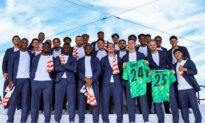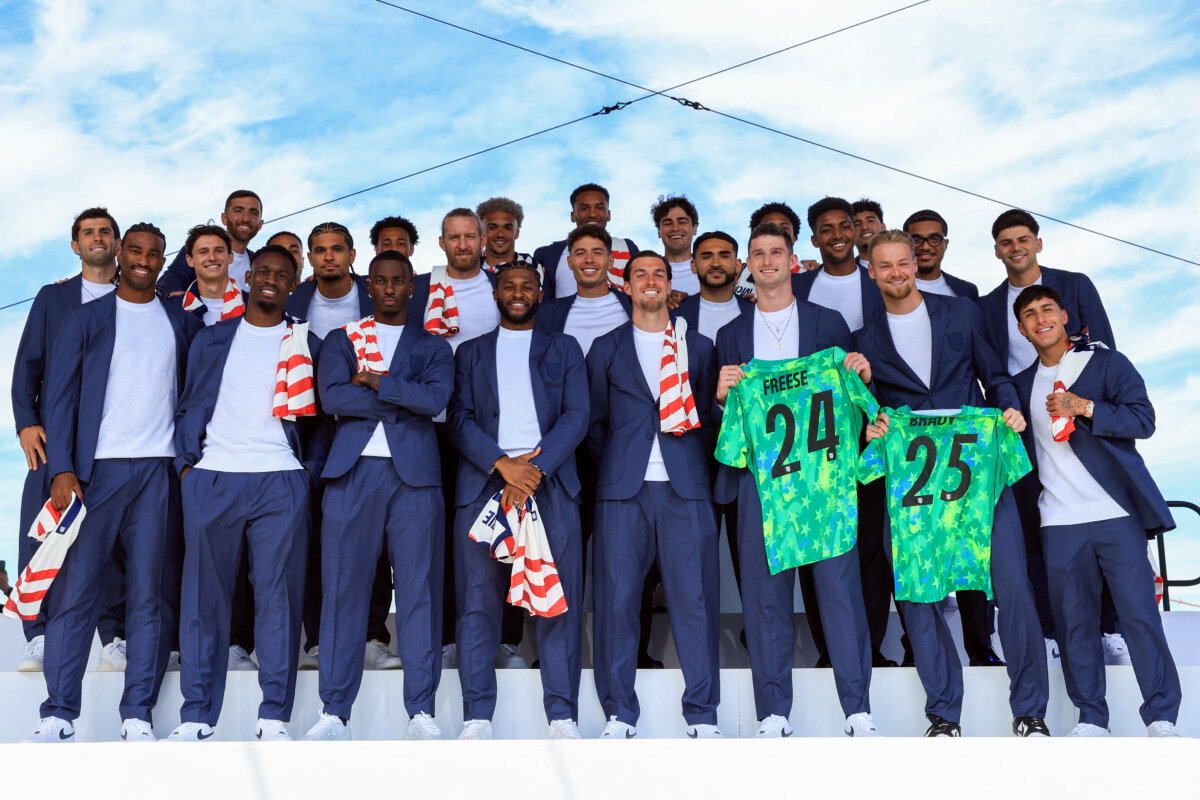

The world’s biggest sporting event is no longer months or weeks away—the 2026 FIFA World Cup is now just days away. It kicks off on June 11, with the United States Men’s National Team (USMNT) having its first game the following day. The United States is a co-host, alongside Mexico and Canada, and the prospects for the Americans are as high as they’ve ever been for a World Cup.
However, questions remain regarding their roster, Mauricio Pochettino’s coaching tactics, and even the role that playing on home soil will play. Here are the biggest storylines that USMNT fans should pay attention to both leading up to and during the 2026 World Cup.
1. Can Christian Pulisic Rise to the Occasion?
Let’s start with the current face of American soccer in Christian Pulisic. He began the 2025-26 Series A season on fire, but had been ice-cold for both club and country recently. Prior to scoring against Senegal on May 31, Pulisic hadn’t found the back of the net for either the United States or AC Milan since December 2025, a drought of 21 matches.
The USMNT isn’t exactly blessed with goal-scoring mavens, so they need Pulisic to come through and come through often. His 0.39 goals per match is the second-best ratio in USMNT history, trailing only Clint Dempsey (0.40), and Pulisic has one goal across four World Cup matches. Team USA has not scored more than one goal in each of their last six World Cup matches, and Pulisic will be essential in the squad, breaking through that glass ceiling to give the Americans a chance for a deep tourney run.
2. Does Having Home-field ‘Advantage’ Actually Hurt?
The Americans have never entered a World Cup as a true contender, and the same goes for this year’s edition. However, with the United States serving as the main host of the competition, there is more pressure on the USMNT than ever before. Host countries are expected to perform well, as 77 percent of host nations across the prior 22 World Cups have advanced to at least the quarterfinals.
Being the host has the obvious advantage of playing on home soil and having the crowd in your favor. But being a host also comes with the disadvantage of not having to qualify for the World Cup. Thus, the United States, along with Mexico and Canada, didn’t have those high-pressure matches leading up to the World Cup that the other 45 nations had. We’ll see if that easier road hurts or helps the Americans.
3. How Fit will Chris Richards be?
The reigning U.S. Soccer Player of the Year, Chris Richards, tore ligaments in his ankle in late May and missed Crystal Palace’s final two matches. The defender has previously served as captain of the USMNT, and while indications are that he’ll be ready for the World Cup, there’s no guarantee. He is atop the team’s depth chart at center back, and without his presence, the Americans would have to heavily lean on 38-year-old Tim Ream, who is set to become the oldest USA player in World Cup history. That is exactly what opponents of the United States want the Americans to do, as Richards’s form and fitness are integral.
4. Will Opponents Exploit the Back-3 Formation?
In recent matches, coach Pochettino has deployed either a 3-4-2-1 or 3-4-3 formation that is very attack-minded. For the most part, this formation has worked, with the team posting five wins and one draw across the six matches it was used, including wins over World Cup teams Australia, Senegal, and Paraguay. But there is obviously a downside to overly emphasizing the attacking third, and that comes in the defensive third.
The United States has been simply overwhelmed on the back end in recent matches versus European squads. Against Portugal, Switzerland, Belgium, and Türkiye, the USMNT conceded 13 goals across four defeats. All of those contests were with a back-4 set, so one has to wonder how much worse things could get with one fewer defender on the field. While the United States gets to face Australia and Paraguay again in the group stage, it also has to face Türkiye again, so will Poch shuffle his formation from match to match or roll out a uniform set throughout WC 2026?
5. What Would a Great USMNT Performance Mean for US Soccer?
The United States’ successful bid to host the 1994 FIFA World Cup played a role in the launch of Major League Soccer. In the 30-plus years since then, the MLS has been a clear fifth among North American major sports leagues, behind the NFL, NBA, MLB, and NHL. While hosting a World Cup is one thing, having success at it is another, and that’s something the USMNT has truly never experienced. A 2002 quarterfinals appearance is the best World Cup result by the United States in nearly 100 years.
Thus, no one knows what cultural or economic impact the World Cup success—akin to that achieved by the United States Women’s National Team—could have. The U.S. soccer boon is something that’s been talked about since that landmark 1994 World Cup, and to this point, it’s only been talk and hasn’t been realized. The arrivals of David Beckham and Lionel Messi in the United States via the MLS moved the needle only so much and didn’t necessarily take soccer in the United States to new heights.
But the USMNT winning the World Cup in the United States—could that propel the MLS to leapfrog the NHL in terms of hierarchy? Could it spur generations of American kids to strap on the shin guards instead of lacing up sneakers or putting on a helmet? Could it finally allow soccer in the United States to become a daily talking point instead of one that pops up every four years?
We’ll find out soon.
 Friends Read Free
Copy
Facebook
Tweet
Friends Read Free
Copy
Facebook
Tweet