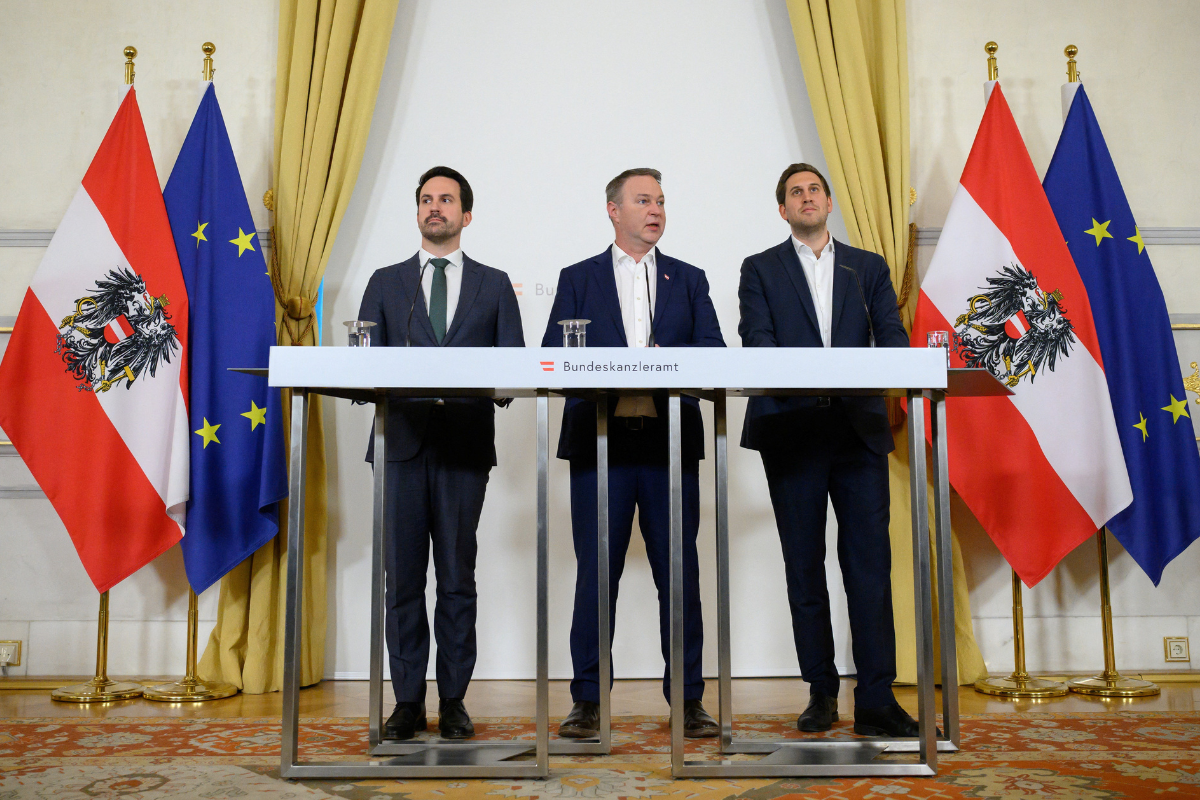

Austria’s government on March 27 said it plans to introduce a ban on social media for under-14s, citing concerns over child safety, addiction, and cyberbullying.
Social media “exacerbates distractions and concentration problems, while personalized advertising and algorithmic content increase the pressure on young people,” the federal government said in a statement.
When the plans will take effect was not immediately clear, but the government said that legislation will be drafted by the end of June.
“We will decisively protect children and young people in future from the negative effects of social media,” Austrian Vice Chancellor and Media Minister Andreas Babler said.
“We will no longer stand by and watch while these platforms make our children addicted and often also sick. … The risks associated with this use were ignored for long enough, and now it is time to act.”
The vice chancellor said the federal government would decide which platforms to ban based on how addictive their algorithms are and whether the sites include content such as “sexual violence.”
The plans form part of wider measures it says aims to protect children and young people online, including plans to reinforce the teaching of media literacy, the government said.
Australia Sets Precedent
Australia on Dec. 10 became the first country in the world to legally impose restrictions on minors’ access to social media platforms.
Canberra enacted a ban on those under 16 from accessing a dozen platforms, the restrictions being brought in amid concerns over mental health, online harms, and screen addiction affecting Australian children.
Other countries are following Australia’s lead, including Spain, which is seeking a similar ban on social media for minors under age 16.
In France, legislation is moving through parliament to ban children younger than age 15 from accessing social media platforms. Denmark and Slovenia are likewise looking at bans for under-15s.
Portugal is taking a different approach. Rather than introducing an outright ban on children under a certain age from accessing social media, it aims to require explicit parental consent for children aged 13 to 16 to access the platforms.
Earlier this week, the British government said it was running trials to test whether social media bans, time limits, and digital curfews can improve children’s lives.
The government said on March 25 that the six-week pilots will involve 300 families and test which measures work in practice before the government decides on a national policy.
Reuters contributed to this report.
 Friends Read Free
Copy
Facebook
Tweet
Friends Read Free
Copy
Facebook
Tweet