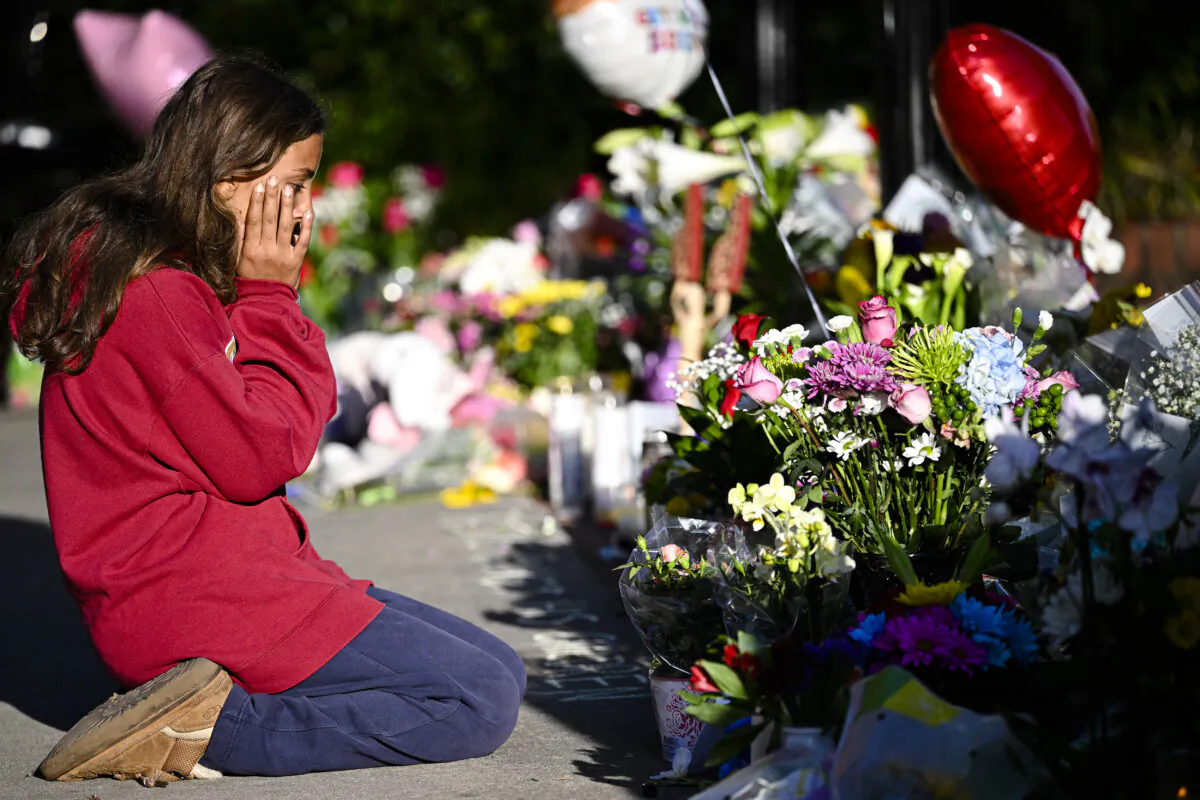
The family of one of the victims killed in the Florida State University (FSU) shooting last year has sued OpenAI, claiming the alleged gunman used ChatGPT to carry out the attack, attorneys for the family announced Monday.
According to the lawsuit, suspect Phoenix Ikner, who is a son of a sheriff’s deputy and was an FSU student at the time of the shooting on April 17, 2025, discussed his obsession with mass shootings and terrorism with the artificial intelligence (AI) chatbot, questioning which targets gain the most notoriety and what happens to a mass shooter after an attack.
“We are not going to allow the American public to have clinical trials run on them by OpenAI and ChatGPT,” attorney Bakari Sellers said in a news conference Monday.
Florida Attorney General James Uthmeier last month opened a criminal investigation into OpenAI, saying ChatGPT allegedly gave Ikner detailed information on how to carry out the campus shooting.
Lawyers for the family of Tiru Chabba, one of the victims of the shooting, agreed. The AI bot failed to connect Ikner’s disturbed state of mind with his potential to carry out real-life harm.
He is accused of injuring five and killing two, FSU campus dining Director Robert Morales and Chabba, a South Carolina native who was regional vice president of Aramark and was conducting business at the university last year during the attack.
Chabba is survived by a spouse of 18 years, an 11-year-old son, and 5-year-old daughter.
OpenAI has not publicly addressed the lawsuit and did not immediately respond to a request for comment. A spokeswoman previously told The Epoch Times that ChatGPT is not responsible and did not play a part in encouraging the shooter.
The Family’s Claims
The family accused OpenAI of failing to create a product that would refrain from having discussions tantamount to being a co-conspirator to crimes, the suit said.
Furthermore, OpenAI failed to create a product to alert a human of the need for law enforcement’s involvement based on the disturbing discussions Ikner had with ChatGPT. Lawyers for the family also said the company acted negligently in rushing its AI chatbot to market despite knowing the dangers it poses to humanity.
“Ikner had extensive conversations with ChatGPT which, cumulatively, would have led any thinking human to conclude he was contemplating an imminent plan to harm others,” the suit said. “ChatGPT either defectively failed to connect the dots or else it was never properly designed to recognize the threat.”
The alleged shooter obtained a Glock handgun and Remington 12-gauge shotgun from his stepmother, according to the lawsuit.
Ikner uploaded photos of the guns to ChatGPT, which identified them and explained how to use them, including how the Glock had no safety and was meant to be fired quickly “under stress.”
OpenAI CEO Sam Altman is currently involved in a high-profile case in California, where Elon Musk is accusing the company, which Musk co-founded, of breaching its founding agreement to be a nonprofit for the public good and converting to a for-profit entity.
“While Sam Altman is worried about trial on the west coast right now … Sam Altman now has to worry about us,” Sellers said about himself and other attorneys.
Moments Before the Attack
Ikner arrived at an FSU parking garage around 11 a.m. the morning of the attack.
The lawsuit said he remained in and around his car for the next hour while using ChatGPT to further prepare.
According to the filing, Ikner asked ChatGPT how to load and operate the shotgun before carrying out the attack.
Prior to the shooting, the AI chatbot “inflamed and encouraged” his delusions, the lawsuit said, endorsing his beliefs that he is a sane, rational person.
“[ChatGPT] helped convince him that violent acts can be required to bring about change. … [ChatGPT] provided what he viewed as encouragement in his delusion that [he] should carry out a massacre,” the lawsuit reads.
Some of the other final conversations Ikner had with ChatGPT on the day of the attack include asking what would happen to a shooter after a shooting on FSU’s campus.
The AI bot described the legal process and incarceration outlook, according to the lawsuit.
“If ChatGPT were a person, it would be facing charges for murder,” Uthmeier said.
Months Before
Ikner used ChatGPT for 18 months before the mass shooting. Chabba’s family claims this span and the lengthy discussions between the suspect and chatbot should have tipped off OpenAI to Ikner’s state of mind.
Ikner’s chat logs showed his obsessions with guns, terrorism, mass shootings, and other concerning topics.
The suspect discussed all aspects of his life with the AI bot, the lawsuit shows, including homework, workout routines, hair styling, video games, and the pair’s “friendship.”
Ikner repeatedly told ChatGPT he was lonely, depressed, and experienced rejection in attempting romantic relationships, and asked numerous questions about suicide.
“Eventually, the ‘supportive relationship’ Ikner believed this product created with him appears to have emboldened him to move forward and cement a plan to resort to a violent act to gain notoriety,” the lawsuit said.
There were about 16,000 chats between Ikner and the AI bot, lawyers said.
At one point, Ikner asked ChatGPT what the busiest time in the FSU student union was and what would happen if there was a shooting on campus.
ChatGPT said there would be “immediate national attention and rapid social media spread.”
“This is a dangerous—an inherently dangerous—product,” attorney Amy Willbanks said.
 Friends Read Free
Copy
Facebook
Tweet
Friends Read Free
Copy
Facebook
Tweet