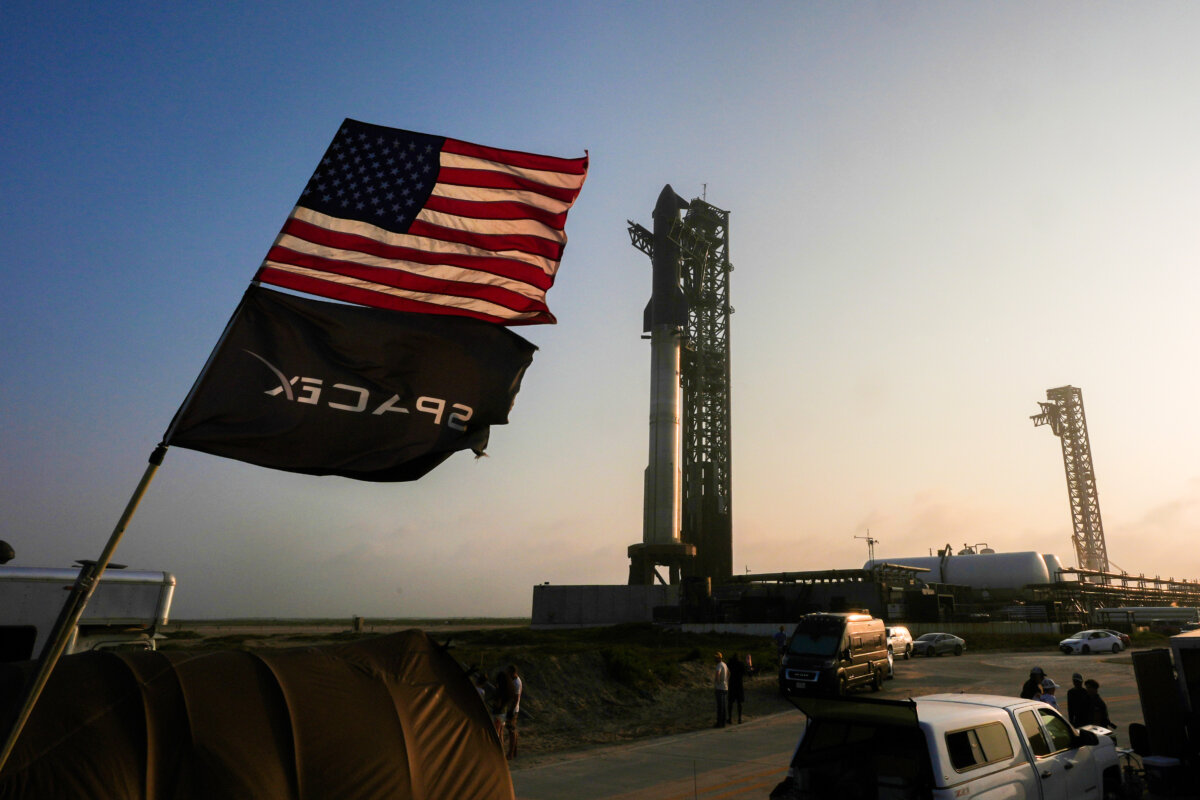
Tech billionaire Elon Musk said on March 22 that SpaceX and Tesla will build two advanced semiconductor fabrication plants in Austin, Texas: one to power cars and humanoid robots and another designed for artificial intelligence data centers in space.
The comments followed Musk’s announcement a day earlier of plans to build an advanced AI chip complex in Austin.
“We either build the Terafab, or we don’t have the chips,” he said on March 21 during a presentation in an Austin facility, noting that current global chip production would meet only a small fraction of his companies’ future needs.
Musk later said in a post on social media that the complex would operate as two “fabs,” each dedicated to a single chip design, enabling faster iteration and scaling.
“Current fabs are extremely conservative, operating on rigid historical heuristics, which are mostly, but not all, correct,” he said. “Anything that is a rate limiter at the machine level means that machine will be redesigned, unless already at limit of physics.”
SpaceX stated in a post on X that the complex will be the “next step to becoming a galactic civilization.”
It stated that, together with Musk’s Tesla and artificial intelligence company xAI, the company is “building the largest chip manufacturing facility ever (1TW/year)—combining logic, memory & advanced packaging under one roof.”
Control over semiconductor supply chains has also become a focal point of geopolitical tensions, particularly between the United States and China, with the West seeking to secure domestic production and reduce reliance on foreign manufacturing.
U.S. President Donald Trump has emphasized the need to rebuild domestic chip production as part of a broader industrial strategy.
The Trump administration stated in a Jan. 15 White House fact sheet that restoring U.S. semiconductor and related technology capacity is “critical for economic and national security.”

The Commerce Department stated on the same day that it was leading “a whole-of-government effort to revitalize American semiconductor manufacturing.” It also announced a U.S.–Taiwan chips deal on Jan. 15, which is expected to go a long way toward reshoring U.S. semiconductor manufacturing.
“The agreement establishes a strategic economic partnership between the United States and Taiwan to decisively strengthen U.S. domestic semiconductor supply chains and secure America’s technological and industrial leadership,” the department stated at the time.
Currently, TSMC, the world’s largest contract chipmaker, and Samsung in South Korea are the only companies capable of manufacturing the most advanced five-nanometer chips.
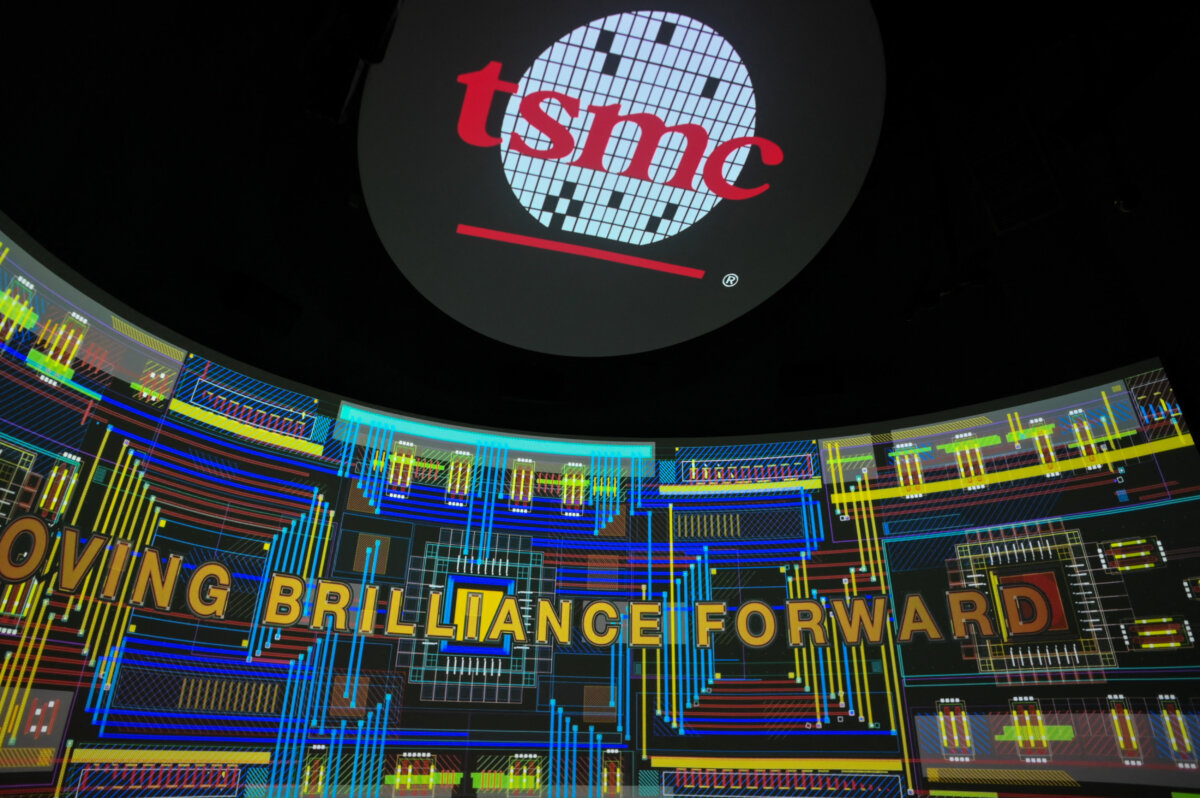
China claims Taiwan as a part of its territory even as the self-governing island is a de facto independent country with its own democratically elected officials, military, and currency.
Commerce Secretary Howard Lutnick told CNBC in January that chipmaking giant TSMC had just bought “hundreds of acres” adjacent to its Arizona facility and may expand if the company’s board approves.
He said the $250 billion commitment from major Taiwanese companies and the matching investment from the Taiwanese government will help bring the entire semiconductor supply chain to the United States.
“We’re going to bring it all over so we become self-sufficient in the capacity of building semiconductors,” he said.
Catherine Yang, Eva Fu, Frank Fang, and Reuters contributed to this report.
 Friends Read Free
Copy
Facebook
Tweet
Friends Read Free
Copy
Facebook
Tweet