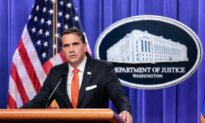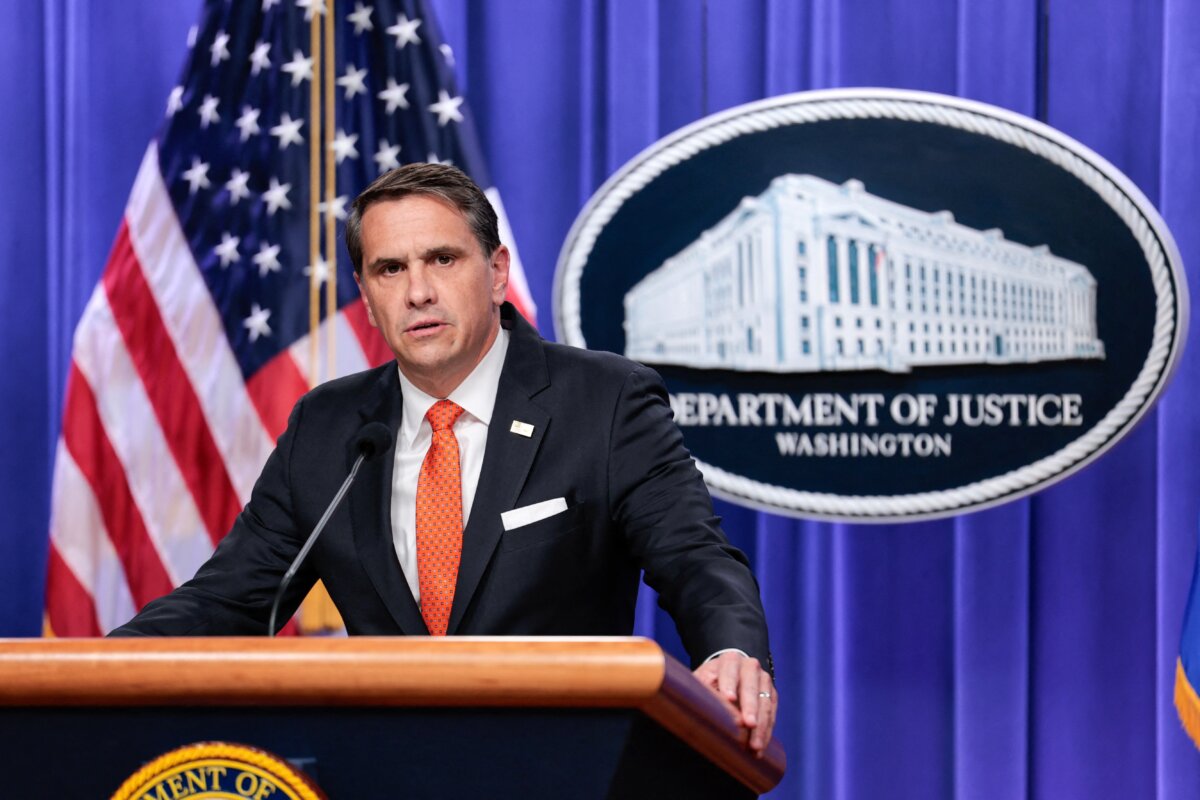

Authorities arrested five suspects in a $1.6 million COVID-19 pandemic scheme and took “enforcement action” in fraud cases totaling $340 million during the past week, the Department of Justice (DOJ) said on April 17.
The DOJ statement highlights the work of federal prosecutors and the agency’s new fraud-focused unit.
“The National Fraud Enforcement Division is committed to prosecuting anyone who steals from American taxpayers,” Colin McDonald, assistant attorney general assigned to the division, said in the statement.
The actual loss or “intended loss” in individual cases varies from $54,000 to more than $100 million, he said. “No matter the amount, we are steadfast in our effort to eliminate fraud.”
In recent months, fraud scandals have been drawing increased public attention—and action from President Donald Trump’s administration.
In an April 7 memorandum creating the anti-fraud division, acting Attorney General Todd Blanche said the DOJ has fought fraud in taxpayer-funded programs previously but that those efforts need to be better organized.
“With over a trillion dollars at stake each year, threatened by increasingly sophisticated and opportunistic fraudsters, the time for that comprehensive and coordinated approach is now,” Blanche wrote.
Federal scrutiny of government-funded assistance programs initially focused on Minnesota late last year, then expanded nationwide.
In recent weeks, federal prosecutors revealed that California’s government-program fraud—believed to total hundreds of billions in taxpayer dollars—dwarfs Minnesota’s estimated $9 billion in fraud since 2018.
The new DOJ fraud-fighting division is working with a task force that Vice President JD Vance leads.
The DOJ’s statement summarizes developments in federal fraud prosecutions from April 9 to April 16.
COVID-19, Minnesota Cases
In the newest case, five people were arrested on April 16 across three states: Kentucky, Indiana, and Colorado. The suspects are accused of scheming “to fraudulently obtain approximately $1.6 million in COVID-19 relief funds,” the DOJ said.
A Kentucky indictment alleges that Kaelynn Greene, 31, and Camden Newton, 32, defrauded two COVID-19 pandemic-era loan programs. The defendants filed fraudulent applications “in their own names, through entities they created, or through stolen identities,” the DOJ said.
Greene also is accused of working with co-conspirators—including defendants Betty Walker, 39; Breanna Patterson, 32; and Jordan Greene, 34—to recruit borrowers who were ineligible for the loans.
Through 90 fraudulent applications, the scheme reaped more than $850,000 and attempted to gain another $750,000, the DOJ said.
In a separate COVID-19 pandemic relief case, federal agents arrested Randon “Romero” Williams, 40, in Michigan. He faces accusations of fraudulently applying for more than $5 million in Paycheck Protection Program loans. A complaint charges Williams with wire fraud and money laundering.
The April 17 DOJ statement also outlines fraud-related sentencings across the nation.
One involves a Minnesota case with dozens of defendants, mostly of Somali descent.
Abdullahe Nur Jesow, 45, of Minneapolis, was sentenced to 43 months in prison for his role in the nation’s largest COVID-19 pandemic fraud scheme.
He and other defendants had been involved with Feeding Our Future, a now-defunct nonprofit Minnesota organization.
That group claimed that it fed “millions of free meals” to children but that “few, if any, were ever fed,” then-Attorney General Pamela Bondi wrote on X late last year. She estimated that the “ultimate” price tag of the scheme could reach $400 million.
Farmer, Doctors, Others Sentenced
In Iowa, a farmer was sentenced to 13 years in prison for cheating federal taxpayers out of more than $1.7 million. Tanner James Seuntjens, 33, admitted that he falsely obtained agricultural subsidies, stole multiple identities, and stalked a witness, the DOJ said.
In Florida, an Orlando man was sentenced to more than six years in federal prison for bank fraud and aggravated identity theft. Dexter Ray King, 36, filed “dozens of fraudulent claims” for funds through the COVID-19 pandemic unemployment assistance program in several states, the DOJ stated, often using “stolen identities of other people and fake addresses.” The court also ordered King to forfeit $549,375.50 in proceeds from his bank fraud scheme.
In another Florida case, a nursing assistant was sentenced to nine years in prison for his role in an $11.4 million conspiracy. Christian Cruz, 45, owned and operated a medical equipment company.
“[He] submitted millions of dollars in false claims to Medicare,” the DOJ said.
“Hundreds of Medicare beneficiaries were sent thousands of orthotic braces they did not need.”
Another medical professional, Missouri chiropractor Jerry Dale Leech, 53, was sentenced to more than eight years in prison.
Leech was ordered to repay nearly $5 million to three government health care programs: Medicare, Medicaid, and Tricare. The DOJ said Leech issued fraudulent prescriptions for pain medication, including nearly 95,000 oxycodone pills, for “no legitimate medical purpose.”
In Louisiana, a medical doctor was sentenced for conspiracy to commit health care fraud.
Dr. Robert Tassin, 67, schemed to bill Medicare “for medically unnecessary cancer genetic tests,” the DOJ said, resulting in $6.6 million in false and fraudulent claims submitted to Medicare.
A judge sentenced Tassin to a year of home confinement, plus two additional years of probation, and ordered him to repay $2 million to Medicare. He is also banned from participating in a health care business during his probation without approval from federal probation officials.
In Alabama, a Pennsylvania woman was sentenced to nearly 14 years in prison in an elaborate tax fraud scheme. Queen Naja, 45, conspired with an Alabama man to fraudulently snag $2 million—a fraction of the nearly $430 million she attempted to reap, the DOJ said.
It stated that the plan involved “creating a legal trust, submitting false tax documents, and filing a fraudulent payment,” leading the U.S. Treasury to issue a check for more than $1 million.
In addition, Naja fraudulently netted more than $1 million in refunds paid to her mother—money that helped pay for a house where Naja “lived for several years while continuing to commit her fraudulent activity,” the DOJ said.
“Between trial and sentencing, she listed that house and all its furniture for sale,” the DOJ said, but the IRS seized $214,010.42 from that sale.
The remainder of cases in the DOJ summary centered around defendants sentenced for smaller dollar amounts and some who pleaded guilty but were not yet sentenced.
Correction: A previous version of this article misspelled the name of Tanner James Seuntjens. The Epoch Times regrets the error.
 Friends Read Free
Copy
Facebook
Tweet
Friends Read Free
Copy
Facebook
Tweet