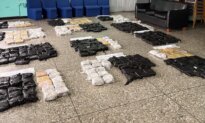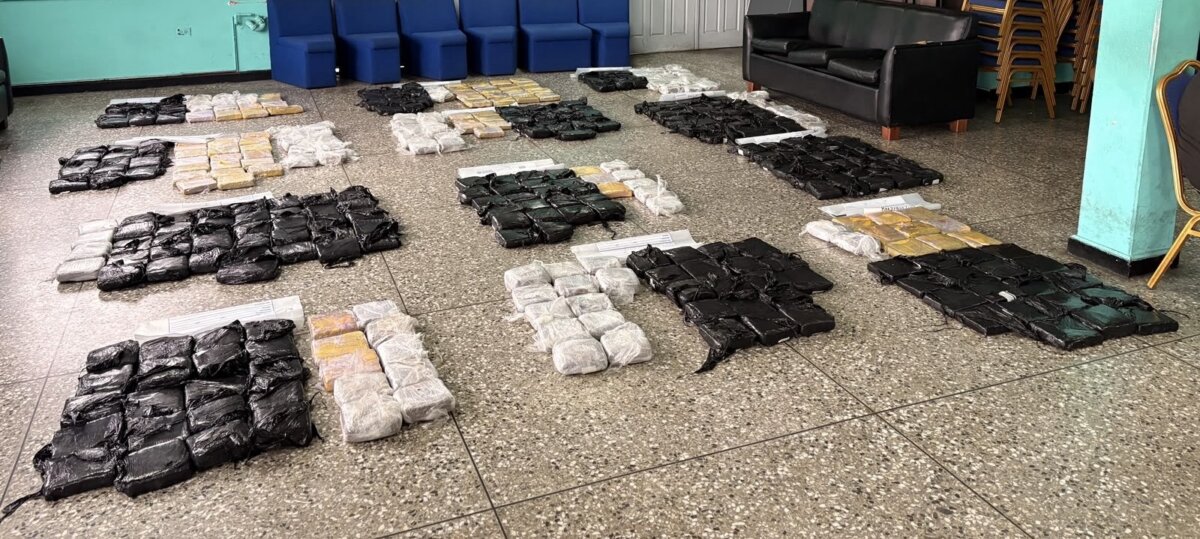

U.S. and Caribbean authorities seized 411 marijuana packages worth more than $3.7 million in estimated street value as part of a maritime interdiction operation.
The Trinidad and Tobago Defence Force detected and interdicted a go-fast vessel transporting the packages, which carried roughly 511 pounds of marijuana, the Joint Interagency Task Force South (JIATFS) stated in an Oct. 8 post on X.
“[Such efforts] strengthen regional security and show what is possible when partners work together to counter illicit trafficking,” the post reads.
Detection and monitoring efforts of JIATFS support U.S. Southern Command operations to disrupt and dismantle narco-terrorist networks operating in the Caribbean Sea and Eastern Pacific Ocean regions.
The JIATFS post on X did not reveal whether individuals were detained in the operation.
According to a May 4 report from the Office of National Drug Control Policy, the Caribbean’s complex geography offers cover for transnational criminal organizations (TCOs) to hide their drug trafficking operations.
“The operational environment in the Caribbean is overwhelmingly maritime. TCOs use high-speed ‘go-fast’ boats, low-profile vessels, submersibles, and semi-submersibles to move multiton quantities of cocaine,” the report reads.
“This threat has led to a fundamental shift in the U.S. government’s posture from a law enforcement-led mission to a security-focused campaign.”
The report outlined an effort to strengthen regional partnerships to counter drug flows. One of the measures involves the War Department expanding its intelligence sharing with certain foreign security forces to ensure more effective narcotics interdiction operations in the region.
In an earlier operation involving JIATFS, the U.S. Coast Guard and the Navy intercepted a suspected drug smuggling vessel, confiscating 840 pounds of marijuana and roughly 450 pounds of cocaine. Two individuals were detained in the incident.
Another operation in the Caribbean that involved Colombian and Dutch forces led to the seizure of about 655 pounds of cocaine valued at more than $13 million, JIATFS stated in a Sept. 28 X post. Four Venezuelan nationals were detained in relation to the seizure.
The Trump administration has faced criticism over its maritime anti-drug operations.
In a July 2 post, Juanita Caballero, a fellow at the John Quincy Adams Society, an independent network of professionals and students focused on U.S. foreign policy, highlighted certain issues with the administration’s Operation Southern Spear, a military campaign against suspected narcotics trafficking vessels in the Eastern Pacific and Caribbean.
“Drug trafficking organizations are decentralized criminal networks that absorb enforcement pressure by rerouting shipments, replacing personnel, and splintering into smaller groups,” Caballero wrote.
Caballero suggested replacing Southern Spear with a whole-of-government strategy focused on Treasury sanctions, Department of Justice prosecutions, Homeland Security land border enforcement, and Drug Enforcement Administration financial intelligence.
Sept. 1 marked the one-year anniversary of Operation Southern Spear. During a press call on Sept. 1, U.S. officials said there had been a 65 percent reduction in illegal maritime activity in the Western Caribbean over the past year.
The Eastern Caribbean saw a 60 percent drop, while the Eastern Pacific registered an almost 50 percent dip in such activity in certain areas.
When asked about what the operation’s mission accomplishment would look like, one of the officials said victory would involve America’s partner nations in the Western Hemisphere being in control of their governments, according to a Sept. 2 statement from the Department of War.
“Victory is that these [foreign terror] organizations cannot raise armies, they can’t control territory, they can’t export violence into America, they cannot exercise control over commerce in the region, and they can’t kill American citizens by importing drugs into our country,” the official said.
“Our job is not acting in defense of those countries for their own sake—though they are our partners and we help them—but in the defense of the United States; the president made clear we can, and we will strike wherever we need to.”
 Friends Read Free
Copy
Facebook
Tweet
Friends Read Free
Copy
Facebook
Tweet