
Three House Energy and Commerce Committee leaders have asked senior White House science advisers and the FBI to brief Congress on allegations that foreign adversaries, including China-linked actors, are trying to slow the buildout of U.S. artificial intelligence data centers.
House Energy and Commerce Committee Chairman Brett Guthrie (R-Ky.), Oversight and Investigations Subcommittee Chairman John Joyce (R-Pa.), and Energy Subcommittee Chairman Bob Latta (R-Ohio) sent the June 4 letter to FBI Director Kash Patel as well as David Sacks and Michael Kratsios, co-chairmen of the President’s Council of Advisors on Science and Technology.
The chairmen requested a briefing no later than June 18 on what actions the administration is taking to investigate what they called foreign influence campaigns and “billionaire-backed activism” aimed at slowing U.S. AI development and the infrastructure needed to support it.
“Americans deserve to know who is bankrolling the disinformation campaign that seeks to block critical infrastructure investments,” Guthrie said in a June 4 statement.
Reports Cited by Lawmakers
The letter cites reports by the Bitcoin Policy Institute as the basis for some of the concerns.
The Bitcoin Policy Institute report alleges that foreign influence efforts are moving through three channels: Chinese state media, a network allegedly linked to a Shanghai-based businessman, and foreign-billionaire funding tied to U.S. nonprofit advocacy.
The institute said Chinese state-controlled outlets, including CGTN, China Daily, and Global Times, have highlighted U.S. data centers’ energy use and grid demands while Beijing continues to support its own AI infrastructure. The report also states that a December 2025 coalition letter calling for a national data center moratorium was followed, 107 days later, by federal moratorium legislation introduced by Sen. Bernie Sanders (I-Vt.) and Rep. Alexandria Ocasio-Cortez (D-N.Y.).
The Bitcoin Policy Institute acknowledged that Americans have legitimate concerns about water use, energy costs, and grid capacity, but said public debate should include more transparency about who funds advocacy campaigns.
The House letter also cites a report by Power the Future, an energy advocacy group, that alleges wealthy donors are funding nonprofit campaigns against data center construction. The letter says the Power the Future report found that Virginia alone had about $45.8 billion in data center projects disrupted.
Those claims remain allegations by outside groups. The House letter does not establish that foreign funding was tied to specific local residents or community groups opposing data centers.
AI Race, Power Demand
The lawmakers tied the issue to the Trump administration’s July 2025 AI Action Plan, which says the country with the largest AI ecosystem will set global AI standards and gain economic and military benefits.
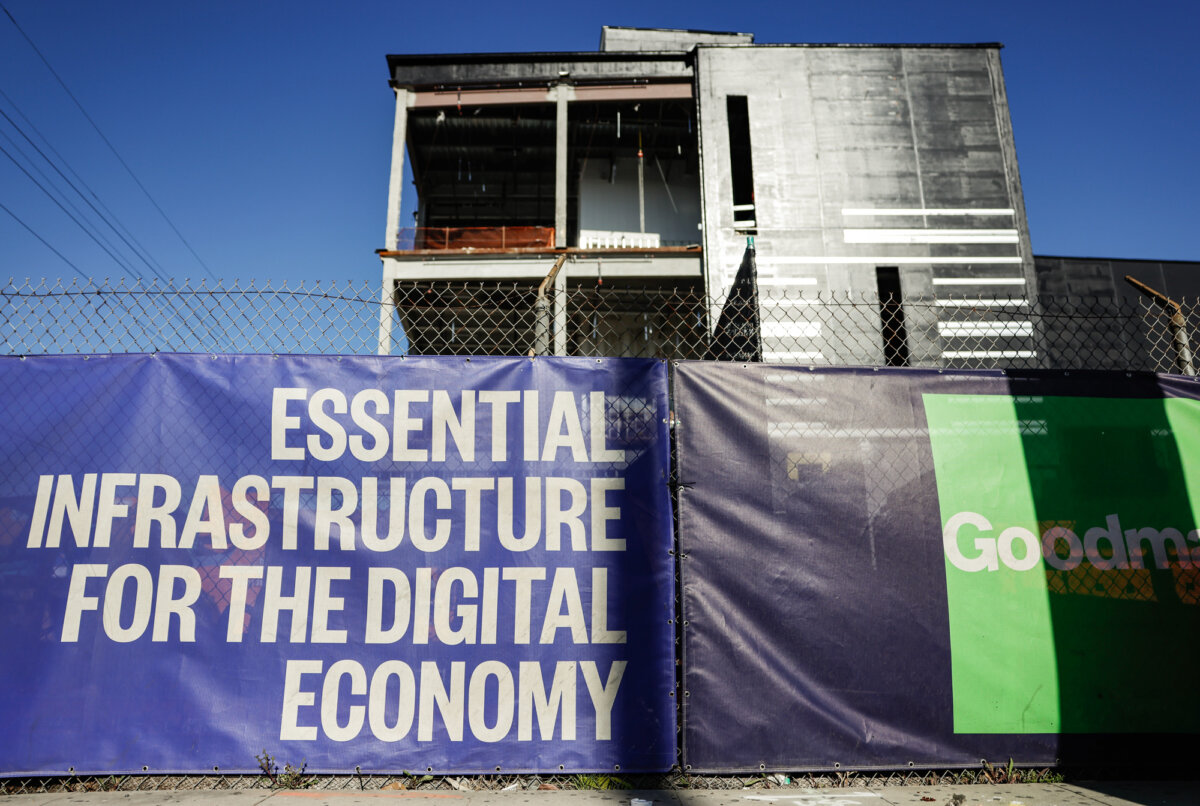
The White House plan lists AI infrastructure as one of its three pillars and calls for streamlined permitting for data centers, semiconductor manufacturing facilities, and energy infrastructure.

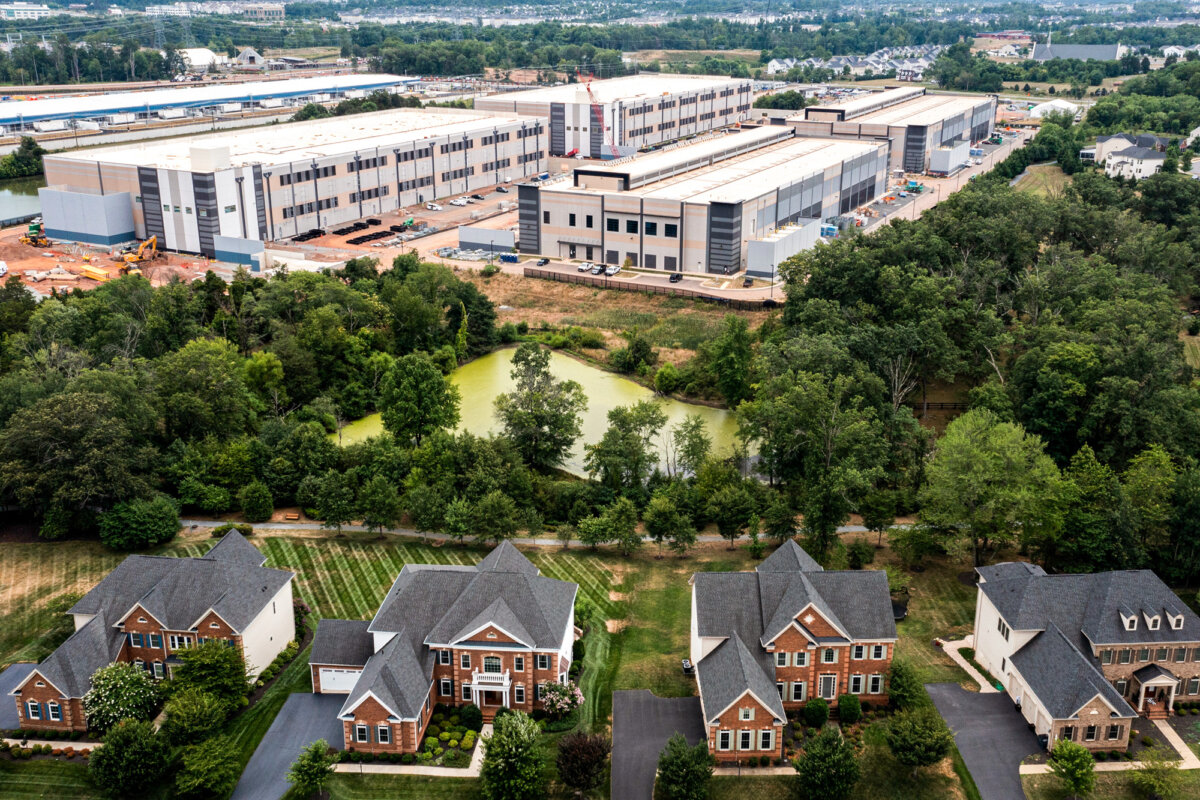
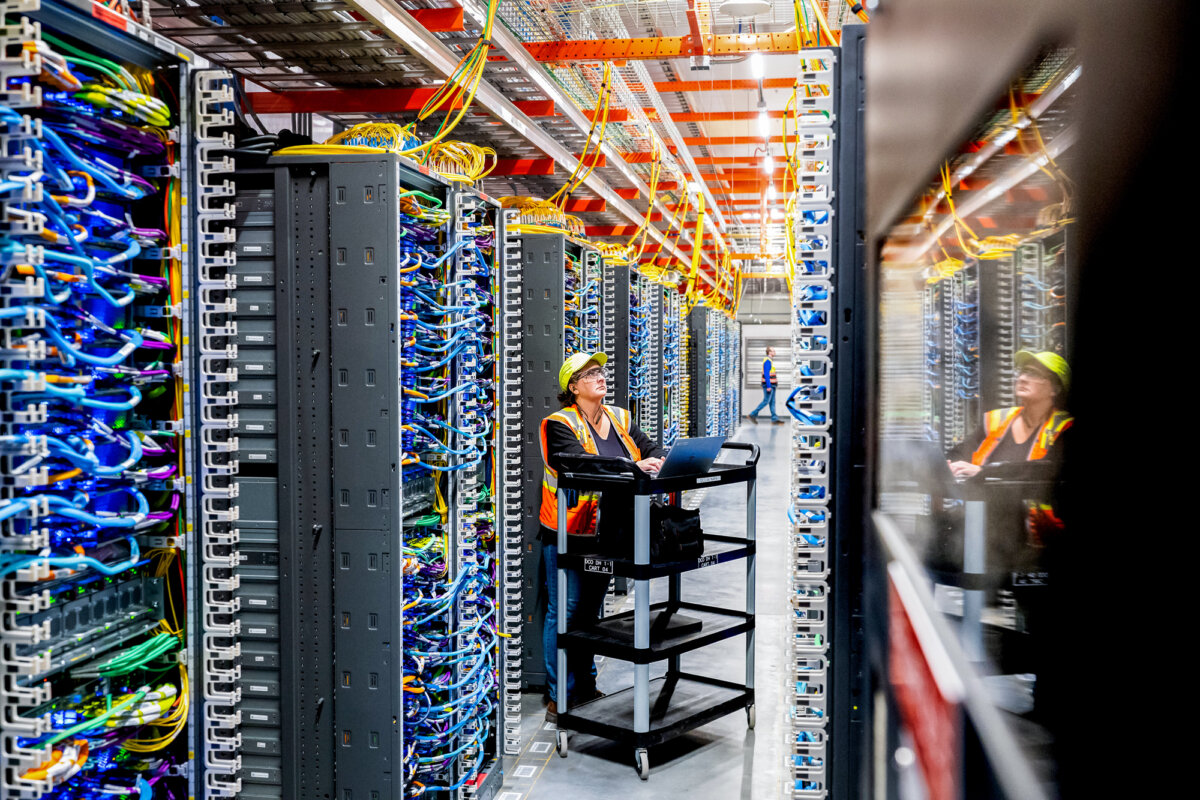
Data centers have become a pressure point in the AI race because they require large amounts of electricity, land, water, and cooling capacity.
A December 2024 Department of Energy report, produced by Lawrence Berkeley National Laboratory, estimated that data centers consumed about 4.4 percent of total U.S. electricity in 2023. The report projected that figure could rise to between 6.7 percent and 12 percent by 2028.
The report estimated that total data center electricity use climbed from 58 terawatt-hours in 2014 to 176 terawatt-hours in 2023 and could rise to between 325 and 580 terawatt-hours by 2028.
Local Opposition
Local opposition to data centers has also been driven by documented concerns over electricity demand, water consumption, noise, land use, utility bills, and tax incentives.
A Gallup survey conducted March 2–18 found that 71 percent of U.S. adults oppose construction of AI data centers in their local area, including 48 percent who said they are strongly opposed.
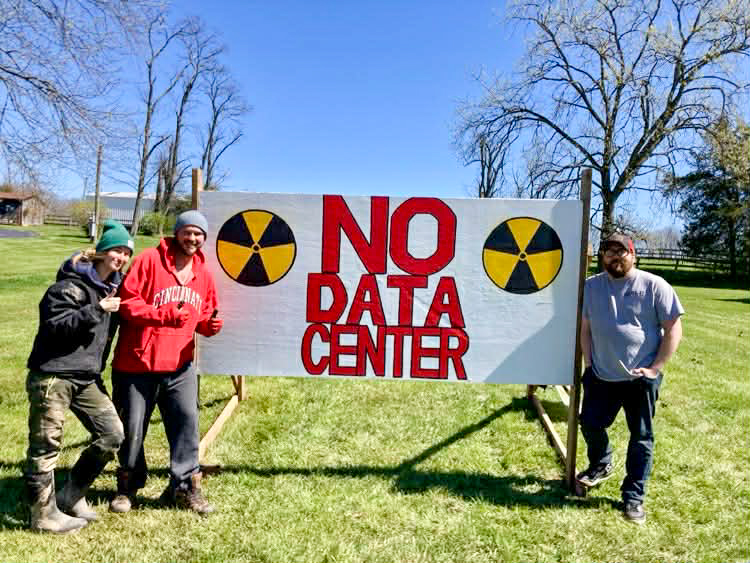
Gallup said opponents most often cited environmental concerns, including resource use, water, energy, pollution, noise, and effects on local quality of life.
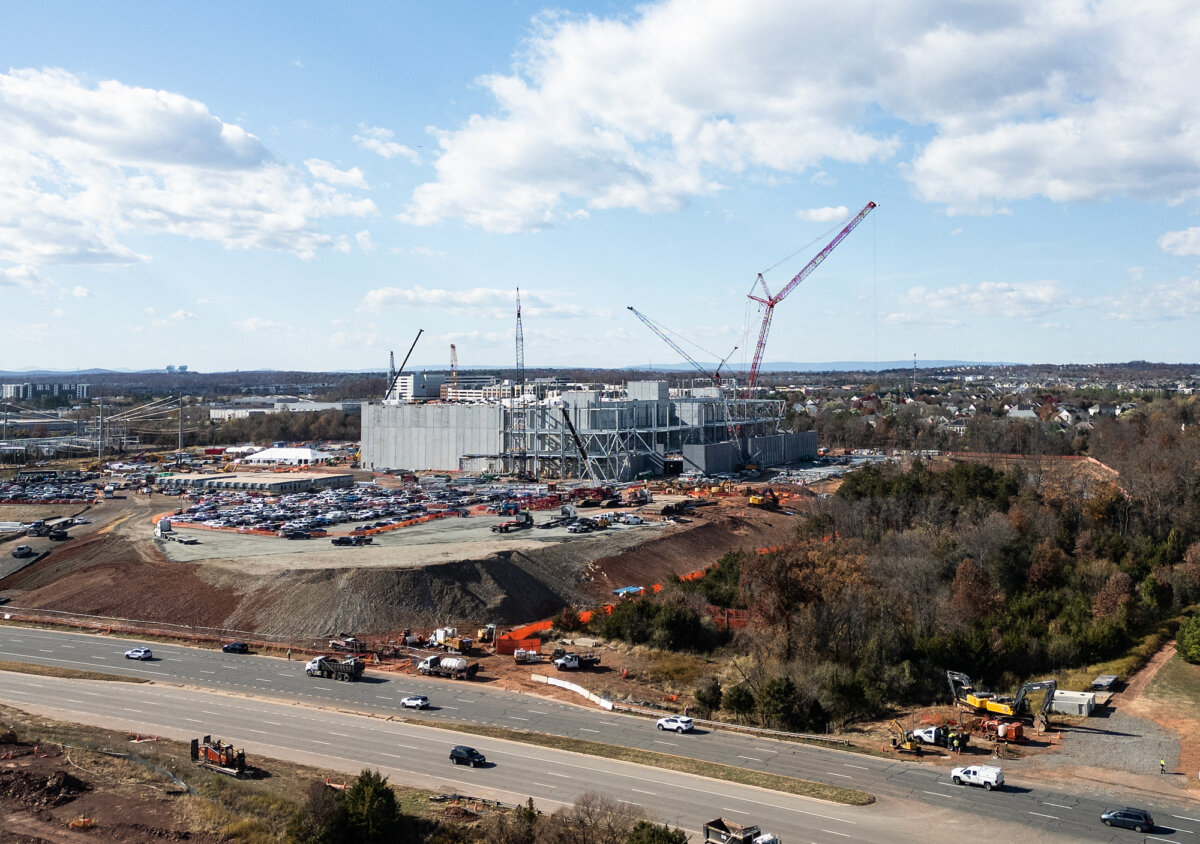
The poll found that supporters were more likely to cite potential economic benefits, including jobs and tax revenue.
The Epoch Times has also found local residents and agricultural advocates raising concerns about water availability, well-drilling costs, noise, and possible utility-rate increases in communities where data centers are proposed or expanding.

Those concerns are separate from the foreign-influence allegations cited by the House chairmen. Available materials do not establish that the alleged foreign funding was tied to local opposition.
Briefing Requested by June 18
The House letter says the committee has jurisdiction over energy, telecommunications, healthcare, and environment, and therefore has an interest in AI infrastructure and data center buildout.
“As the Committee with legislative jurisdiction over matters related to energy, telecommunications, health care, and environment, advancements in AI and the buildout of infrastructure supporting this technology, such as data centers, is of keen interest,” the letter states.
The chairmen asked PCAST and the FBI to brief the committee by June 18 on how the administration is investigating and responding to the alleged foreign influence campaigns.
 Friends Read Free
Copy
Facebook
Tweet
Friends Read Free
Copy
Facebook
Tweet