



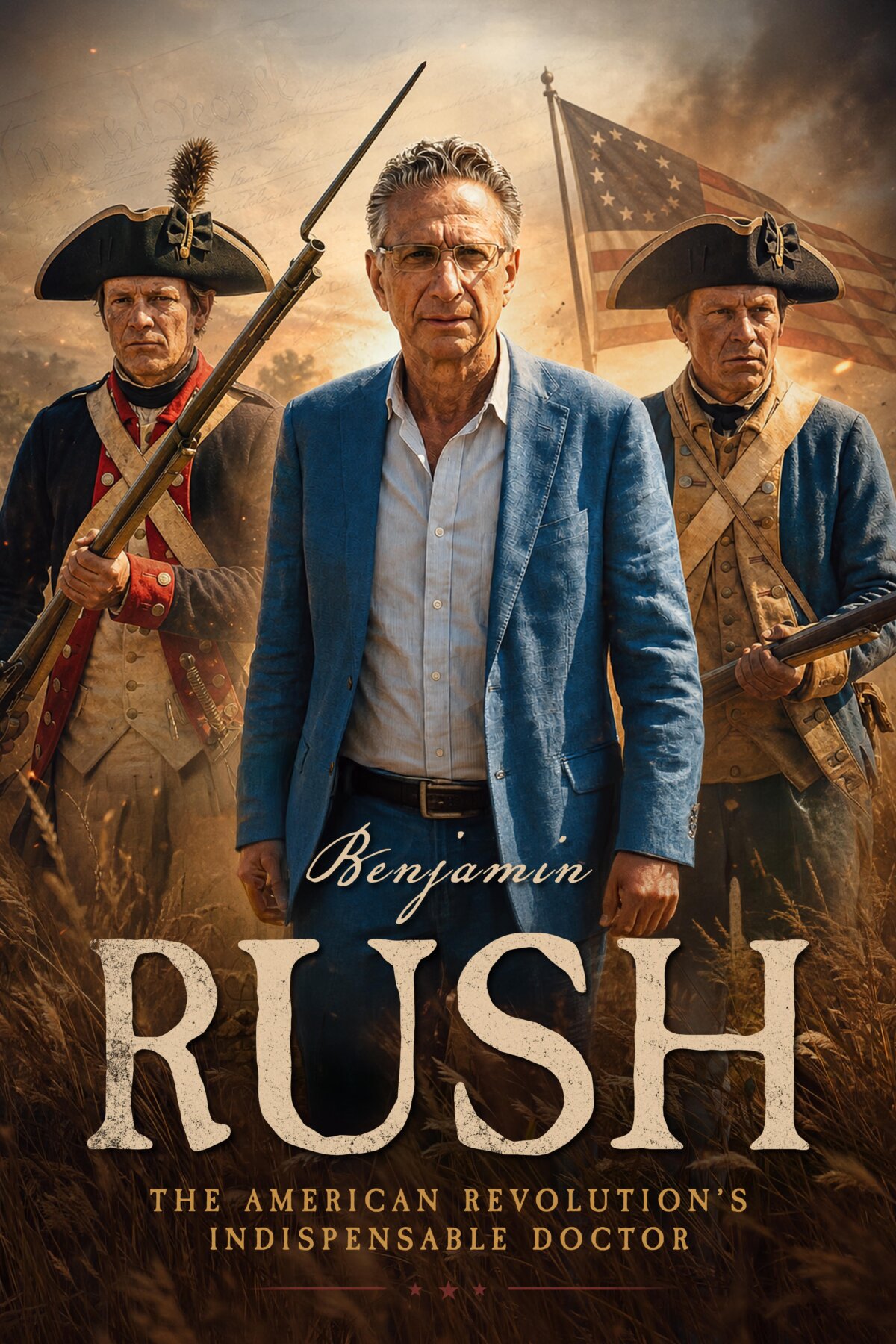
Who is the Founding Father most Americans have probably never heard of? A new documentary, “Rush: The American Revolution’s Indispensable Doctor” asks, then answers, that question.
The film’s screenwriter-host, historian Joseph Loconte explains why and how 18th-century Philadelphian Dr. Benjamin Rush is that man.
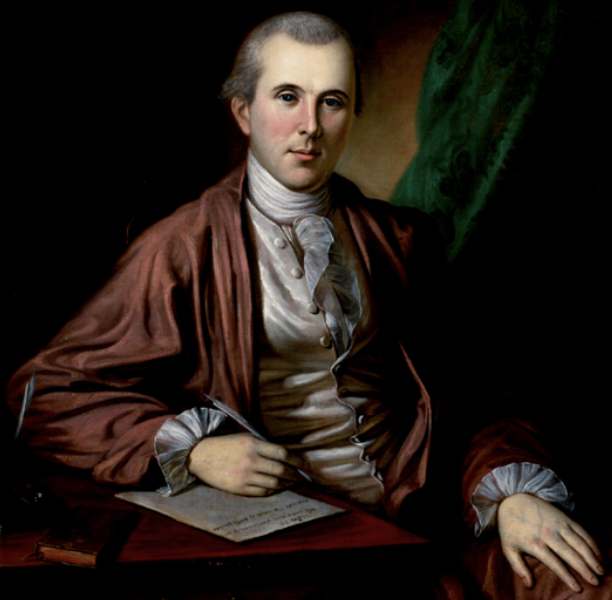
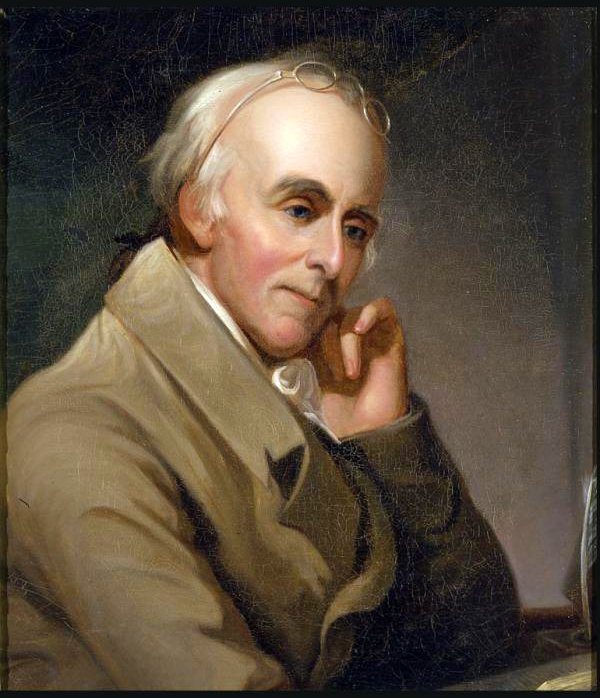
Rush was a pioneering abolitionist, a key figure in the Continental Congress, and a gutsy surgeon in George Washington’s Continental Army. He was a champion of women’s education, a trailblazer in the psychiatry of the mentally ill, and above all, a man of faith. As a 30-year-old, he was also one of the youngest signers of the Declaration of Independence.
Rumors of Rebellion
Loconte opens by ordering a cappuccino at a coffee shop in Philadelphia, then makes an arresting claim. The American Revolution didn’t begin in 1775 when British forces fired at American militia in Massachusetts.
It began in 1773 in Philadelphia, when patriots gathered in that coffee shop to read aloud resolutions in defiance of Britain’s arbitrary and enslaving Tea Act.
Rush was one of the authors of this then-incendiary document. His deceptively mundane Philadelphia coffee party inspired his fellow patriots’ more spectacular act of defiance: the Boston Tea Party.
As Rush told his friend John Adams, “The flame kindled on that day soon extended to Boston and gradually spread throughout the whole continent.” Talk of a pot (or kettle) boiling over.
Like many of his peers, Rush drew on concepts of freedom and equality from 17th-century British philosopher John Locke. He cleaved to what began to be called “natural” rights: the right to life, liberty, and property. Violations were considered inimical to self-government. But as Rev. Charles L. Howard, Chaplain at the University of Pennsylvania says in the documentary, blacks were denied those rights.
Rush rejected the very notion of slavery. He skewered clergy who used the Bible to sanctify slavery. Scathingly, he wrote, “In vain will you command your flocks to offer up the incense of faith and charity while they continue to mingle the blood and sweat of negro slaves with their sacrifices.”
Rush called for moves toward abolition nearly a century before President Lincoln’s Emancipation Proclamation. He did so not by invoking shared nationality, but by invoking a more universal freedom founded on shared human dignity. That he did this at a time when slavery was the norm is a tribute to his exemplary courage.
‘Common Sense’
Rush had been working on a document that he hoped would metaphorically light the fuse to the fight for freedom. Given how explosive his first ideas were, he hesitated to publish; Philadelphia was his home, still divided rather than united over breaking away from the British Crown.
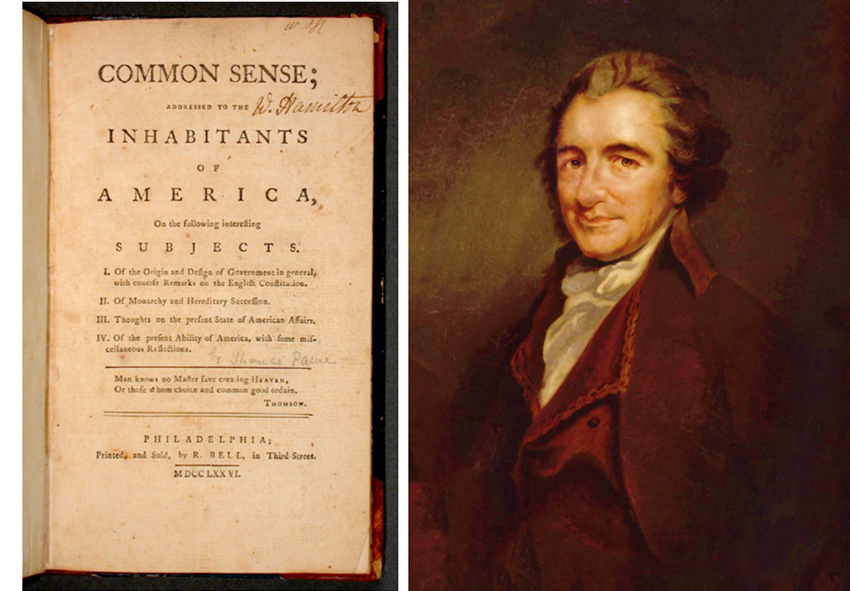
Still, Rush commissioned Thomas Paine, editor of The Pennsylvania Magazine, to write, polish, and then publish that text as a pamphlet. Rush titled it “Common Sense.” Presciently Paine wrote, “The cause of America is in a great measure the cause of all mankind.” That pamphlet was soon read and repeated nationwide, in clubs, schools, and even churches.
Here, Dr. R. Scott Stephenson, President and CEO of the Museum of the American Revolution, explains how far-reaching Rush’s ideas proved to be. Dr. Patrick Spero, CEO of the American Philosophical Society (APS) shows Loconte documentary evidence; APS’s library holds 14 million pages of manuscripts including some of the founding documents.
Spero points to the statue of APS founder Benjamin Franklin gracing the library building. Franklin is presented in a toga to evoke the republic. His arm rests on a heap of books, suggesting that learning will strengthen the republic. The scepter he holds upside down symbolically rebukes the idea of monarchy, or any form of similarly unelected government.
The Fog of War
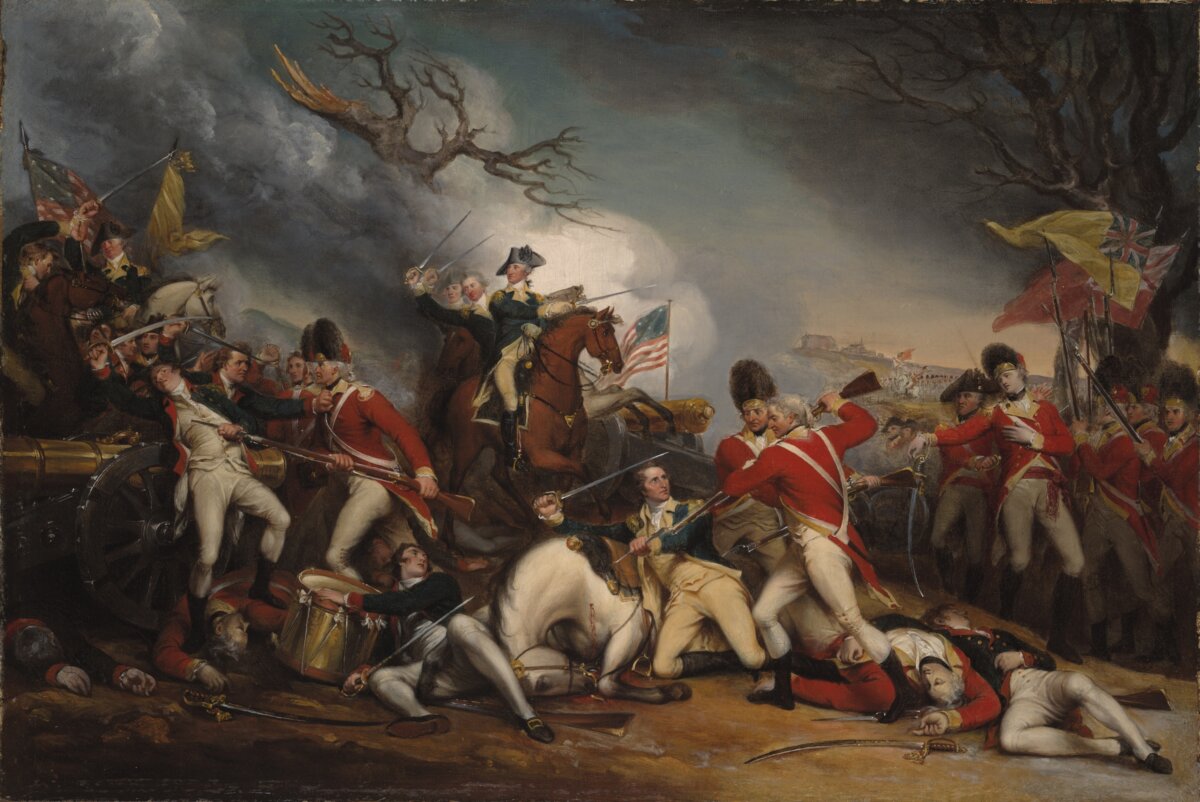
During battle as part of Washington’s Continental Army, Rush found himself frequently soaked in blood from surgeries and amputations; he tended to wounded troops at the crossing at the Delaware river, then at Trenton.
Unsurprisingly, Washington adopted protocols outlined in Rush’s medical manifesto to improve military healthcare; they saved the lives of many who would otherwise have died of infection or injury.
Loconte admits that Rush wasn’t without flaws. He often slipped into self-righteousness, stubbornness, and self-pity. For instance, Rush’s dogmatism bull-headedly favored archaic bloodletting as a cure even when prevailing medical wisdom counseled otherwise. But he was a reformer in every other sense.
Loconte insists that Rush wasn’t a Christian merely in name; he applied the Golden Rule in every field he contributed to, before, during, and after the war. He argued that diseases of the mind may also be diseases of the body, with physical or genetic, not just mental-psychological causes. Thanks to him, the Pennsylvania Hospital pioneered infinitely more humane treatment of the mentally ill. Small wonder that he’s called the Father of American Psychiatry.
The Future of Freedom
After helping secure freedom from Britain, Rush retreated from public life to be with family and work in medicine. But events drew him in again to the dramas accompanying the Constitutional Convention. As Philadelphia played host, Rush was up to the task, advocating for a more perfect union between federal government and states, tempering representation with checks and balances.
Rush’s denouncement of slavery was ahead of its time. Later, he helped raise funds for the black churches of Philadelphia, and helped launch America’s first anti-slavery organization, the Pennsylvania Abolition Society. Among other things, it paid for attorneys who helped slaves secure their freedom.
When yellow fever ravaged Philadelphia, the wealthy fled to country homes while others fended for themselves. Rush sent his wife Julia and their children to safety but stayed behind. He made house calls and tended to other patients at his home. He ended up training over 3,000 doctors; indirectly, he trained thousands more.
Loconte asserts, “Perhaps more fully, and more consistently than any other American founder, Benjamin Rush embodied the political and religious ideals of the Revolution. If we’re looking for a model of courage, integrity and high moral purpose that is both realistic and inspiring, we have one.”
Enthusiastic Delivery
Loconte’s engaging, raspy insistence is reminiscent of the benign gravitas of George C. Scott. Yet, he simultaneously manages to exude the excitement of a freshman, animatedly recreating the energy that must have permeated those heady days.
When he says the first Continental Congress is “meeting right here,” he’s standing in front of the building as he thumbs back at the historic Carpenters’ Hall, lending immediacy to his narrative.
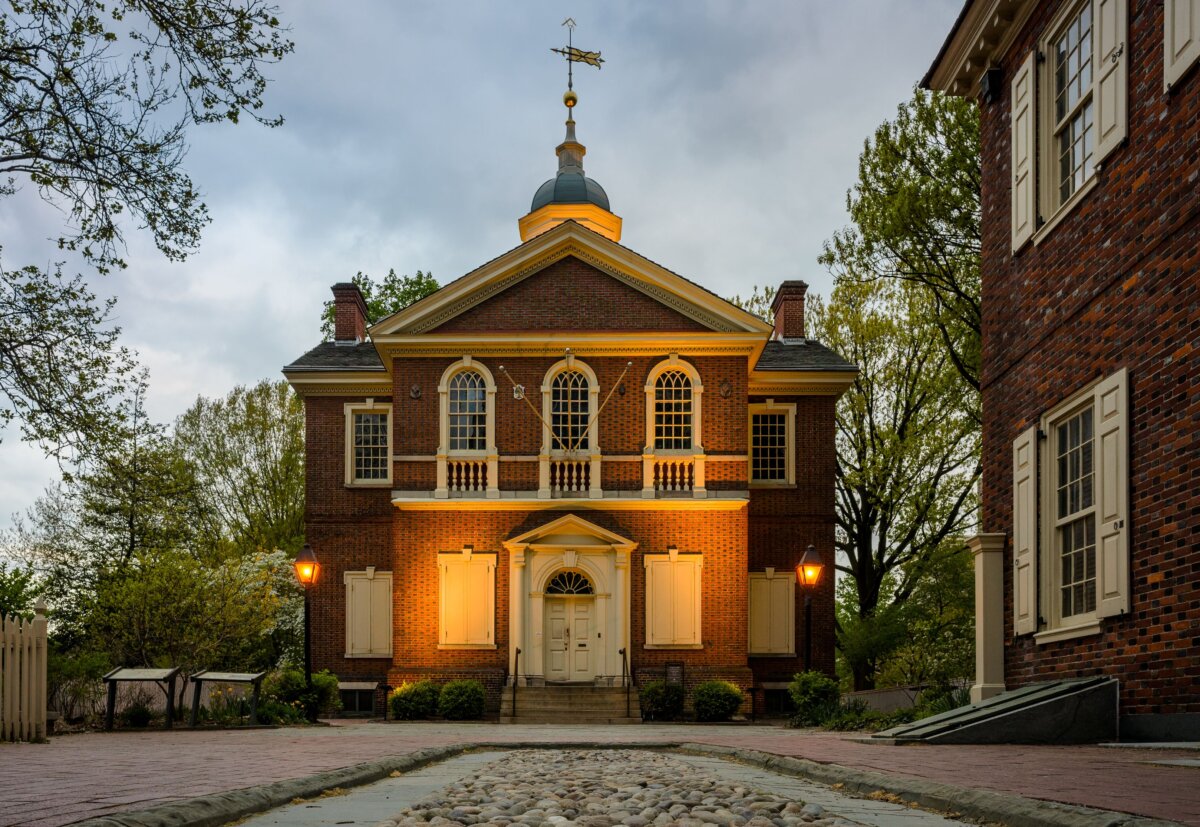
Director Sloan Inns allows that immediacy to surround his storytelling as his camera lovingly captures Philadelphia’s taverns, bookshops, the state house, even the west bank of the Schuylkill River.
As the nation marks 250 years of independence, if its schools, colleges, museums and libraries haven’t yet given this father of American flourishing the pride of place he deserves, they’d better rush to it.
You can watch “Rush: The American Revolution’s Indispensable Doctor” on Amazon Prime.
‘Rush: The American Revolution’s Indispensable Doctor’
Documentary
Director: Sloan Inns
Running Time: 1 hour
Release Date: June 1, 2026
Rated: 5 stars out of 5
What arts and culture topics would you like us to cover? Please email ideas or feedback to features@epochtimes.nyc

