
News Analysis
Alan Greenspan’s China record shifted from support for market-opening policies, such as permanent normal trade relations, to later warnings about the persistence of state-directed finance, administrative controls, and China’s hesitation to allow companies to default.
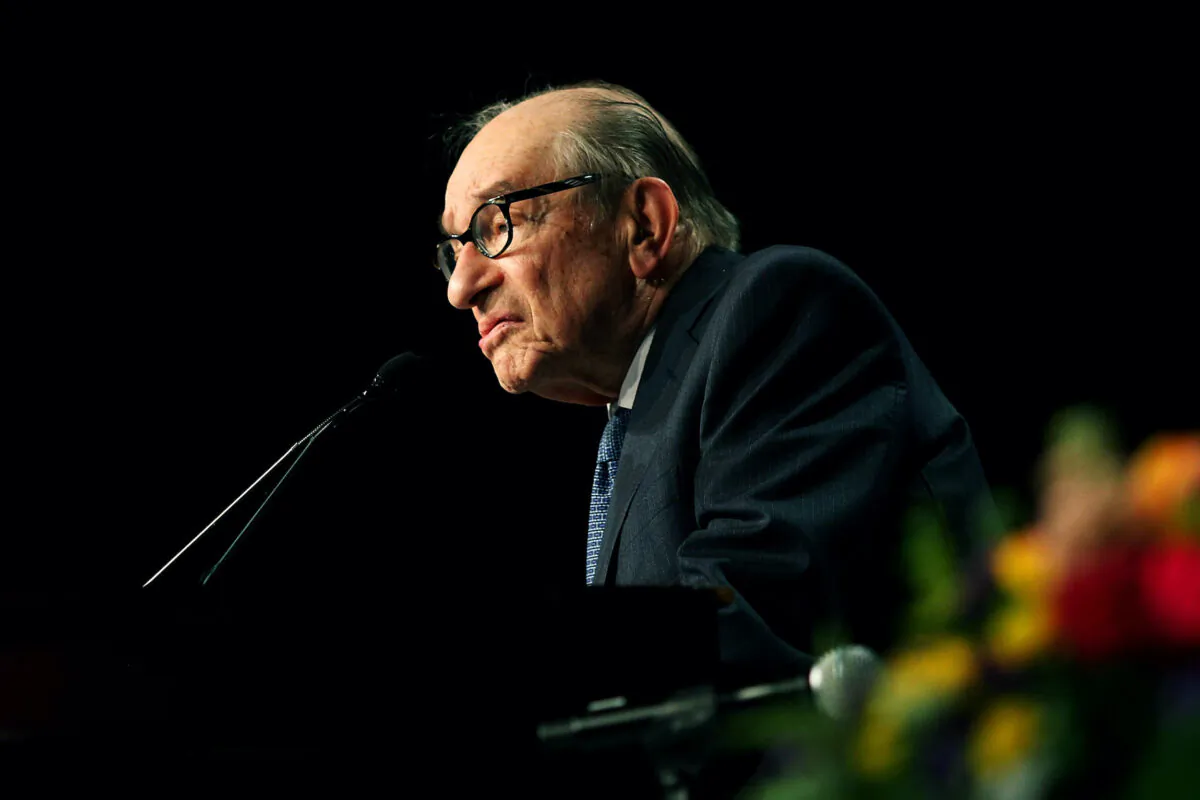
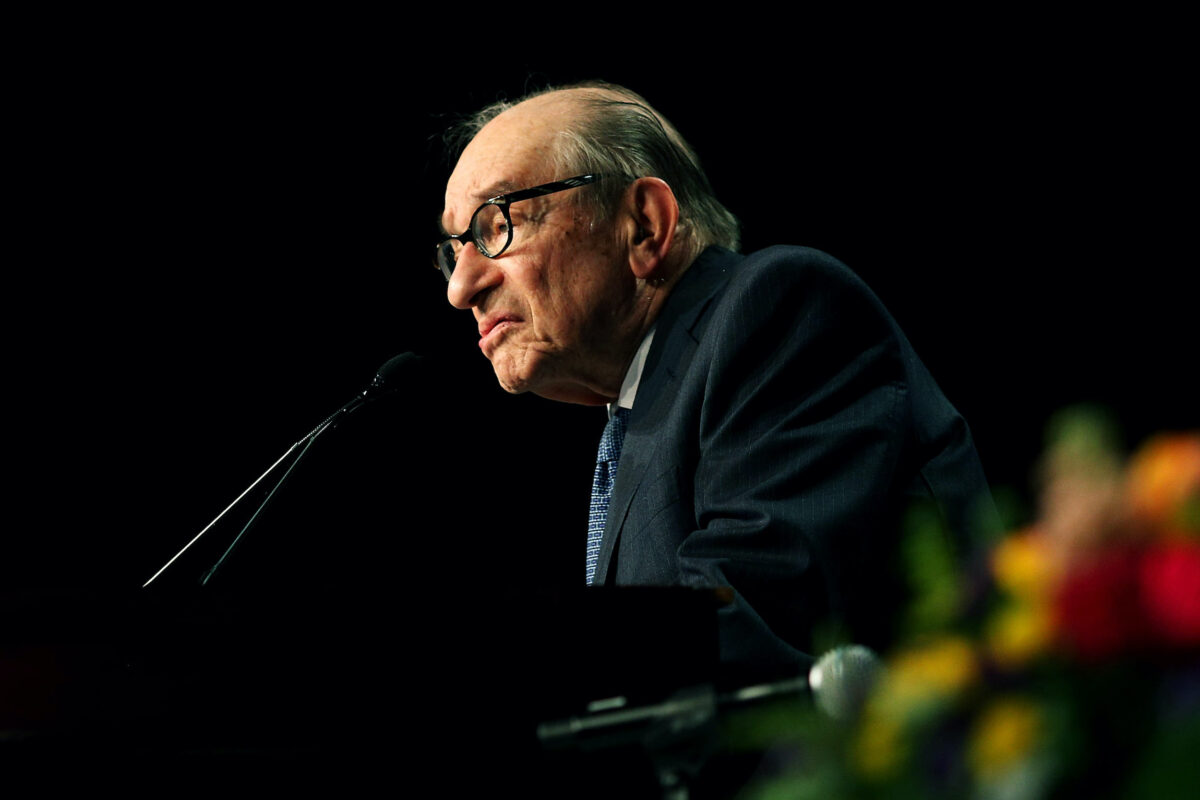
Greenspan, the former Federal Reserve chairman who died on June 22 at age 100, made his strongest public case for China’s market integration in May 2000 during White House remarks, when then-President Bill Clinton was pressing Congress to approve permanent normal trade relations ahead of China’s entry into the World Trade Organization (WTO).
In those remarks, Greenspan argued that WTO-linked market opening would expand global efficiency, lift living standards, weaken central planning, and broaden individual rights inside China.
Five years later, in Senate Finance Committee testimony on China, he warned that the country’s financial system still had “considerable distance to go” before reaching soundness and flexibility.
By 2015, nearly a decade after leaving the Fed, Greenspan was describing an earlier Chinese growth model built on state-directed investment and government-owned banks—and said that Chinese authorities had stepped back after briefly allowing company defaults during a Council on Foreign Relations conversation.
Taken together, his remarks highlight the tension between the economic benefits he expected from China’s integration into global markets and the persistence of administrative controls, state direction, and limited market discipline in key areas of China’s economy.
WTO Optimism
Greenspan’s May 18, 2000, remarks on permanent normal trade relations were an explicit argument for granting China normal trade status as it moved toward WTO membership.
“The addition of the Chinese economy to the global marketplace will result in a more efficient worldwide allocation of resources and will raise standards of living in China and its trading partners,” Greenspan said.
He said China’s acceptance of international competition through WTO membership would promote domestic economic development, encourage the adoption of modern technologies, and help lift Chinese citizens out of poverty.
Greenspan also linked market mechanisms to broader changes inside China.
“History has demonstrated that implicit in any removal of power from central planners and broadening of market mechanisms as would occur under WTO is a more general spread of rights to individuals,” he said.
He said that expanded trade with the United States and other industrial countries would strengthen the rule of law in China and increase Chinese citizens’ choices in work, lifestyle, communication, and access to information.
Congress approved permanent normal trade relations with China later that year. China joined the WTO in December 2001.
Greenspan’s later comments would focus less on the promise of opening and more on areas where China’s financial and investment systems remained subject to administrative control.
Lessons From East Asian Crisis
Greenspan’s confidence in market discipline was informed in part by the Asian financial crisis, which he treated as a warning about government-directed investment, weak financial sectors, pegged exchange rates, and poor transparency.
In February 1998 testimony before the Senate Foreign Relations Committee, Greenspan said East Asian economies had tried to combine rapid growth with “a much higher mix of government-directed production” than Western market-driven economies.
For years, he said, domestic savings and foreign capital had been steered by governments into investments that banks were required to finance. Without a market test, much of that investment was unprofitable, he said.
“So long as growth was vigorous, the adverse consequences of this type of non-market allocation of resources were masked,” Greenspan said.
He also told lawmakers that a competitive market system requires the rule of law that limits arbitrary government intrusion into commercial disputes.
The argument paralleled what he would later say more directly about China: market systems can identify imbalances through prices and defaults, while administrative systems may allow imbalances to grow before they are addressed.
Capital Controls and Technology
Greenspan addressed China directly during the 1998 crisis in testimony on the international financial system.
In the September 1998 testimony before the House Banking Committee, he said the relative stability of China and India—both of which restricted international financial flows—had led some observers to argue that free capital flows were harmful to growth and living standards.
He rejected that conclusion.
“The relative stability of China and India, countries whose restrictions on international financial flows have insulated them to some extent from the current maelstrom, has led some to conclude that the relatively free flow of capital is detrimental to economic growth and standards of living,” Greenspan said. “Such conclusions, in my judgment, are decidedly mistaken.”
Greenspan said the answer to fragile financial systems was not a return to capital controls but stronger domestic institutions.
He warned that an economy deprived of new technologies and inhospitable to risk capital would be left with slower growth and older technologies.
While those comments applied broadly to restrictive financial flows in both China and India, they placed China inside Greenspan’s larger argument that limits on capital movement could insulate a country from immediate shocks while also limiting access to technology, investment, and long-term growth.
Financial System Still Governed by Command
By 2005, Greenspan’s China testimony had become more pointed.
Appearing before the Senate Finance Committee, he said he was offering his own views on China’s trade and exchange-rate regime, not necessarily those of the Federal Reserve Board.
Greenspan rejected the idea that a major rise in the value of the Chinese yuan against the dollar would significantly increase U.S. manufacturing jobs. He said China had become the final assembly point in a wider Asian production chain, meaning that some trade would likely shift within Asia rather than return to the United States.
But the testimony’s sharper assessment of China’s economy concerned Beijing’s financial system.
Greenspan said a more flexible yuan would help China’s economic stability and support global and U.S. growth. He warned that China’s reserve accumulation, driven by support for the yuan, risked fueling money growth, inflation pressure, and overheating in the country.
“Because the Chinese financial system has considerable distance to go before achieving a satisfactory degree of soundness and flexibility,” he said, sterilizing large speculative inflows would become more difficult.
“In spite of its recent improvements, the financial system of China is still inordinately governed by administrative command and control,” he said. “Market pricing of financial instruments is still accorded only a minor role.”
Greenspan said financial markets, when free to reprice interest rates and asset values, can identify imbalances earlier than a system based on administrative edict.
In a highly administered system, he said, supervisors may identify imbalances only when they have already become visibly large and troublesome.
Defaults and Cold Feet
A decade later, Greenspan returned to China’s state-directed model during a Council on Foreign Relations conversation in December 2015.
Asked about China’s effect on global and U.S. growth, he said China was a “very big player” and the major consumer of many commodities.
He said China’s handling of its stock market that year indicated to him that Chinese authorities “hadn’t a clue what they were doing.”
Greenspan then described an earlier Chinese growth model in which Beijing’s State Council could order a province to build infrastructure and direct a state-owned commercial bank to finance it.
The purpose, he said, was to create jobs rather than meet market demand for space. Under standard national income accounting, that investment added to gross domestic product.
“They could set the level of GDP as they chose by calibrating their capital investment,” Greenspan said.
He said China had moved away from that model as markets opened and expanded faster than Chinese authorities expected.
Greenspan noted that Chinese authorities had briefly allowed greater market discipline but had stepped back from company defaults.
“They dipped their toes in allowing creative destruction to work, meaning allowing firms to default, and then they got cold feet,” he said.
Asked by the presider, CNBC senior economics reporter Steve Liesman, whether Chinese authorities “didn’t like it,” Greenspan replied: “They didn’t like it.”
 Friends Read Free
Copy
Facebook
Tweet
Friends Read Free
Copy
Facebook
Tweet