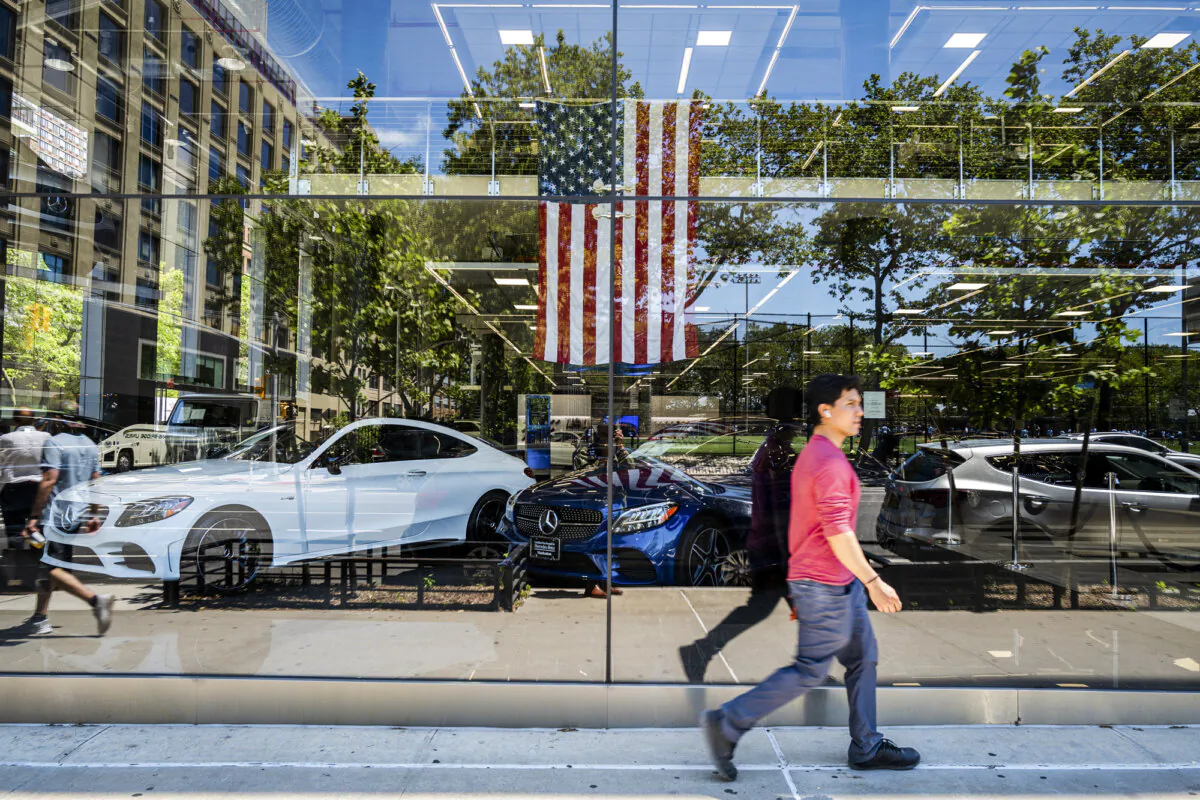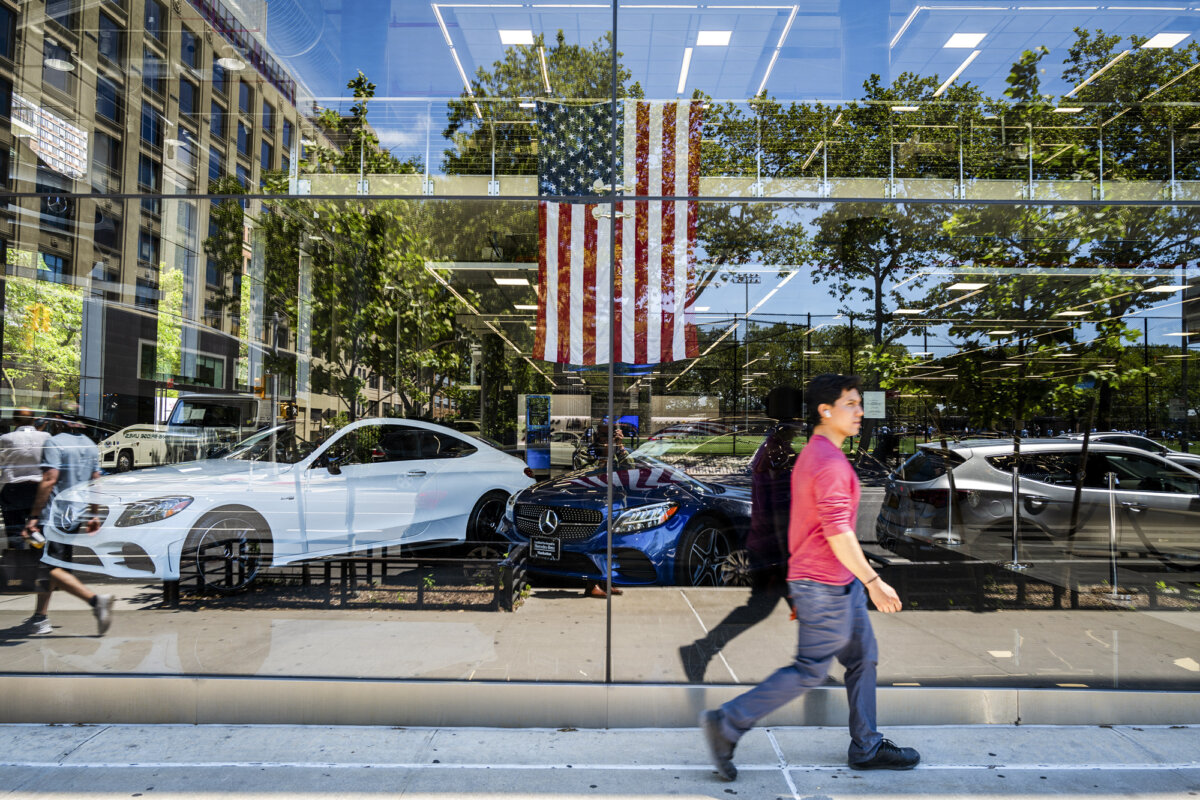

The number of new vehicles sold annually in the United States is expected to hit 15.7 million units, according to October estimations, industry expert Cox Automotive said in an Oct. 27 statement.
The seasonally adjusted annual rate is down from 16.4 million in September and 16.1 million a year ago, the company stated, attributing the slowdown to auto tariffs and the end of electric vehicle (EV) incentives.
“The new-vehicle sales pace was surprisingly strong this summer despite ongoing tariff uncertainty,” Charlie Chesbrough, senior economist at Cox, said in the statement.
“However, as more tariffed products replace non-tariffed inventory, prices are tracking higher, which should lead to slower sales through the remainder of the year. With the expiration of EV tax credits and a decline in alternative powertrain sales, the sales pace is anticipated to decrease as we move into a new season.”
Sales volume for October is forecast to be 1.3 million units, down by more than 3 percent from 2024. While this figure is 2.7 percent higher than September’s figure, October had three more selling days than September, Cox stated.
The federal government instituted 25 percent tariffs on auto imports in April, followed by 25 percent tariffs on the imports of auto parts. The rates have been adjusted for certain nations based on their negotiations with Washington.
Until Sept. 30, Americans who bought EVs could get a $7,500 tax credit. This incentive ended because of a requirement in the One Big Beautiful Bill Act, signed into law by President Donald Trump in July.
According to Cox, EV sales had accelerated after the passage of the act, and Q3 EV sales volume hit an all-time high.
“Sales of EVs and [plug-in hybrid electric vehicles] are expected to collapse in October as tax credits expire,” Chesbrough said.
“In addition, market conditions for other vehicles are expected to become more challenging in future months as prices increase.”
Amid slowing sales, car buyers are faced with high acquisition costs. The typical monthly payment for a new vehicle has jumped by 1.9 percent to hit $766, the highest monthly payment level in 15 months, Cox said in an Oct. 15 statement.
Meanwhile, 28.1 percent of cars traded in for new vehicles in the third quarter this year had negative equity, a situation in which the car value is less than the loan amount, industry resource Edmunds said in an Oct. 15 statement.
“The sheer amount of debt consumers are carrying in their trade-ins should be a wake-up call,” Ivan Drury, director of insights at Edmunds, said in the statement.
Auto Loan Burden
According to an Oct. 30 report by financial tech company WalletHub, the average U.S. household owed roughly $13,800 in auto loans as of Q2 2025, just a few hundred dollars shy of the record high. The total auto loan debt has gone up to nearly $1.7 trillion.
Auto debt is rising the most in Vermont, followed by Delaware, New Mexico, Idaho, and Utah, WalletHub stated. In contrast, it is rising the least in Ohio, South Dakota, Hawaii, Oregon, and Arkansas.
John Kiernan, editor at WalletHub, said residents in some states saw average auto loan balances rise by almost 2.4 percent between Q1 and Q2, which he called “dramatic increases.”
“[This] suggests that people in some states are more affected by inflation in car prices or are biting off more than they can chew when it comes to loans,” he said.
Meanwhile, despite rising prices, auto demand from middle-income Americans is trending higher, according to an Oct. 16 statement from financial institution Santander US.
A survey of middle-income Americans showed that 54 percent were considering buying a vehicle in the year ahead, up from 43 percent a year ago, it stated.
More than seven in 10 said they were willing to sacrifice other items in their budgets to ensure access to vehicles, which Santander said was the highest level in two years.
 Friends Read Free
Copy
Facebook
Tweet
Friends Read Free
Copy
Facebook
Tweet