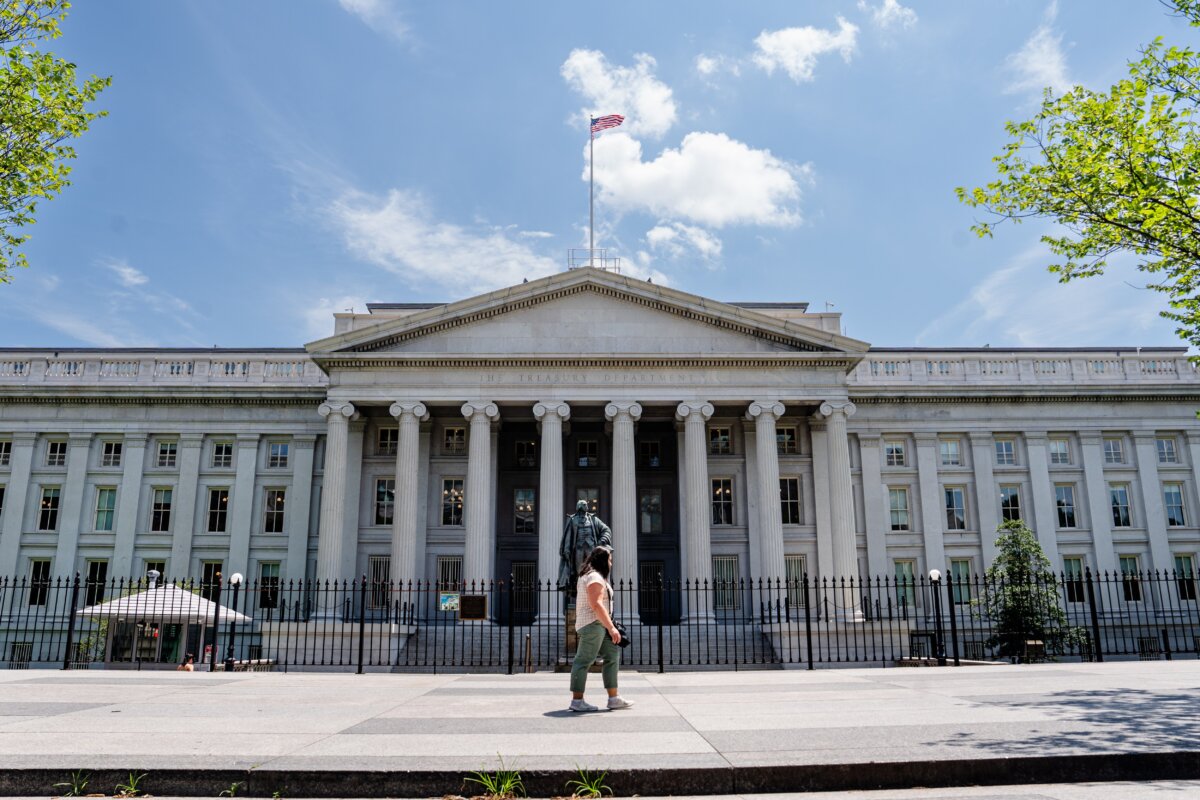

David Zervos, longtime chief market strategist at Jefferies, has been hired for a position at the Treasury Department.
The veteran Wall Street economist will join the department as a counselor in the Office of the Secretary, according to a Sept. 28 news release.
The personnel decision does not require Senate confirmation.
The Epoch Times reached out to Jefferies for comment but did not receive a response by publication time.
Zervos brings more than three decades of experience in global markets, central banking, and macroeconomic research to the Treasury Department. This also marks the third time he has chosen public service, beginning his career as an economist at the Federal Reserve Board and returning later as a visiting advisor during the global financial crisis in 2009.
Last year, Zervos was on a list of potential candidates for Federal Reserve chair, a position that ultimately went to Kevin Warsh.
“I think it would be an incredible benefit to have more market-savvy, more market-competent people involved in the monetary policy decision,” he told CNBC in August 2025.
Sympathy for the White House
Zervos has been sympathetic to the current administration’s economic stances.
He also believed the Fed should have been cutting interest rates last year to support the labor market and keep the economic expansion intact.
“I think there is a reasonable storyline, a very cogent storyline, that suggests monetary policy is restrictive,” Zervos told the business news network.
Zervos recently defended Bessent’s aggressive debt buyback operations aimed at stabilizing the U.S. government bond market.
Bessent confirmed last month that the Treasury’s scheduled debt buybacks would grow from the initial $2 billion to “at least $4 billion.” This initiative involves repurchasing long-dated government bonds to put pressure on yields.
In an interview with CNBC’s “Squawk on the Street” on Sept. 28, Zervos noted that these actions have generally been successful when the Federal Reserve took similar steps. He also noted that the buybacks were an opportunity to “put a little bit of a kibosh on the potential for a runway through the top end of that range.”
“I don’t see how you could fight this when the firepower and the cards are all sitting in the Treasury Department,” Zervos said.
“There could be some fights for a little while, but I’m not expecting the traditional bond vigilantes to win any battles here.”
Since the Treasury’s Aug. 19 announcement, the benchmark 10-year Treasury bond yield has risen about 60 basis points to around 5.24 percent, the highest since 2007. The 30-year yield has also climbed almost 40 basis points to a 22-year high of 5.56 percent.
Rising yields across the U.S. Treasury market have been powered by a whole range of factors. Persistent war-driven inflation fears, intensifying capital competition, and growing expectations that the Fed will keep raising interest rates have been leading contributors.
While U.S. bonds have captured all the attention, yields have been climbing across advanced economies, including Europe and Japan.
With little news impacting yields, this could be the new norm, says Jesse Marre, senior portfolio manager at Hilbert Group.
“A 25 basis point run through the highs with no catalyst and no retracement is a different kind of signal from a data-driven repricing. It says the trend and the fiscal concern are now sufficient on their own,” Marre said in a note emailed to The Epoch Times.
But this week will be pivotal for financial markets amid a plethora of economic releases.
The Fed’s go-to Personal Consumption Expenditures (PCE) Price Index, August job openings, the final second-quarter GDP growth estimate, and the September jobs report will be released over the next few days.
 Friends Read Free
Copy
Facebook
Tweet
Friends Read Free
Copy
Facebook
Tweet