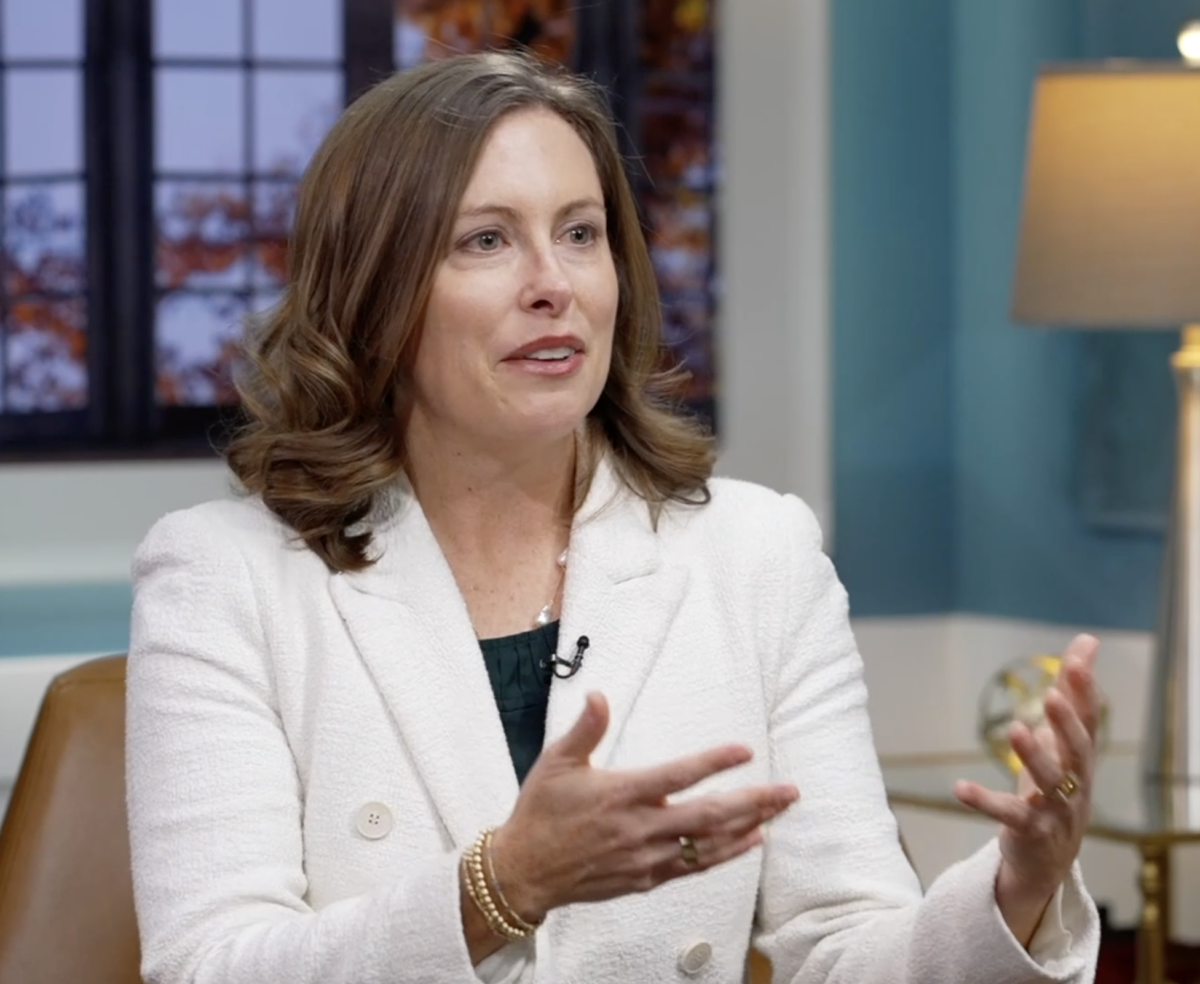

More than 20 years ago, Margaret “Meg” Kelsey first came across the issue of human trafficking while studying law in college. She said hearing stories of victims “activated” something within her.
But, first, Kelsey’s career path took her to serve as an assistant Commonwealth Attorney for the state of Virginia, where she prosecuted crimes such as embezzlement, burglary, and narcotics manufacturing.
She eventually landed at the Center for Global Justice at Regent Law School in Virginia Beach and in 2023 helped found the center’s Human Trafficking Clinic.
Kelsey now works to represent trafficking survivors directly in court, filing petitions to have their records cleared.
“A primary barrier that a lot of survivors face in the United States is having a criminal record [because] they were forced to commit crimes by their trafficker,” Kelsey told The Epoch Times.
“Even if they exit, and can get away from their trafficker, they still have this criminal record and can’t get a job, can’t get meaningful employment or housing, safe housing, can’t get custody of their children.”
As of mid-2026, the clinic has achieved a 100 percent success rate in filing petitions on behalf of 19 survivors who were able to get all or part of their records cleared following their escape from trafficking.
While the clinic has been a help to many, there are still several major issues facing those exiting human trafficking.
There are areas in the United States that Kelsey called “legal deserts,” because no resources are available to those in need.
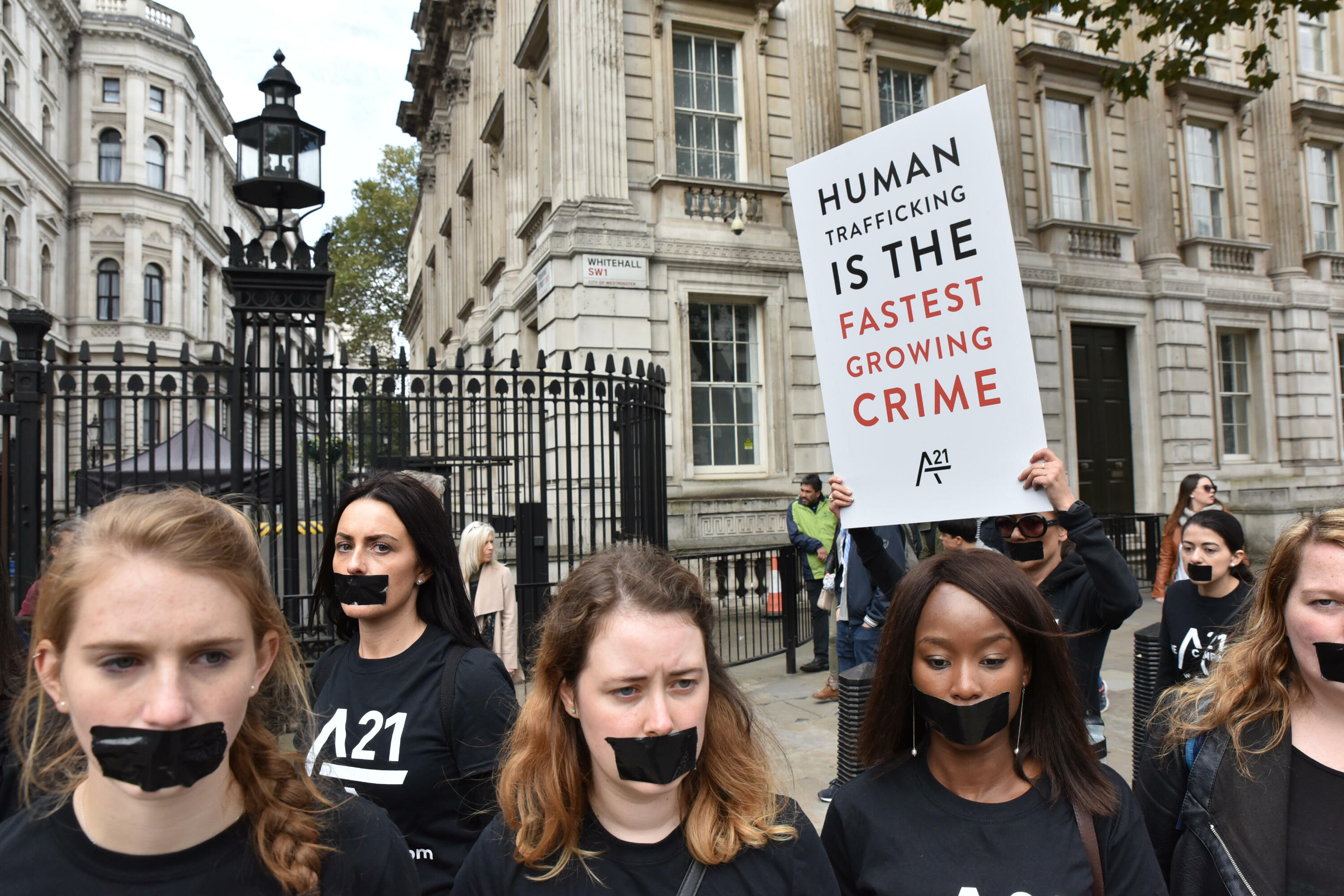 A silent march against modern slavery in London in 2016. Because human trafficking is often a “hidden crime,” data on trafficking victims is unreliable. (Alamy/PA)
To that end, part of the clinic’s work involves training attorneys who want to support survivors by providing pro bono legal services.
Another major issue is the unreliability of data on human trafficking, she said. Trafficked individuals until recently were treated as criminals instead of victims and the trafficking that led to their criminal history was an unreported “hidden crime.” Therefore the number of trafficking victims may be much higher than official statistics indicate. And helpful data that could have been gleaned from those unreported victims is unavailable.
Kelsey said there aren’t a lot of alternatives for survivors—beyond living with the stigma and penalty that goes with a criminal record. Sometimes a survivor will opt for an affirmative defense—admitting to the accused crime, but introducing evidence that mitigates or negates criminal liability.
Kelsey cited the Center for Global Justice’s founding scripture that reiterates the group’s commitment to “give a voice to the voiceless, to speak up for those who can’t speak for themselves, to speak up and judge fairly and defend the rights of the poor and needy.”
“We get to do that,” Kelsey said. “Not just speaking on behalf of survivors, but giving them a place and a space where they can speak and tell their own story.”
Since it founding in 2010, the Center for Global Justice has worked with nearly 90 different organizations through research and student legal interns, contributing almost 70,000 hours of pro bono work valued at about $5 million.
The group works with organizations such as International Justice Mission, Alliance Defending Freedom, The National Center on Sexual Exploitation, and Shared Hope to assist those who have been exploited by traffickers and now have a record.
 Advocates for human trafficking victims increasingly help them find alternatives beyond living with a criminal record. (Freedomz/Shutterstock)
Kelsey said this matters because, “We’re all human, and we should see the value one human to another, that another man, another woman, has inherent value.”
She said that because the clinic is a Christian institution, they believe everyone is an image bearer of God, and she hopes everyone can see that—but they can’t do the work alone.
“We need everybody, because this is such an expansive, pervasive problem,” Kelsey said.
“We need everyone—lawyers who are willing to engage, perhaps offer pro bono services, but even neighbors who are willing to grow in awareness, perhaps be trained in red flags to see around their neighborhood or in our churches.”
She noted the staggering statistics behind human trafficking. The U.N.’s International Labour Organization estimates that almost 30 million people are enslaved worldwide. Human trafficking, including sex trafficking, is the world’s second most profitable criminal enterprise, valued at $32 billion a year, the organization said.
Kelsey hopes that “more people [become] aware and choose to not look away.”
“It’s painful,” she said. “But we choose to learn, grow in knowledge and awareness, and only with everyone involved can we really eradicate human trafficking.”
This article is part of the “Heroes Wanted” campaign, honoring the brave men and women who fight to end human trafficking. The Epoch Times and sister media NTD Television are proud partners of Kaleido.Charity and the Fifth Annual International Summit Against Human Trafficking in Washington from July 21 to July 23.
To learn about many more remarkable heroes, visit Kaleido.charity/HeroesWanted, watch their videos, and VOTE (once per day) for the hero who inspires you the most. Voting ends Sept. 23, 2026.
 Friends Read Free
Copy
Facebook
Tweet
Friends Read Free
Copy
Facebook
Tweet