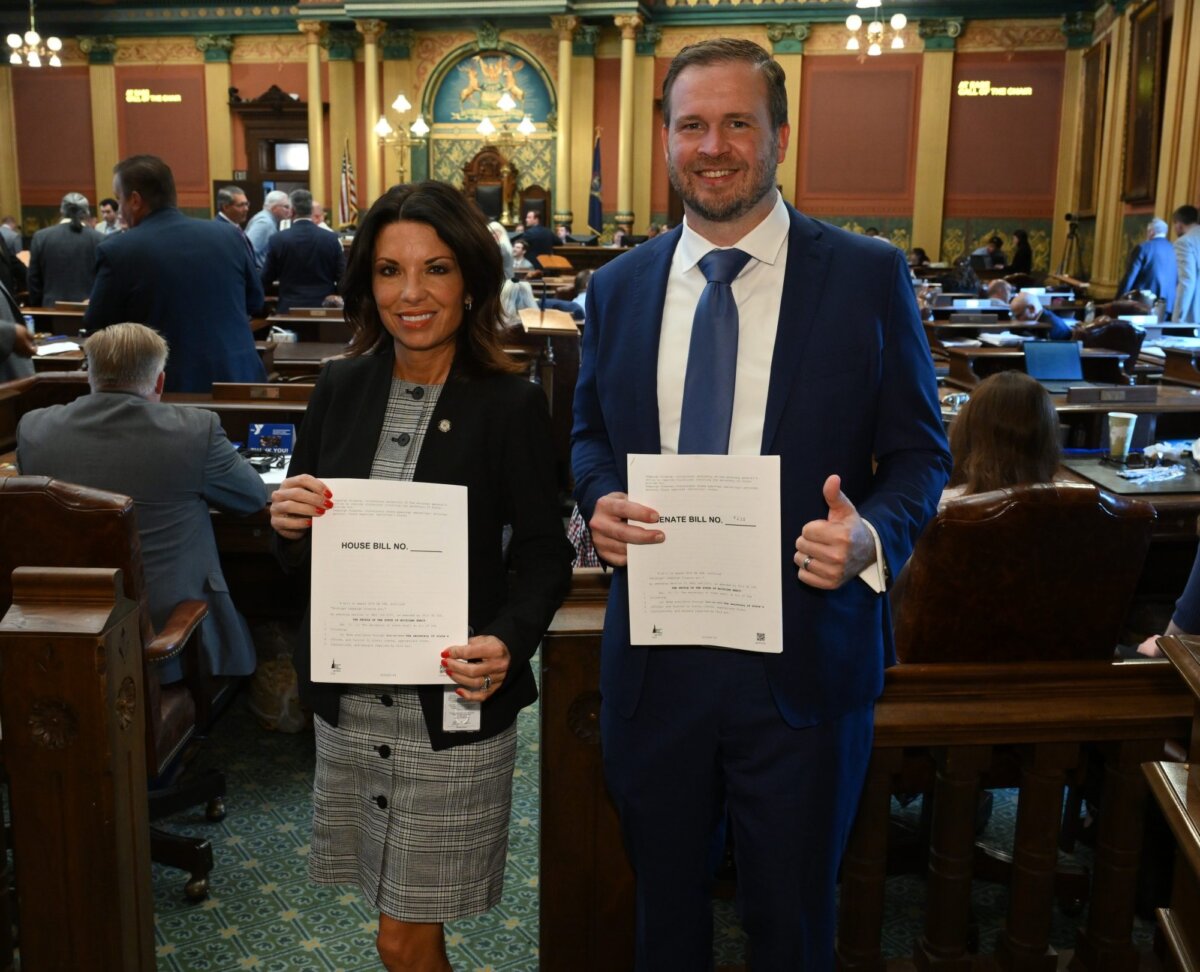

State Rep. Angela Rigas and state Sen. Jonathan Lindsey have introduced legislation to amend the Michigan Campaign Finance Act (MFCA) to fix a defect that unintentionally allows a secretary of state who violates the act to avoid any penalty.
On June 11, Rigas and Lindsey, both Republicans, introduced bills in their respective houses that give the state attorney general power, which was lacking in the existing statute, to impose fines and even jail time against a secretary of state found to be in violation of the MCFA.
Under the terms of the current act, in the case of a campaign finance complaint against a sitting secretary of state, upon the required referral from the Department of State, the attorney general is mandated to investigate but not apply any penalties if a campaign finance violation by the secretary of state has been determined.
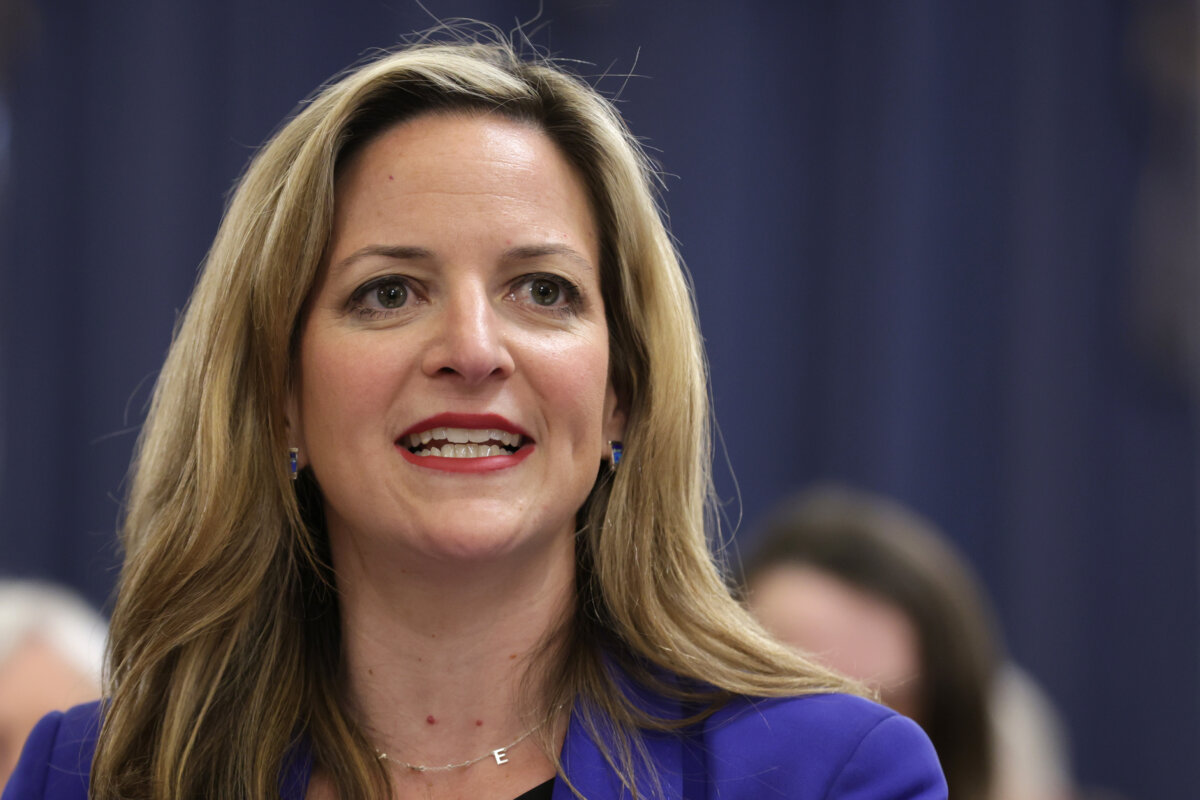
The quirk in the law surfaced last month when several citizens filed campaign finance complaints against Michigan Secretary of State Jocelyn Benson for using the lobby of a state-operated office building in Lansing to announce her candidacy for the Democratic nomination for governor on Jan. 22, 2025.
Current Michigan law requires that a campaign finance complaint be investigated and adjudicated by the Department of State, which has the authority to penalize proven violators with fines or incarceration.
However, if a complaint is filed against the secretary of state himself or herself, a member of their immediate family, or their campaign committee, the complaint must be turned over to the attorney general’s office to investigate to determine whether there is any culpability.
On May 19, the office of Attorney General Dana Nessel, a Democrat, sent a letter to Benson informing her that, after investigation, her use of a state-operated office building lobby for a personal, partisan purpose violated state law, but there would be no penalty.
The notification letter said, “It is determined that Secretary Benson’s use of the Austin Building lobby space to hold a press conference to announce her gubernatorial candidacy is a violation of section 57 of the MCFA.”
The letter went on to state: “The MCFA does not establish any means by which the Attorney General can impose a civil penalty to redress a violation of the MCFA by the Secretary of State.
“The MCFA itself seemingly gives no authority to the Attorney General to seek criminal penalties for a violation by the Secretary of State, either.
“Consequently, the Attorney General is left with no choice but to simply identify the violation, remind the Secretary of State of her obligations under the MCFA, and warn her against violating them in the future.
“It could be viewed as odd and unfair that the Secretary of State, her immediate family, her campaign, and any committee that she is connected with are the only people and entities subject to the requirements of the MCFA, but not any of the penalties for violating them.”
The attorney general’s letter attributed the omission of the power to penalize the secretary of state to a possible legislative “oversight” in the drafting of the MCFA.
In a joint statement by Lindsey and Rigas explaining the proposed legislation, Lindsey said: “No one should be above the law. Yet the current situation allows the Secretary of State to evade accountability. … This bill would create accountability for the SOS.”
“This bill is about restoring trust in our electoral system,” said Rigas. “No one, especially not the Secretary of State, should be immune from accountability. We’re fixing a broken system to ensure fairness and uphold the law.”
Rigas and Lindsey called on their colleagues to support the bill and strengthen Michigan’s campaign finance laws and protect the integrity of the state’s elections.
The Michigan Department of State declined to comment on the proposed legislation.
Neither Michigan House Minority Leader Ranjeev Puri nor Michigan Senate Majority Leader Winnie Brinks, both Democrats, responded to a request for comment by publication time.
 Friends Read Free
Copy
Facebook
Tweet
Friends Read Free
Copy
Facebook
Tweet