
California announced on July 13 that it would offer state rebates of $3,500 to first-time buyers of new electric vehicles (EVs).
Gov. Gavin Newsom signed the bill into law, saying it would amount to a combined $270 million in total savings to California families at the point of sale, funded by both the state and car manufacturers.
The rebate applies to new vehicles with a manufacturer’s suggested retail price of up to $50,000, and it includes a separate provision for a $1,750 rebate for those buying used EVs costing up to $25,000.
No specific date for the launch of the scheme has yet been unveiled; the announcement from Newsom’s office simply said it was “coming late this summer.”
Nor has a list of the EV manufacturers participating in the scheme become available.
The move comes after President Donald Trump nixed the federal $7,500 EV tax credit and a $4,000 used EV credit by signing the “Unleashing American Energy” executive order on his first day in office last year.
That executive order also canceled California’s EV mandate, which required that the proportion of new vehicles sold in the state that were zero-emission gradually increase over time, with the goal that 100 percent of new sales would be zero-emission by 2035.
In the “Unleashing American Energy,” Trump said that “burdensome and ideologically motivated regulations have impeded” the development of the United States’ abundant energy resources, “limited the generation of reliable and affordable electricity, reduced job creation, and inflicted high energy costs upon [U.S.] citizens.”
Since then, Trump has approved three Congressional Review Act resolutions to halt several of California’s emissions regulations that relied on those Environmental Protection Agency waivers.
One of the resolutions overturned the state’s prohibition on new gas-powered vehicle sales after 2035.
Newsom, in a statement announcing the rebate on July 13, accused Trump of “doing everything in his power” to pollute the air and “surrender the clean car industry to China on a silver platter.”
“California is putting its foot on the accelerator. With our new instant rebate program for electric vehicles, we’re making it easier for families to drive clean, breathe clean, and keep more money in their pockets,” Newsom said.
He said that “no one can stop Californians from choosing vehicles that are better for their wallets and better for the air they breathe.”
White House spokeswoman Taylor Rogers told The Epoch Times via email that Newsom is “carrying on with the Biden administration’s failed energy policies by wasting Californians’ hard-earned taxpayer dollars to subsidize electric vehicles.”
“President Trump rolled back the left’s very unpopular and costly nationwide EV mandate and restored consumer choice,” she wrote.
She also said that Newsom “continues to fail California by digging his heels into the Green New Scam instead of embracing the President’s common-sense agenda.”
The move marked a reversal of Newsom’s stated position in September 2025, when he said California lacked the resources to step in and cover the gap left by the axing of the federal rebate.
California is by far the state with the most EVs in the United States, according to the latest data available from the Department of Energy, with a total of approximately 1,256,646 registered as of December 2023, almost five times the number in the second-placed state of Florida.
That figure accounted for approximately 35 percent of EVs registered across the country that year.
According to Veloz, a California-based nonprofit that advocates EV use, EVs represented 15.7 percent of all new light-duty vehicle sales in the state during the first quarter of 2026, down from 23 percent in the first quarter of 2025.
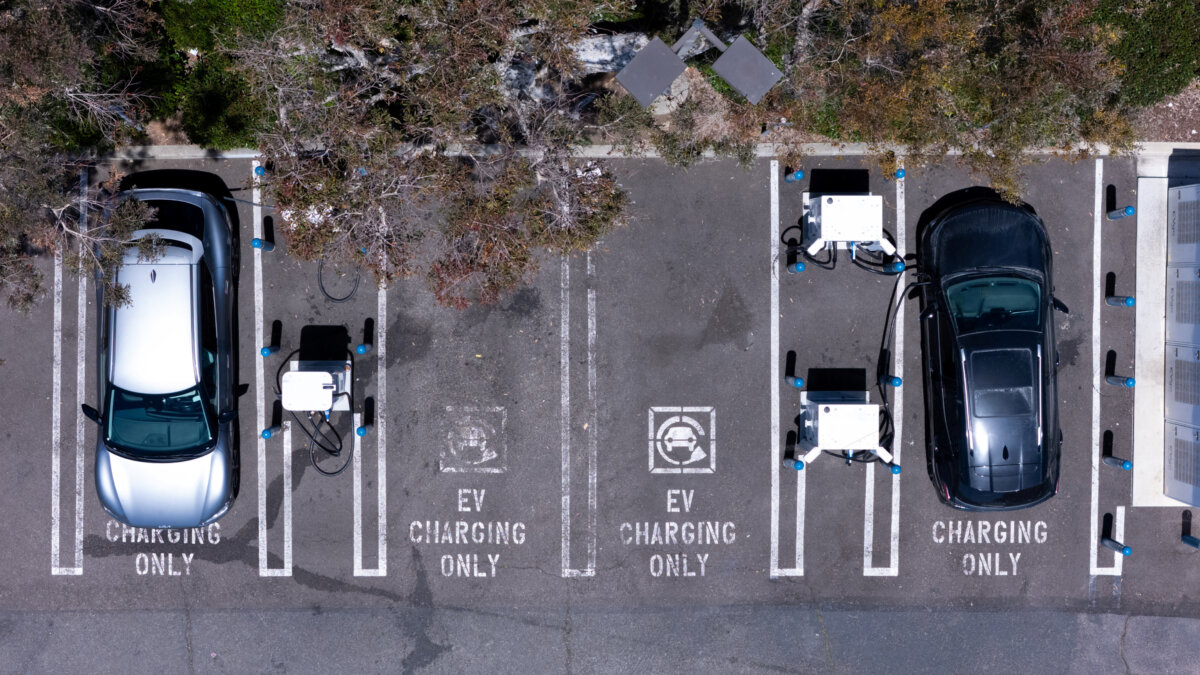
As of March 2025, California had 48 percent more public and shared private EV chargers than the number of gasoline nozzles available.
The California Energy Commission estimated that there were 120,000 gas nozzles in California versus 178,549 public and shared private chargers, according to the governor’s statement at the time.
A shared private charger is usually at a workplace and is available to employees or at a condo or apartment complex, available to tenants, residents, or visitors.
 Friends Read Free
Copy
Facebook
Tweet
Friends Read Free
Copy
Facebook
Tweet