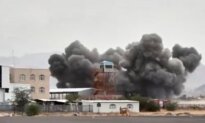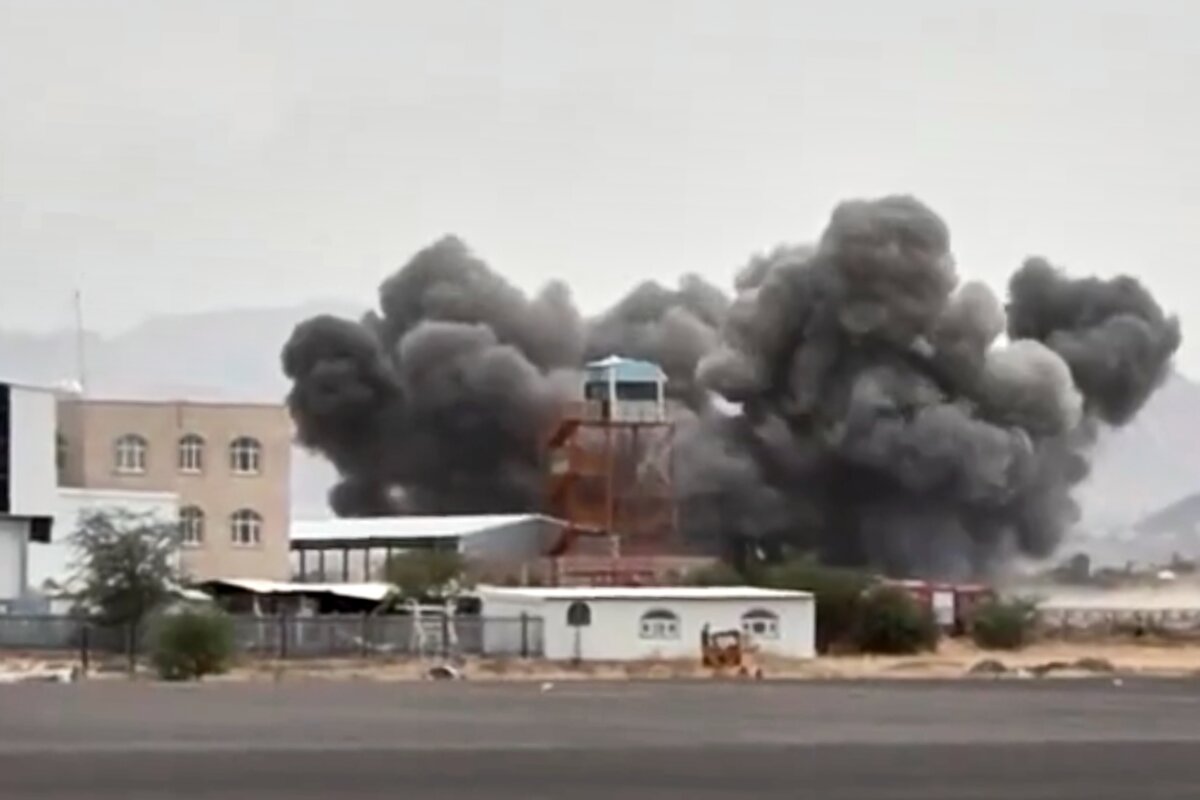

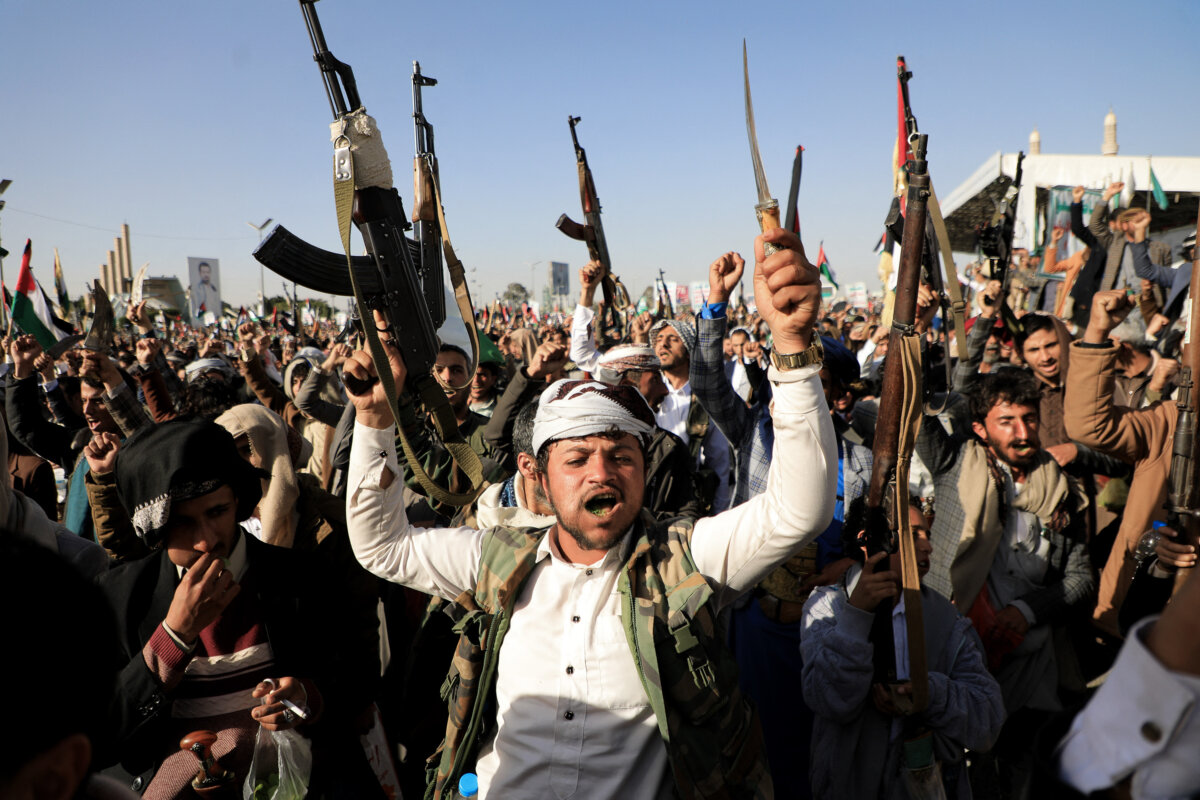
Houthi terrorists in Yemen said they fired missiles and drones at Saudi Arabia’s Abha International Airport on July 13, in response to airstrikes that struck Sanaa International Airport earlier that day, which the Iran-backed group blamed on Riyadh.
Yemen’s defense minister said the country’s armed forces had struck the runway at Sanaa International Airport earlier that day to prevent an Iranian aircraft from landing. No casualties were reported in the attacks, but they marked an escalation not seen since a Saudi-led coalition struck Houthi-controlled areas several years ago. Those areas were targeted by the coalition before a U.N.-brokered truce to cease hostilities came into effect in 2022.
The terrorist group released a statement on Monday via the Houthi-controlled SABA News Agency, saying that “the enemy Kingdom of Saudi Arabia, insisting on continuing its unjust blockade against the Yemeni people, launched a blatant aggression today, Monday, at 1:54 p.m., carried out by its military aircraft against Sana’a International Airport, targeting it with a number of airstrikes with the aim of closing it to humanitarian flights carrying patients and stranded persons to and from Sana’a International Airport.”
The group said it “carried out a military operation targeting Abha International Airport, using a number of ballistic missiles and unmanned aerial vehicles,” adding that the operation had “successfully achieved its objectives.”
It further warned “all airlines against overflying the airspace of the Kingdom of Saudi Arabia” and stressed that “these warnings should be taken seriously until the blockade on Sana’a International Airport is lifted.”
Yemen’s defense minister, Gen. Taher al-Aqili, said in a July 13 post on X that the Sanaa Airport’s runway had been struck in response to an Iranian plane transporting a Houthi delegation in violation of Yemen’s airspace.
“The Yemeni Armed Forces targeted the runway at Sanaa International Airport to prevent the Iranian aircraft from landing on Yemeni territory,” al-Aqili said.
“The terrorist Houthi militia, backed by the Iranian regime, prevented Yemen’s national airline from landing at the airport in the capital, Sanaa, while insisting that the Iranian aircraft violate the territory of the Republic of Yemen. Therefore, the airport runway was targeted.”
Saudi Arabia has not so far publicly commented on the terror group’s claims. The Epoch Times contacted the Saudi Foreign Ministry but did not receive a response by the time of publication.
The official spokesperson of the Saudi-led Coalition to Restore Legitimacy in Yemen, Maj. Gen. Turki al-Malki, said in a July 13 post on X that air defenses dealt with ballistic missiles launched by the Houthis toward the southern region without providing further details.
Saudi Arabia’s neighbor, Qatar, condemned the Houthi attack, with the Qatari Ministry of Foreign Affairs calling it a “flagrant violation of the Kingdom’s sovereignty and territorial integrity, a breach of international law, and a threat to the region’s security and stability,” in a July 14 statement.
“The Ministry of Foreign Affairs reiterates the State of Qatar’s full solidarity with the sisterly Kingdom of Saudi Arabia, and its full support for all measures taken by it to preserve its security, stability, sovereignty, and the safety of its citizens and residents on its territory,” the statement added.
The U.N. Security Council called an emergency meeting on Monday afternoon to address developments, during which officials expressed concern about the risk of wider escalation.
U.N. Assistant Secretary-General for the Middle East Khaled Khiari told the 15-member council that “Yemen and the wider region cannot afford another cycle of escalation.”
“We call on all actors to constructively engage in negotiations under UN auspices. Such engagement is essential to ensure de-escalation, advance safe, predictable, and sustainable civilian air access, among other priorities,” he said. “The UN Special Envoy for Yemen is actively engaging with the parties and has contacted military representatives from all sides to urge de-escalation.”
U.N. special envoy for Yemen Hans Grundberg said in a statement posted on X by his office that he is concerned about the risk of wider escalation.
“I call on the parties to engage in dialogue and negotiations under UN auspices to find a way forward that preserves the relative calm Yemen has experienced since 2022 and makes progress toward sustainably ending the conflict,” he said.
The attack comes amid increased hostilities between the United States and Iran, with U.S. President Donald Trump on July 13 warning Tehran that the United States could soon target Pickaxe Mountain, an Iranian underground nuclear site.
“We’re watching it closely. We see no activity there. They’re not doing well with their nuclear situation … but we’ll probably give Pickaxe Mountain a shot relatively soon,” Trump told “The Hugh Hewitt Show”.
Pickaxe Mountain, located near Iran’s heavily damaged Natanz uranium enrichment facility, is a complex buried about 330 feet below ground, according to Andrea Stricker of the Foundation for Defense of Democracies (FDD), an expert in nuclear proliferation and counterproliferation who specializes in Iran’s nuclear program.
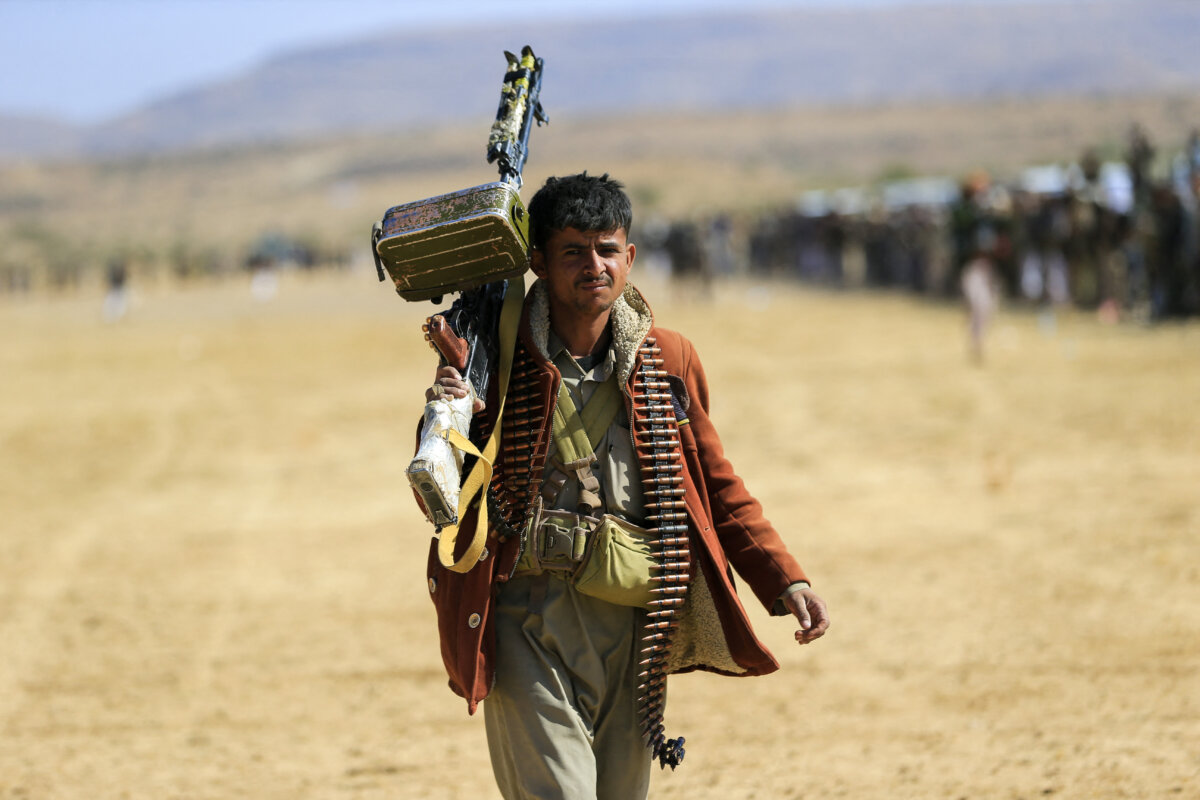
The Iran-backed Houthis seized much of northern Yemen, including Sanaa, in 2014, forcing the internationally recognized government into exile and triggering a Saudi-led intervention the following year. Yemen has since been mired in a protracted civil war.
Houthi-controlled areas were last targeted by the Saudi-led coalition before a U.N.-brokered truce to cease hostilities came into effect in 2022.
Houthis Close Red Sea to Israeli Ships
The Houthis on June 8 declared a ban on Israeli shipping in the Red Sea, warning that any Israeli-linked vessel would be considered a military target.
“We consider all enemy movements to be legitimate military targets for our armed forces,” the Houthis said in a statement.
The Houthis have been firing at Israel and targeting shipping in the Red Sea since the start of the 2023 conflict between Israel and Hamas in Gaza, in what they describe as solidarity with the Palestinians.
 Friends Read Free
Copy
Facebook
Tweet
Friends Read Free
Copy
Facebook
Tweet