
The words Phthartolatrae, Chelicerata, and jatrorrhiza originated in different countries, but they share something in common.
Most adults wouldn’t recall ever using them in a sentence, let alone writing them or noticing them in a book or news article.
And yet, they’re in school dictionaries; children as young as 9 are asked to define them or spell them correctly.
It’s a proud American tradition dating back to 1925.
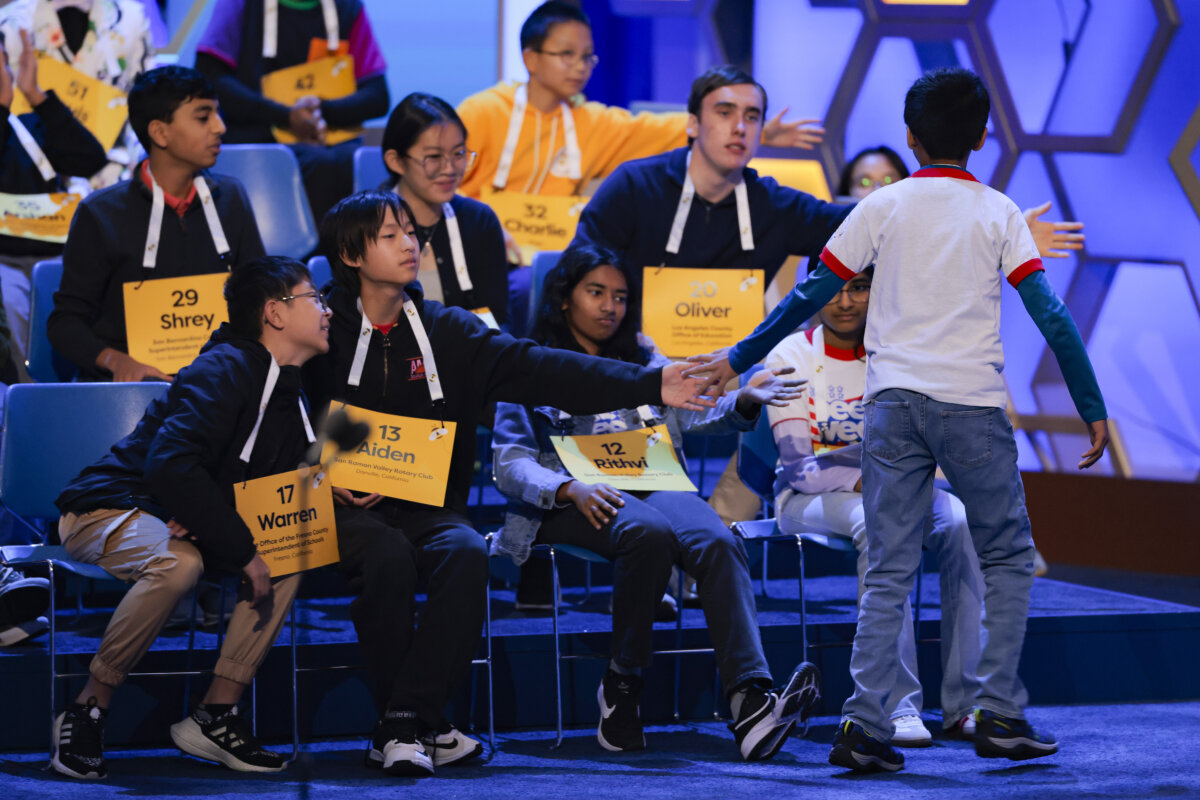
This week, 247 elementary and middle school children and their families arrived in Washington to compete in the 101st Scripps National Spelling Bee.
They emerged from an initial pool of hundreds of thousands of children who competed in local events; 25,000 moved on to regional competitions to vie for a slot in the nation’s capital.
The finals, with just nine children remaining, take place tonight at Daughters of the American Revolution Constitution Hall.
The last one standing takes home $50,000, though there are smaller cash amounts for the others, and everyone who reached the national event received prizes.
In 1925, the winner received $500 in gold pieces for spelling gladiolus.
Last year’s final word was éclaircissement.
Every year, the event features different storylines.
One past participant reached the national competition six times.
The youngest contestant to win was only 6 years old.
The first non-American champion, a Jamaican, claimed the top finish in 1998.
Twenty-one states have yet to crown a champion.
This year’s competition featured a pair of siblings from California.
Most of the students in this year’s event come from public schools, though private, charter, and homeschooled children were also in attendance.
The field included four 9-year-olds, one 15-year-old, and a vast majority of 13- and 14-year-olds.
Sixty-four competitors returned from last year, and 14 had qualified before 2025, according to the event website.
The spotlight shone on competitors’ personalities in 90-second intervals as the youngsters asked their hosts to repeat the words, note parts of speech, and provide definitions and alternative pronunciations.
Expressions of concentration, frustration, and confidence followed as they tried to digest the consonants and unusual letter combinations based on where the word originated.
Some words had no known place of origin or came from North American Indian tribes.
“If you haven’t seen it before,” said television commentator Paul Loeffler, “You just take your best guess.”
In that instance, Thanvi Gatamaneni, a seventh-grader from Maryland, forgot the second “s” in “assacu,” a noun denoting a tropical American tree.
In earlier rounds, she successfully spelled “lyophilic” and defined posterity.
Her biography indicates that she is an avid reader who has won poetry awards and studies classical Indian dance.
The announcers said she’s fluent in three languages.
Nine-year-old Zachary Teoh was also tripped up by the question of whether a singular or double “s” applies when he misspelled “cultus,” a North American fish as defined in the Chinook tribal language.
Teoh was a crowd favorite because of the level of composure he displayed at such a young age.
The announcers were astounded when, in earlier rounds, he correctly spelled “houtou” and defined “kitsch”—art, objects, or design considered to be of low quality. It’s a German word.
“How many third graders have read the word kitsch?” Loeffler said.
 Friends Read Free
Copy
Facebook
Tweet
Friends Read Free
Copy
Facebook
Tweet