
Leaders, faculty, and students at one of the nation’s leading learning and research institutions say higher education is still worth it—if the university can clarify and renew its purpose.
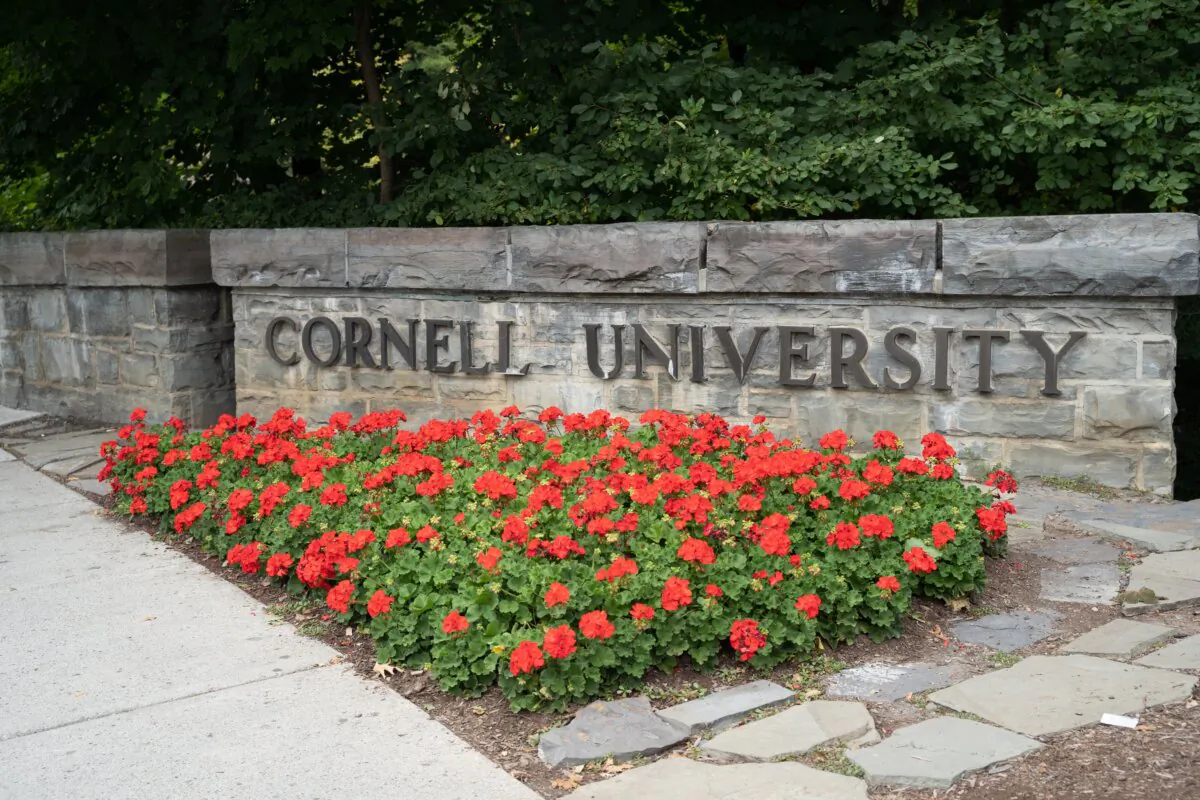
To address concerns about rapid technological change, the erosion of public trust in higher education, and tense relationships between universities and the federal government, Cornell University leaders gathered opinions and insights from more than 6,000 people in its academic community based in Ithaca, New York, over the past 12 months.
The 238-page report and a vision statement were released on Sept. 22.
Cornell’s report follows similar initiatives from fellow Ivy League institution Yale and Vanderbilt University in Tennessee, both of which raised concerns about the dilution of academic standards.
Last month, the Department of Education encouraged higher education institutions to update their mission statements to outline their commitments to pathbreaking research and academic excellence.
“This moment is an all-hands-on-deck situation,” Adam Smith, Cornell social science professor, said in a Sept. 22 news release.
“We are going to need the commitment and the energy of the entire campus if we are going to realize real change.”
Regarding artificial intelligence, the report said a student who uses the technology to produce an essay has not learned how to write, just as a researcher who uses it to synthesize existing literature has “not learned to deeply engage it.”
The report calls for a central office with staff to manage and share information about AI risks, guidance, ethics, and responsible use and innovation.
Some educators have already taken initiatives to minimize AI use, including a German instructor who requires students to use typewriters in class, and an engineering professor interviewed by The Epoch Times who gives oral exams.
The document notes that Cornell, unlike many other colleges and universities across the nation, advises against online-only programs, a unified core curriculum, initiatives to become more vocational, and shortened undergraduate programs where students can complete a bachelor’s degree in three years instead of four.
“The goal is to challenge them to expand their horizons and capacities and then give them tools and time to grow,” it said.
The sticker price to attend Cornell last year, including tuition, room and board, was $92,844, compared to the median U.S. household income of $84,000, the report said.
With financial aid and scholarships, the average student paid $65,370.
The report did not identify potential cuts to make Cornell affordable to more prospective students but did recommend creating a task force to develop a new tuition model and identify cost-saving measures without substantially reducing the quality of education.
The Cornell student experience could be improved if university leaders integrate learning environments across classrooms and campus life.
Faculty and non-academic staff should be seen as co-educators, the report said.
It also recommended a program that connects younger students with more senior peers who can mentor them.
Moreover, first- and second-year students should have regular access to smaller, more intimate classes and in a less intimidating environment where “they’ll be able to risk being wrong in front of others,” the report said.
It added that Cornell should encourage alumni to share their experiences with students and help them network with potential employers.
Students might also appreciate optional “tech-free” residence halls, dining facilities, and social events where phones are set aside, and in-person interaction is the norm, the report said.
The admissions section of the report advises against favoring “maximally accomplished and credentialed” applicants over those who are ready to care for and add something to a community “rather than simply extract prestige from it.”
Merit-based ranking, the report said, “would likely lead to a class composed almost entirely of students from the top income quintile, raising issues of basic societal fairness while reducing the range of differences needed to foster learning.”
President Donald Trump’s administration in recent months has investigated and sanctioned prestigious schools that gave preferential treatment to minority applicants despite existing civil rights laws and the 2023 U.S. Supreme Court ruling that race cannot be considered in college admissions.
This includes medical schools and law schools that used questions about zip codes, income, essays, and personal interviews as proxies to admit black and Hispanic applicants over white and Asian applicants who scored higher on entrance exams.
In November, Cornell agreed to pay the federal government a $30 million fine after the university was cited for unlawful racial discrimination in admissions and various programs.
The agreement also requires Cornell to demonstrate a commitment to merit-based admissions.
Cornell’s report also recommends addressing persistent concerns about special-case admissions, which include legacies from wealthy families, children of donors, children of faculty and staff, and “athletes in sports associated with wealthy families.”
Looking ahead, the report said, doctoral and post-doctoral training should be broadened for a more uncertain job market.
These students should develop more transferable skills, including communication and conflict resolution, which are needed in any career field.
The report also recommends expanding Cornell’s global recruitment with an explicit outreach plan for underrepresented regions and countries.
 Friends Read Free
Copy
Facebook
Tweet
Friends Read Free
Copy
Facebook
Tweet