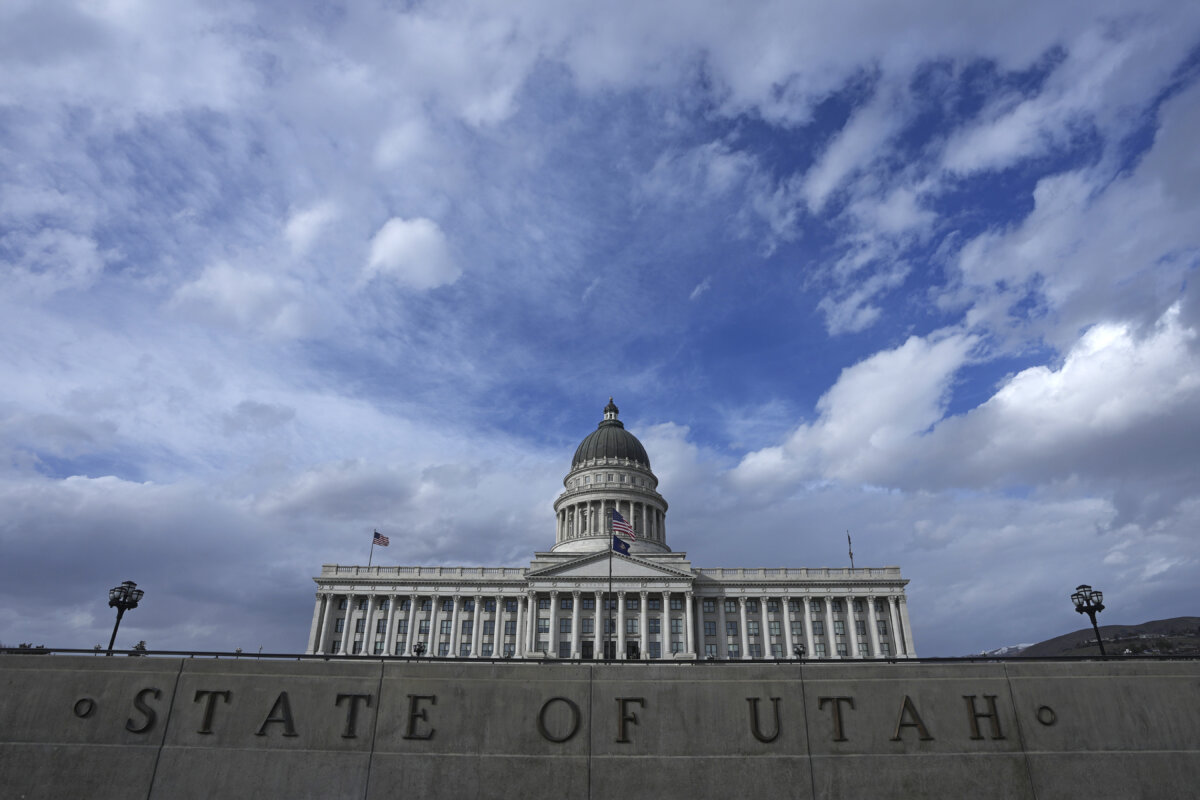


Utah has joined the congressional mid-decade redistricting trend, but not by choice. The state is being forced to redraw its congressional maps to comply with a recent court order.
Though mid-decade redistricting tends to be relatively rare, the practice has made headlines recently after Texas, followed by California, moved toward partisan gerrymanders in their states that would add about five new Republican seats in Texas and five new Democratic seats in California.
Although some states, such as New York, Florida, Illinois, and Ohio, have considered joining the redistricting scramble, the Republican-dominated Beehive State—where Republicans already hold all four congressional seats—isn’t one of them.
Instead, Utah has been ordered by courts to redraw its maps ahead of the 2026 midterm elections to resolve claims that the current map violates state gerrymandering laws.
Here is what to know about Utah’s redistricting.
Why Is Utah Redrawing Its Congressional Map?
Utah has been ordered to redraw its maps amid a larger legal battle over how the state handles districting because a court found its current congressional maps to be unlawful.
On Aug. 25, Utah Third District Judge Dianna Gibson ruled that the Republican-dominated state Legislature had circumvented anti-gerrymandering protections in drawing its congressional lines and therefore needs to draw a new map ahead of the 2026 midterms.
The state’s current congressional map, which was drawn in 2021, “cannot lawfully govern future elections in Utah,” she wrote.
Specifically, Gibson ruled that the Legislature had exceeded its authority with a 2020 bill that changed the state’s independent redistricting commission.
Redistricting in Utah has been handled by an independent commission since 2018, when voters approved Proposition 4, which created a seven-member commission to oversee the creation of congressional maps in Utah.
In March 2020, the state Legislature passed S.B. 200, which altered the commission’s rules. The commission proceeded to create a new map in 2021.
On Aug. 25, Gibson ruled that the change to the commission was unconstitutional, citing a state Supreme Court ruling in 2024 that held that the Legislature cannot override a public initiative such as Proposition 4.
Who Benefits?
With all four of Utah’s seats in the U.S. House currently held by Republicans, any alteration to the status quo could create uncertainty for the party.
However, it’s unclear whether Democrats stand to gain from a redrawn map. The last Democrat to serve in Utah’s congressional delegation was Ben McAdams, who represented the state’s Fourth Congressional District between 2019 and 2021.
Republican candidates in the previous election all won their districts with strong margins: Rep. Celeste Maloy’s race was closest, but she still finished with 58 percent, nearly 24 points ahead of Democrat Nathaniel Woodward.
The current map divides Salt Lake County, which Kamala Harris won by 10 points in 2024, into four districts. If a new map were drawn that keeps the metropolitan county intact, it could give Democrats a foothold in at least one district.
Reactions
Republican state leaders indicated that they intend to keep the maps largely as they are, with each of the state’s four districts comprising a mix of urban and rural voters.
“While we will continue to pursue every legal option available—including requesting a stay from the Utah Supreme Court if necessary—we will attempt to redistrict under these unprecedented constraints, consistent with our oath to represent the best interests of Utah,” state Senate President J. Stuart Adams and Republican Speaker Mike Schultz said in a statement following the ruling.
President Donald Trump, who won Utah by 22 points in 2024, criticized the ruling in a post on Truth Social.
“All Citizens of Utah should be outraged at their activist Judiciary, which wants to take away our Congressional advantage, and will do everything possible to do so,” he wrote.
Meanwhile, Democrats praised the ruling.
“Today’s ruling is a victory for democracy,” Democratic Congressional Campaign Committee Chair Rep. Suzan DelBene (D-Wash.) said in a statement following the court’s decision.
“In throwing out the current, gerrymandered congressional map, voters in Utah will now have an opportunity to elect leaders that best represent their values, and not have their representation dictated by politicians.”
What Comes Next?
Judge Gibson has given the Legislature until Sep. 25 to submit new maps.
The Utah shake-up is playing out as part of a nationwide redistricting battle that began when Trump encouraged Texas to redraw its maps, possibly adding five new GOP seats to the state in the 2026 midterms.
In response, California Gov. Gavin Newsom promised to redraw his own state’s districts, adding five Democratic seats.
The outcome may affect the balance of power in the House of Representatives, where Republicans hope to cushion their 219–212 majority.
 Friends Read Free
Copy
Facebook
Tweet
Friends Read Free
Copy
Facebook
Tweet