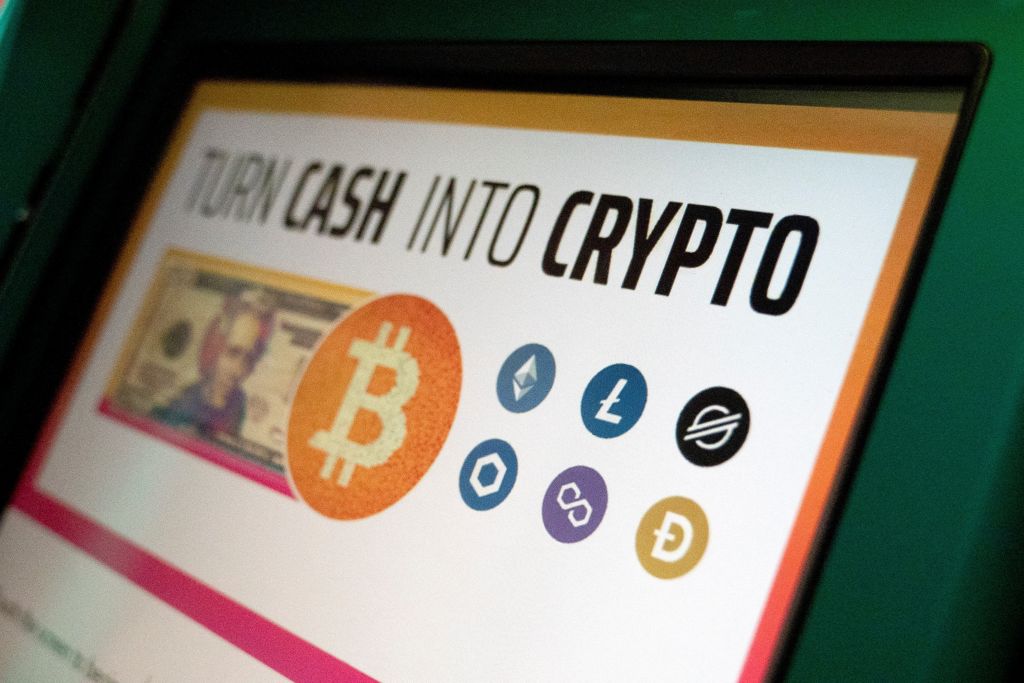

Financial institutions should be wary of illicit activity and scams involving convertible virtual currency (CVC) kiosks, popularly known as crypto ATMs, the Treasury Department’s Financial Crimes Enforcement Network (FinCEN) said in an Aug. 4 statement.
CVC kiosks allow people to exchange fiat currencies such as the U.S. dollar for cryptocurrencies and vice versa. The machines can be used to transfer payments as well. FinCEN said it has observed that these crypto ATMs “have also been used to launder suspected drug proceeds,” according to the notice.
Transnational criminal organizations (TCOs) such as Mexico’s Cartel Jalisco Nueva Generacion are “increasingly adopting CVC because it enables rapid international funds transfers,” it said. “In areas that face a significant drug-related threat and that have a significant number of CVC kiosks, TCOs may launder money through CVC kiosks as an alternative to bulk cash smuggling.”
Moreover, the speed of CVC transactions and difficulty of reversing them make crypto ATMs an “attractive payment mechanism for scammers,” the notice said.
Once a victim makes a payment via a CVC kiosk, the fraudster instantly transfers the funds into another account, it said, adding that this is different from traditional wire or bank transfers, which can take one or two days to settle.
Scammers can defraud people by posing as a government agency demanding fees or taxes or presenting themselves as customer or tech support of well-known companies.
According to an April 24 report from the FBI’s Internet Crime Complaint Center, it received 10,956 complaints related to crypto ATMs/kiosks for 2024, totaling $246.7 million in losses. This was a 99 percent jump regarding such scams compared with 2023, it said. Losses rose by 31 percent.
The demographic most affected by crypto ATM scams was people aged over 60, who accounted for over $107 million in losses.
The FinCEN notice listed certain red flag indicators aimed at helping financial institutions detect, prevent, and report potential illicit activity such as scams or criminal-linked fund transfers.
The risk of illicit activity is exacerbated if CVC kiosk operators do not meet their obligations under the Bank Secrecy Act, FinCEN said.
The Act authorizes the Treasury Department to require financial institutions and other entities to report on how they identify and prevent money laundering activities.
“Criminals are relentless in their efforts to steal money from victims, and they’ve learned to exploit innovative technologies like CVC kiosks,” said FinCEN Director Andrea Gacki.
“The United States is committed to safeguarding the digital asset ecosystem for legitimate businesses and consumers, and financial institutions are a critical partner in that effort. This Notice supports Treasury’s continuing mission to counter fraud and other illicit activities.”
Unregulated Crypto Transactions
The FinCEN warning comes as crypto ATM numbers have exploded in recent years.
Over a decade ago, in October 2013, there were just two crypto ATMs in the United States, according to Coin ATM Radar. As of Aug. 5 this year, there are 30,695 such kiosks.
In February, Sen. Dick Durbin (D-Ill.) introduced the Crypto ATM Fraud Prevention Act, according to a statement from his office.
“The largely unregulated nature of these machines, coupled with the anonymity and irreversibility of cryptocurrency transactions, make crypto ATMs a favorite tool for scammers,” it said.
“Durbin’s legislation aims to crack down on crypto scams by adding layers of protections to crypto ATM transactions and requiring greater transparency from cryptocurrency ATM operators.”
The bill requires crypto ATM operators to provide warnings to users about the risk of fraud, develop an anti-fraud policy, and register and disclose their ATM locations.
On July 15, North Carolina Attorney General Jeff Jackson issued a statement warning about the risk of crypto ATMs.
The AG joined up with Secretary of State Elaine Marshall, the Wilmington Police Department, and other entities to launch a statewide effort to tackle the issue.
“We’re hearing devastating reports of people losing their life savings through a crypto ATM scam,” Jackson said.
 Friends Read Free
Copy
Facebook
Tweet
Friends Read Free
Copy
Facebook
Tweet