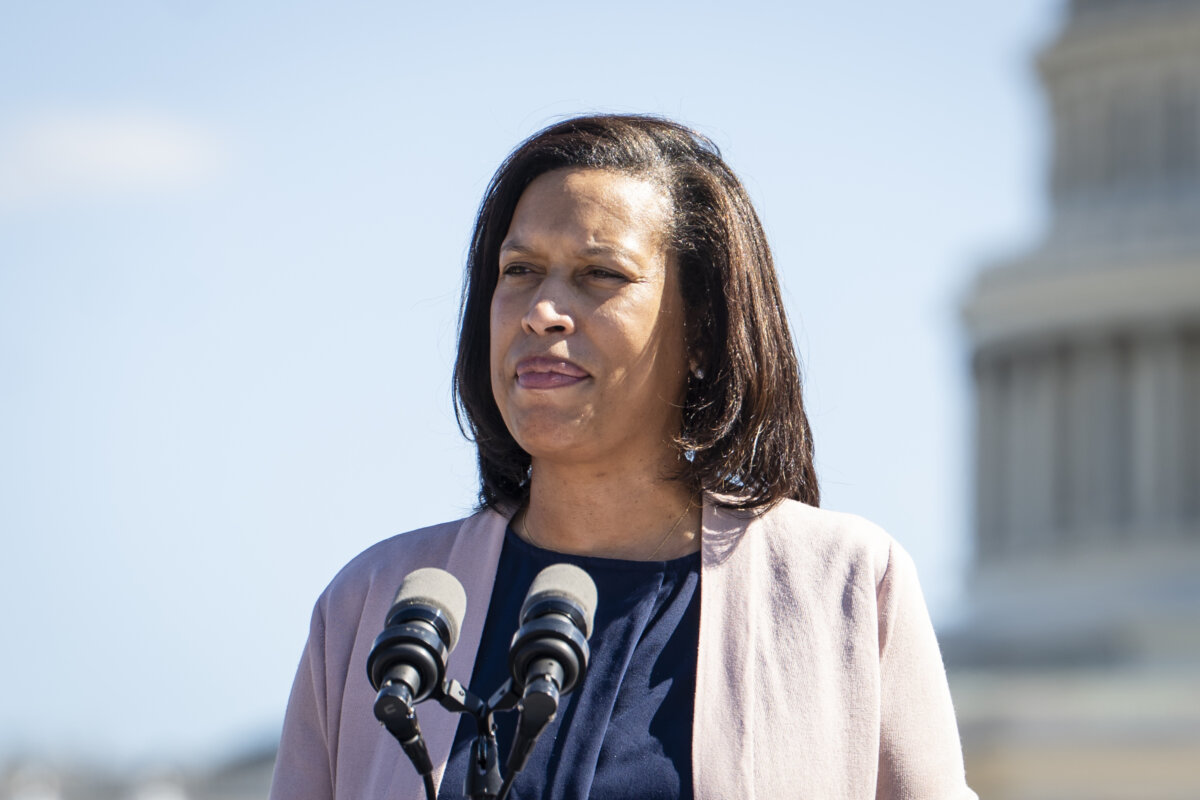

Washington Mayor Muriel Bowser on April 10 unveiled her last budget before leaving office at the end of this year.
The $21.2 billion gross operating spending plan trims the general-fund budget—which pays for core city services—to $12.7 billion, a 3.3 percent cut from the 2026 level. Education and health care, especially Medicaid, remain priorities.
Yet the proposal eliminates $127 million previously set aside for future collective-bargaining deals and non-union pay raises. It also caps the child care subsidy program at 6,000 children and ends a COVID-19 pandemic-era wage supplement for child care workers.
Bowser told the Council of the District of Columbia that the city is “not broke.” She said the reductions address a revenue shortfall caused by a decrease in the number of federal workers and increased costs for Medicaid and the Supplemental Nutrition Assistance Program.
“We are adjusting to what DOGE has done to our workforce and commercial corridor,” she said, referring to the Trump administration’s Department of Government Efficiency. “I think we all have to be clear-headed about where we are and what it will take to keep growing.”
Revenue has fallen because of federal workforce reductions ordered under the current administration. The D.C. Office of Revenue Analysis estimates that the city lost 22,000 federal jobs with a combined annual payroll exceeding $3 billion. City Administrator Kevin Donahue put the direct hit to local revenue at about $325 million this year, and larger losses are expected in fiscal 2027.
Those job losses also ripple through the broader Washington region, where more than 50,000 positions disappeared, according to George Mason University’s Center for Regional Analysis. Businesses that served federal employees and their families also felt the pinch.
Bowser framed the budget within three phases of her tenure: years of growth, the COVID-19 economic shock, and the post-pandemic recovery. She said the city must now adapt to the new fiscal reality without abandoning essential services.
Bowser has led Washington since 2015. She announced in November 2025 that she would not seek a fourth term. In a letter to residents, she called the job the honor of her life and “an extraordinary opportunity to have a positive impact” on her hometown.
Federal oversight has long shaped D.C. budgets. In 2025, Congress forced the city to revert to 2024 spending levels midway through the fiscal year, cutting $1.1 billion from a previously balanced plan.
Council approval will determine whether Bowser’s final spending blueprint survives intact or undergoes further changes before the next mayor takes office.
Chairman Phil Mendelson said the council expects to vote on the budget in June.
The Associated Press contributed to this report.
 Friends Read Free
Copy
Facebook
Tweet
Friends Read Free
Copy
Facebook
Tweet