
The Department of Homeland Security (DHS) on Aug. 27 posted a draft version of proposed changes to temporary visas for overseas students and exchange visitors.
The recommended changes—posted in a notice of proposed rulemaking in the Federal Register officially dated Aug. 28—aim to establish a fixed visa period for nonimmigrant students, exchange visitors, and foreign media personnel to stay in the United States.
Current rules allow F (student) and J (educational and cultural exchange visitor) nonimmigrant visa holders to remain in the United States under a “duration of status (D/S)” or “duration of employment” model. According to the department, this model authorizes the visa holder to be present in the United States for an unspecified period of time, with no oversight or vetting.
The current rules do not allow immigration officers “enough predetermined opportunities to directly verify that aliens granted such nonimmigrant statuses are engaging only in those activities their respective classifications authorize while they are in the United States,” the DHS notice states.
“In turn, this has undermined DHS’s ability to effectively enforce compliance with the statutory inadmissibility grounds related to unlawful presence and has created incentives for fraud and abuse,” it reads.
The DHS stated that the fixed period being proposed for these visa holders and their spouses or dependents would be “until completion of their program or four years, whichever is shorter.” The F and J visa holders’ spouses would not be allowed to work, but their children could attend U.S. public schools.
The DHS also proposed changes for representatives of foreign media on I nonimmigrant visas. The draft recommended a fixed 240 days for these visa holders, with the option to extend for another 240 days through an extension-of-stay application with U.S. Citizenship and Immigration Services (USCIS).
The changes will bring these visa classes in line with the rules for other types of nonimmigrant visas, which have specific departure dates, the DHS stated.
The proposal suggests giving F visa holders an additional 60 days from the law’s effective date to leave the United States, while J visa holders would be given 30 additional days from their program end date to depart the country. The department will also consider reducing the 60-day grace period for students to 30 days, aligning it with other visitor groups.
Those needing additional time to complete their studies or exchange programs can continue to file an extension-of-stay request.
If their extension-of-stay application is denied, visa holders and their dependents must immediately depart the United States.
Nonimmigrants can apply for new study or exchange programs and can apply for a new visa allowing for another maximum stay of four years for their new program.
Vulnerabilities for National Security
The draft document outlines instances of concern as examples of why the DHS is pursuing the changes, particularly in the F and J visa classes. The case studies highlight vulnerabilities to U.S. national security created by the open-ended nature of the “duration of status” visas.
For instance, in September 2019, the FBI charged and convicted a Chinese official, Liu Zhongsan, with conspiracy to fraudulently procure J visas for Chinese officials tasked with recruiting U.S. scientists for state-sponsored efforts to steal U.S. technology.
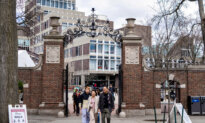
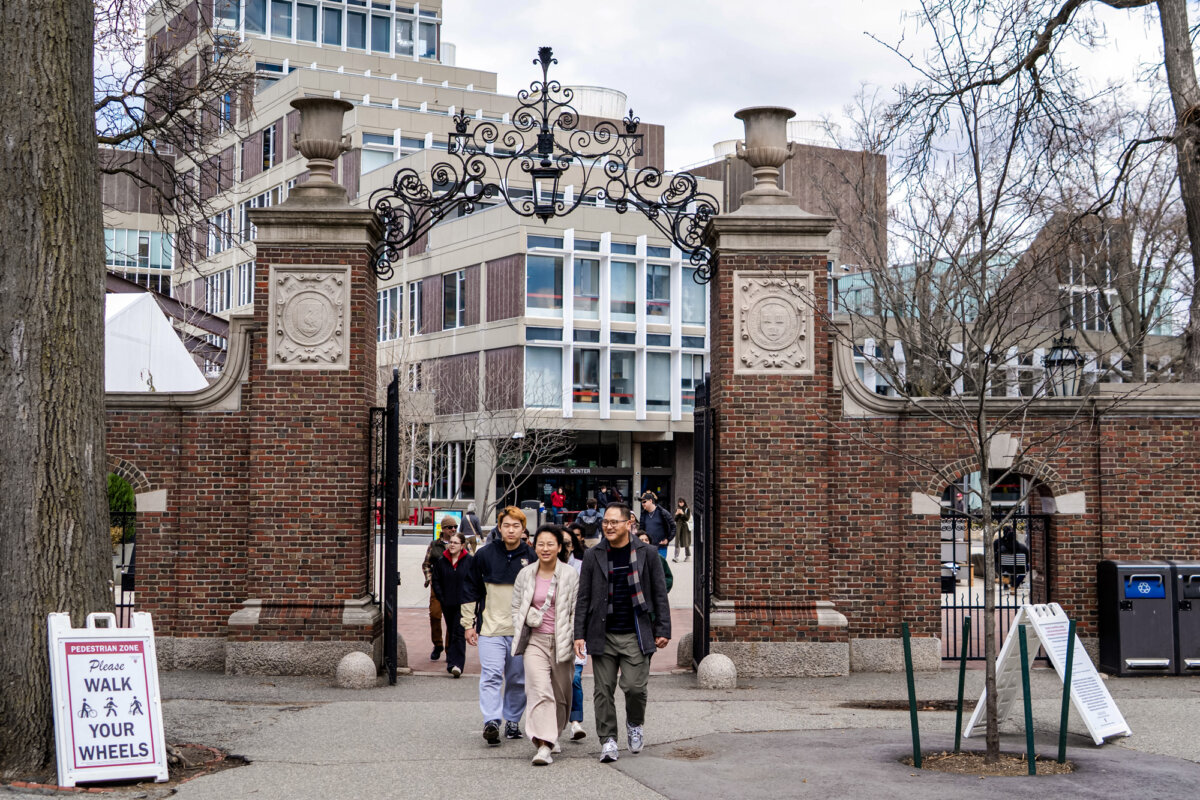
Another example is from December 2019, when 29-year-old graduate student Zheng Zaosong, in an exchange program at Harvard University, was indicted for allegedly smuggling stolen intellectual property out of the United States and lying about it.
In January 2020, J visa recipient Ye Yanqing was charged with visa fraud, acting as a foreign agent, and conspiracy after she lied about her ongoing military service at a top military academy directed by the Chinese Communist Party (CCP). While at Boston University’s Department of Physics, Chemistry, and Biomedical Engineering, she allegedly completed numerous assignments as a People’s Liberation Army lieutenant.
In 2025, a Chinese national and member of the CCP—and J visa recipient—in an exchange program at the University of Michigan was charged in a criminal complaint with conspiracy, visa fraud, and smuggling a noxious fungus into the United States capable of billions of dollars in agricultural losses. She was allegedly receiving CCP funding for her work.
A December 2018 National Institutes of Health report on foreign influence in federally funded scientific research was also cited by the DHS.
“Small numbers of scientists have committed serious violations of [National Institutes of Health] policies and systems by not disclosing foreign support (i.e., grants), laboratories, or funded faculty positions in other countries,” the report reads.
The DHS notice states that the proposals will address clear dangers to national security posed by foreign agents being granted F and J visas.
“A handful of those have been arrested for spying for China,” the DHS stated.
The changes would also address the risk posed by foreign nationals who are granted visas to study one degree but then transfer to a sensitive program, such as nuclear science, once they are on U.S. soil.
Aside from the security risks, such transfers have also burdened school administrators with the costs of processing the transfer requests of students who misrepresented their intentions to study at their institutions, according to the department.
The changes would still allow students to change courses, but through an extension-of-stay application with the USCIS. They would also be required to pay a processing fee. The department stated that it would require changes to the DHS’s Student and Exchange Visitor Information System.
Fraud and Abuse
The changes also crack down on misuse of F-1 student visas, as some students have abused the system by continuously enrolling in different programs at the same degree level, pursuing multiple master’s or undergraduate degrees or even degrees of a lower educational level.
“In 2024, DHS identified nearly 77,000 F-1 students who have spent more than 10 years in student status,” the department stated.
Fraud has also been committed by school owners.
“Since 2008, multiple school owners and others have been criminally prosecuted for ‘pay-to-stay’ fraud, in which school officials, in return for cash payments, falsely report that F-1 students who do not attend school are maintaining their student status,” the DHS notice reads.
Some school owners even ran multiple educational businesses, between which they could transfer students as part of their fraud, it states.
In 2018, a federal judge in the Central District of California sentenced a man to 15 months in prison and a $450,000 fine over his visa fraud scheme involving three schools he owned.
Visas for students to attend language training education also came under scrutiny after the DHS “found students enrolling in lengthy periods of language training, in some cases for more than two decades.”
The draft proposes to offer a fixed period of entry of 24 months for language training education students to ensure that they are meeting the statutory requirements of their visas.
The shorter two-year limit for language students “would provide a reasonable period of time for students to attain proficiency while mitigating the Department’s concerns about the integrity of the program,” the notice states. This time period would align with the estimated guided learning hours necessary for beginners to attain near-native English proficiency in the Cambridge English Exam.
Fee to Amend, Extend Visas
The new rules also recommend changes to the process of applying for a visa extension, proposing that any changes be processed through the USCIS for a fee.
The DHS said this recommendation is a result of its analysis of the economic impact of visa extensions as required by President Donald Trump’s executive orders 12866, 13563, and 14192, which require federal agencies to conduct a cost-benefit analysis of existing regulations and streamline their processes to be more effective.
This change would pass on $86.3 million to $88.1 million in annual costs to F, J, and I visa holders and their schools and sponsors.
Those applying for an extension would also be required to submit their biometrics, a change aimed at “enhancing the government’s oversight and monitoring of these aliens,” the DHS stated.
“DHS welcomes F academic students, J exchange visitors, and I representatives of foreign information media, but it also acknowledges that the sheer size of the population complicates oversight and vetting functions,” the notice reads.
The number of F visas granted has increased by more than six times since 1980, while the number of J visas has increased by more than four times and the number of I visas has doubled.
Public Comments Sought
The public comment period for the DHS’s proposed rules, identified by Docket No. ICEB-2025-0001, is open until Sept. 27. Comments can be submitted by mail, fax, or the Federal eRulemaking Portal. All departments facing any changes to their reporting or record-keeping requirements via the proposed rule changes have 60 days to comment, as per the 1995 Paperwork Reduction Act. Their deadline is Oct. 27.
“DHS will review all properly submitted comments and materials and may revise the rule based on public feedback,” the department stated.
“DHS encourages all interested parties to participate in this rulemaking by submitting data, views, comments, and arguments on all aspects of this notice of proposed rulemaking. Comments providing the most assistance to DHS will reference a specific portion of this rule, explain the reason for any recommended change, and include the data, information, or authority that supports the recommended change.”
 Friends Read Free
Copy
Facebook
Tweet
Friends Read Free
Copy
Facebook
Tweet